

Hmong American Peace Academy plants seeds for generational change

Hmong American Peace Academy promotes generational change
At Hmong American Peace Academy in Milwaukee, history and culture is more than a subject -- it's a modern version of the American Dream.
MILWAUKEE - Wisconsin has the third-biggest Hmong population of any state in the country, and 2025 is a notable year for the Hmong people. It marks 50 years since the first Hmong refugees arrived in the U.S. at the end of the Vietnam War.
As the back-to-school season rolls on, Hmong history and culture isn’t just a subject at one Milwaukee school. It’s ingrained into a modern version of the American Dream.
FREE DOWNLOAD: Get breaking news alerts in the FOX LOCAL Mobile app for iOS or Android
Bookworm Gardens
What they're saying:
At a place that knows how to turn over a new leaf, tiny hands are hard at work.
"I got to dig up the soil," Aniva Lor, a second grade student, said, "and then put my plant in the soil."
"Tomatoes are pretty good," Eli Yang, a fellow second-grader, added. "They’re used for, like, ketchup."
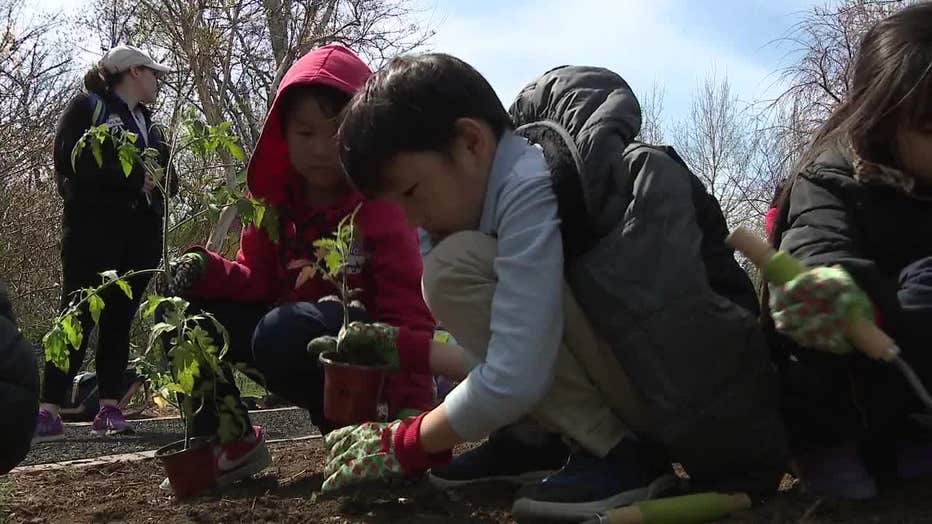
HAPA students at Bookworm Gardens
These insightful students are helping with a new installation at Bookworm Gardens in Sheboygan.
"I got to plant one of these," Cooper Sayaovang said as he pointed to his plant. "And that one was mine."
It’s a place where stories come to life. And these children are the latest chapters in an epic tale of secret wars, overnight escapes and finding home in a foreign land.
SIGN UP TODAY: Get daily headlines, breaking news emails from FOX6 News
"For the Hmong community," father Chai Xiong explained, "it’s really important for us to stay together as much as possible."
If the kids themselves are little sprouts, Chris Her-Xiong is the one ensuring they fully bloom.
"We are a transformational institution," she said.
HAPA in Milwaukee
Local perspective:
Her-Xiong is the founder and chief executive director of the Hmong American Peace Academy, or HAPA.
"Our goal is to inspire our young people to aspire to greatness," said Her-Xiong.
The charter school operates through Milwaukee Public Schools. It’s a place that blends Hmong tradition and history with the tools needed to succeed in the 21st century.
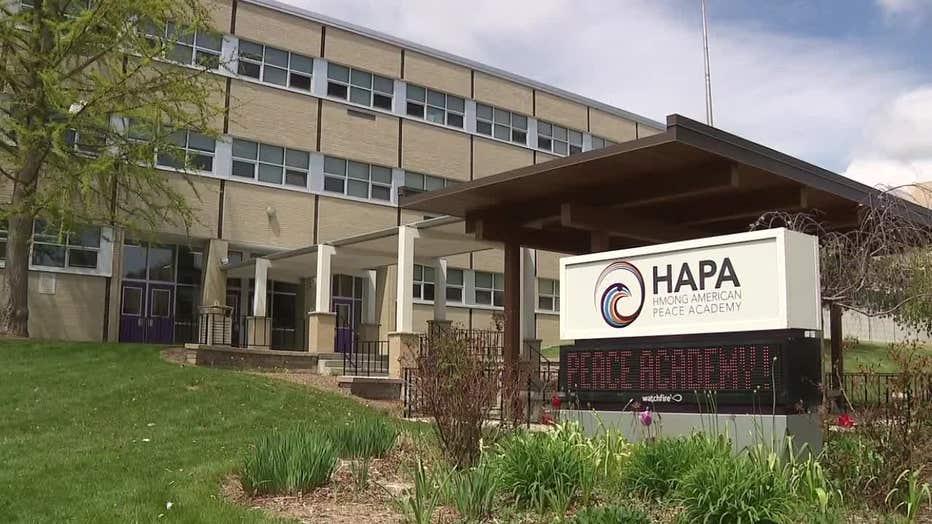
Hmong American Peace Academy (HAPA)
"They’re learning about their identity, their culture, who they are," teacher Lucy Vue said.
"They want to be the next pharmacists, the next lawyers, the next doctors," recent graduate Andrew Vang, who received a full-ride scholarship to the University of Wisconsin-Madison, said of his classmates.
Like any good gardener, Her-Xiong knows you need water to survive.
"The Mekong River has a significant symbol for the Hmong people," she said. "It represents life or death in our journey to come to America."
Images of the Mekong River flow through the halls of HAPA – connecting past, present and future.
"If you were fortunate enough to cross over the Mekong River to the other side," Her-Xiong continued, "then you were considered safe."
'Secret War'
The backstory:
The seeds of HAPA’s story were planted 50 years ago when the first Hmong refugees came to the U.S. at the end of the Vietnam War.
The CIA-backed "Secret War" recruited Hmong soldiers to fight communist forces in Laos.
"At the age of 10," Her-Xiong said, "I remember hearing over the PA system that the Hmong were going to be wiped out by the communists."
Her-Xiong's father, a former soldier, was forced to flee in the night. He took his family across the Mekong River to a refugee camp in Thailand.
"I was hungry and cold the entire time," she remembered. "In the refugee camps, my older sister and I had to get up early in the morning to wait in line for our portion of food."
After a year in the camps, her family immigrated to America.
"I saw all of the glittering lights, the Christmas lights," Her-Xiong remembered. "I thought I died and went to heaven."
It wasn’t heaven, it was Iowa. The beginning of a new life in a land of opportunity. She eventually became the first Hmong teacher hired by MPS. And she noticed something about the next generation of Hmong students.
"These children were living in between two worlds," she said. "The Hmong world and the American world."
Generational change
What they're saying:
Her-Xiong opened the doors of HAPA in 2004, an American melting pot of Hmong culture and modern possibility.
"If you educate a young boy, you will get a well-educated young man," she said. "But when you educate a girl, you will educate the entire village."
Traditionally, Hmong women get married and have kids at a very young age. But for something to flourish – be it a plant or a pupil – it also needs to adapt.
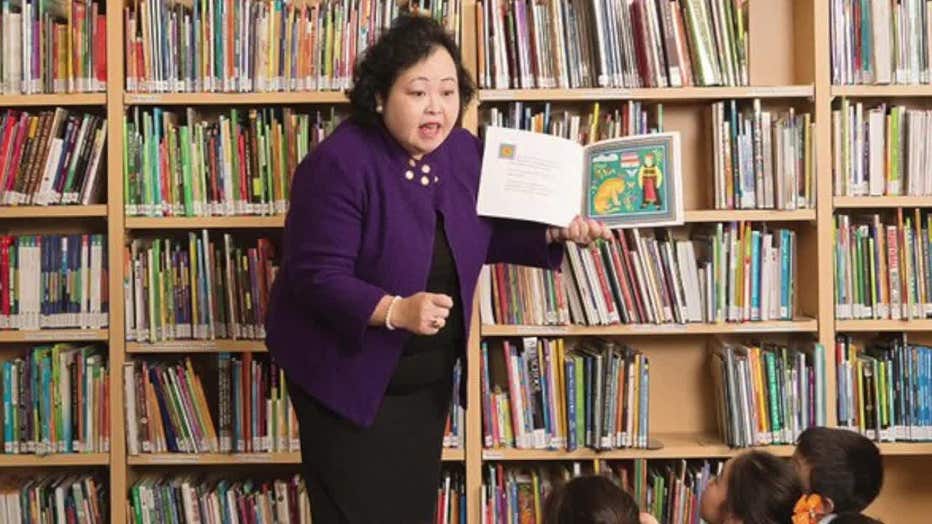
Chris Her-Xiong
"I don’t want our culture to disappear," said rising junior Gao Soua. "I want to make sure that it stays around. But also understand that I’m not restricted to that. That there’s still some other paths and more stuff that I can do that’s not just get married."
By the numbers:
HAPA represents truly generational change. At a school where 85% of the students are economically disadvantaged, listen to these numbers: The Class of 2025 boasted a 100% graduation rate and 100% college acceptance rate, with the vast majority of those students first-generation college students.
"The biggest benefit that has changed the mindset of our parents and grandparents is the opportunity of education," said Her-Xiong. "Not just for boys, but for girls too."
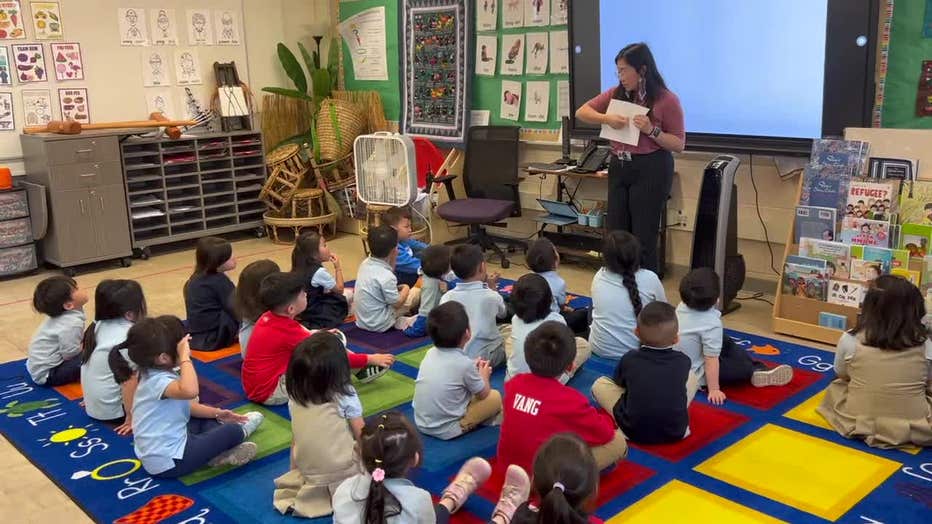
Hmong American Peace Academy (HAPA)
In the halls of HAPA, and at the finished installation at Bookworm Gardens, there’s a lesson for all of us.
"Our goal is to really inspire our young people to dream big," Her-Xiong said.
Like plants, people will thrive when they’re finally able to put down roots.
New state law
Dig deeper:
Just last year, Gov. Tony Evers signed a new state law. It expanded public education guidelines to include the history of Hmong and Asian Americans – in addition to Black Americans, Hispanics and American Indians.
HAPA students were integral in pushing for that change.
The Readers Roundup Garden installation at Bookworm Gardens in Sheboygan through Oct. 31.
The Source: FOX6 News interviewed people and gathered information from the Hmong American Peace Academy and Bookworm Gardens.