

Wisconsin deaths linked to wildfire smoke, new study says
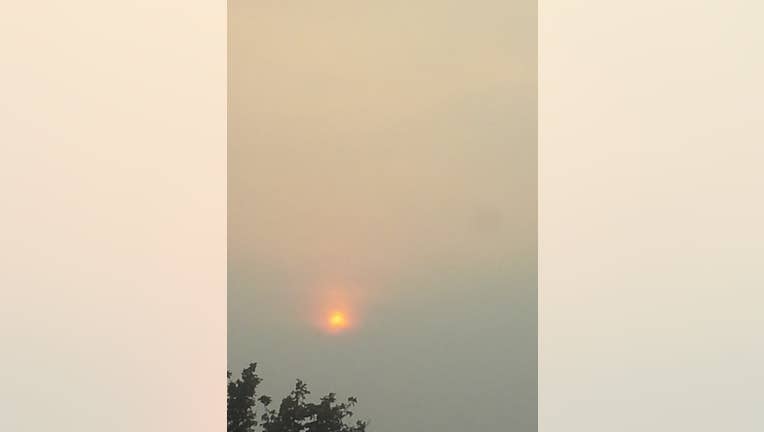
MILWAUKEE - If you spent much of this past summer looking up at hazy skies and feeling a certain sense of déjà vu, there is a good reason. For much of Summer 2025, Canadian wildfires sent thick plumes of smoke into Wisconsin and the Upper Midwest, echoing the unprecedented wildfire season of 2023.
A newly published study in the Journal Nature confirms just how damaging the 2023 fires were. Dr. Qiang Zhang and his team at the University of Michigan found that Wisconsin and the broader Midwest saw some of the sharpest air quality declines in the U.S., with average fine particle pollution (PM2.5) levels jumping by more than 3 micrograms per cubic meter. That spike alone pushed air closer to levels considered unhealthy under federal standards.
Hundreds of deaths linked to wildfire smoke
What we know:
The impact of the 2023 wildfires is pretty sobering: based on the methodology used in the study, hundreds of premature deaths in Wisconsin may have been tied to that year’s smoke exposure, alongside surges in asthma attacks, ER visits, and heart-related illnesses. Orange skies, canceled sports practices, and air quality alerts became the backdrop of a lost summer.
FREE DOWNLOAD: Get breaking news alerts in the FOX LOCAL Mobile app for iOS or Android
Now, in 2025, the pattern is repeating with think smoke reported numerous times in Milwaukee, Madison, and Green Bay. Public health experts warn that as climate change continues to fuel larger and longer fire seasons, Wisconsin can expect summers like 2023 and 2025 to become the rule rather than the exception.
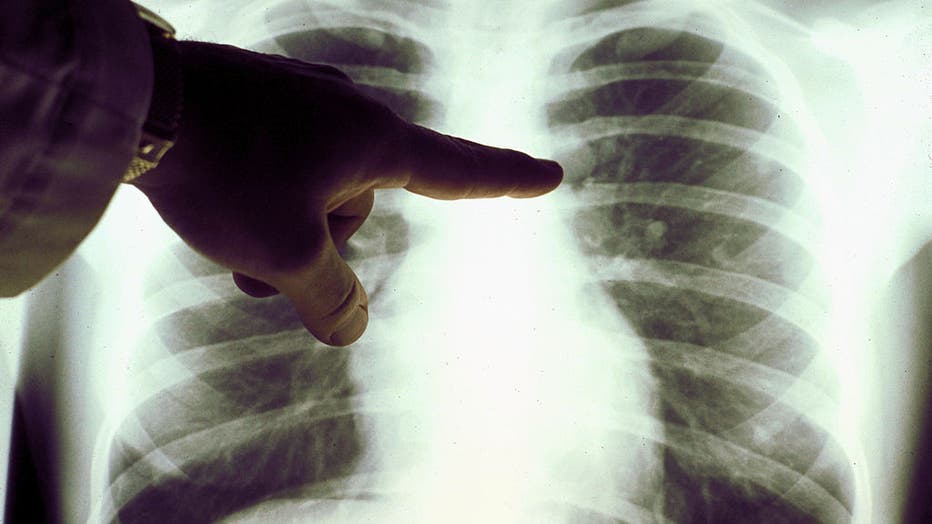
FILE - A view of a close-up of a lung x-ray of a cigarette smoker in an undated photo. (Photo Courtesy of the American Cancer Society via Getty Images)
Global disaster, a local problem
Big picture view:
Canadian wildfires led to over 33,000 chronic premature deaths in the U.S. in 2023. While exact Wisconsin-specific numbers weren’t calculated, emergency rooms across Wisconsin reported spikes in asthma, COPD, and heart-related visits during the thickest smoke days. Similar reports were common during poor air quality events in 2025.
Milwaukee, Madison, Green Bay, and communities across the state endured multiple days when air quality dropped into the "Unhealthy" and even "Hazardous" range levels more commonly associated with smog-choked cities overseas. Many Wisconsinites were forced indoors, summer sports practices were canceled, and festivals carried on under eerie orange skies.
Why you should care:
Wisconsin’s experience is a stark reminder that we don’t need local wildfires to suffer from wildfire smoke. The Canadian blazes were hundreds of miles away, yet their impact here was profound. The research warns that as climate change drives bigger and more frequent wildfires in the boreal forests of Canada, Wisconsin should expect more summers where the air turns thick and hazardous.
SIGN UP TODAY: Get daily headlines, breaking news emails from FOX6 News
Public health experts say Wisconsin needs stronger smoke forecasting, early warning systems, and clear public guidance to protect vulnerable groups. A new website and interactive map for reporting air quality in our stat has recently been launched by the DNR as one concrete step to improve our preparedness. Air filters, clean air shelters, and smarter messaging can all make a difference when the next smoke season hits.

How you can protect yourself
What you can do:
Here are tips to protect yourself in the future:
- Watch the Air Quality Index (AQI). Check daily AQI reports from the Wisconsin DNR, EPA’s AirNow, or here on Fox 6 and Fox local. Anything above 100 means sensitive groups should limit outdoor activity; above 150 means everyone should take precautions.
- Limit outdoor time. Avoid strenuous outdoor exercise when smoke levels are high. Schools, sports teams, and event organizers should be ready to adjust schedules.
- Create a clean airspace. Use HEPA filters or even DIY box fan filters to keep at least one room in your home clear of smoke. Close windows and doors during smoky periods.
- Protect your lungs. If you must be outside, an N95 mask provides far better protection than cloth or surgical masks.
- Check on vulnerable neighbors. Older adults, kids, and people with heart or lung conditions are most at risk. Community support can save lives during prolonged smoke events.
The Source: The Journal Nature; Zhang, Q., Wang, Y., Xiao, Q. et al. Long-range PM2.5 pollution and health impacts from the 2023 Canadian wildfires. Nature (2025). https://doi.org/10.1038/s41586-025-09482-1 and the FOX6 Weather Experts.