

Milwaukee County human case of West Nile Virus; reported in North Shore
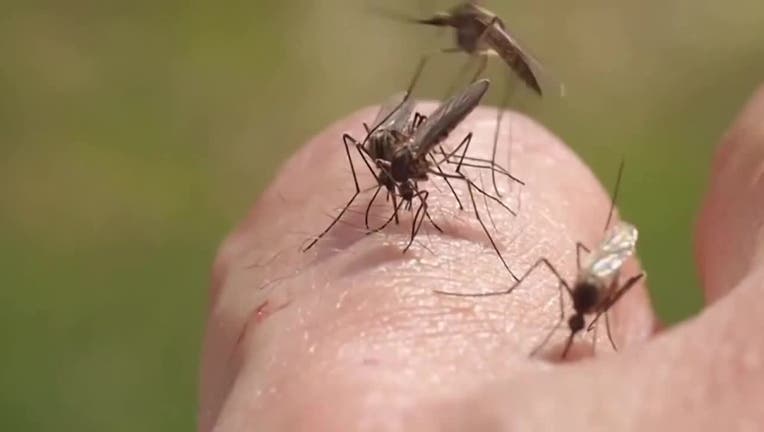
MILWAUKEE - The North Shore Health Department (NSHD) announced on Wednesday, Oct. 1 it has confirmed the first human case of West Nile virus (WNV) in northern Milwaukee County.
Earlier this year, WNV activity was also identified in other parts of Wisconsin, including additional human cases, as well as infected mosquitoes and animals.
West Nile Virus confirmed
What we know:
West Nile virus is spread to people through the bite of an infected mosquito; it is not transmitted from person to person. Mosquitoes become infected by feeding on infected birds. The illness is most common in Wisconsin during the months of August and September. However, the risk of contracting WNV and other mosquito-borne illnesses—such as Jamestown Canyon virus, La Crosse encephalitis virus, and eastern equine encephalitis virus—remains as long as mosquitoes are active.
Officials say it is important for people to stay vigilant about preventing mosquito bites throughout the fall until mosquitoes are no longer active, which is typically after a hard frost (temperatures below 28°F for at least four consecutive hours).
FREE DOWNLOAD: Get breaking news alerts in the FOX LOCAL Mobile app for iOS or Android
Most people (about 80%) who are infected with WNV do not become ill. Those who do usually experience mild symptoms such as fever, headache, muscle aches, rash, and fatigue. However, fewer than 1% of infected individuals develop severe illness, with symptoms that may include high fever, muscle weakness, stiff neck, disorientation, confusion, tremors, paralysis, and coma.
Older adults and those with weakened immune systems are at greater risk of developing severe illness, which can be fatal. Anyone who suspects they may have WNV illness should contact their health care provider.
Reduce exposure to mosquitoes
What you can do:
The best way to avoid illnesses spread by mosquitoes is to reduce exposure and eliminate mosquito breeding sites. The North Shore Health Department recommends the following:
Avoid Mosquito Bites
- Apply insect repellent containing DEET, picaridin, oil of lemon eucalyptus, or IR3535 to exposed skin and clothing.
- Prior to going outdoors, treat clothing with permethrin; do not apply permethrin directly to skin.
- Consider rescheduling outdoor activities during evening or early morning hours, when mosquitoes that spread WNV are most active.
- Wear loose-fitting long sleeves and long pants to help prevent mosquito bites.
SIGN UP TODAY: Get daily headlines, breaking news emails from FOX6 News
Mosquito-Proof Your Home
- Prevent mosquitoes from breeding around your home by eliminating stagnant water. o Empty standing water from tin cans, plastic containers, flowerpots, discarded tires, roof gutters, and downspouts.Turn over wheelbarrows, kiddie pools, buckets, and small boats such as canoes and kayaks when not in use.Change the water in birdbaths and pet dishes at least every three days.Clean and chlorinate swimming pools, outdoor saunas, and hot tubs; drain water from pool covers.
- Turn over wheelbarrows, kiddie pools, buckets, and small boats such as canoes and kayaks when not in use.
- Change the water in birdbaths and pet dishes at least every three days.
- Clean and chlorinate swimming pools, outdoor saunas, and hot tubs; drain water from pool covers.
- Make sure window and door screens are intact and tightly fitted to keep mosquitoes out.
- Trim or mow tall grass, weeds, and vines, since mosquitoes rest in shaded areas during hot daylight hours.
For additional questions, you are urged to contact the North Shore Health Department at 414-371-2980.
The Source: Information in this post was provided by the North Shore Health Department.