

Wisconsin rescinds exception for dog breeding farm's puppy sales

Wisconsin rescinds exception for puppy sales
Wisconsin regulators gave Ridglan Farms, a controversial beagle breeder, permission to transport young puppies out of state – without their mothers.
MADISON, Wis. - A FOX6 investigation led Wisconsin regulators to change their mind on the sale of 5-week-old puppies for research.
Ridglan Farms
The backstory:
State law prohibits breeders from selling puppies younger than 7 weeks old, but for the past 13 years, state regulators gave Ridglan Farms – a controversial Dane County breeding farm – a special exception.
FREE DOWNLOAD: Get breaking news alerts in the FOX LOCAL Mobile app for iOS or Android
On Monday, FOX6 Investigators reported that Ridglan Farms sold dozens of 5-week-old beagles to a laboratory in Iowa earlier this year. They breed thousands of dogs every year for use in scientific experiments.
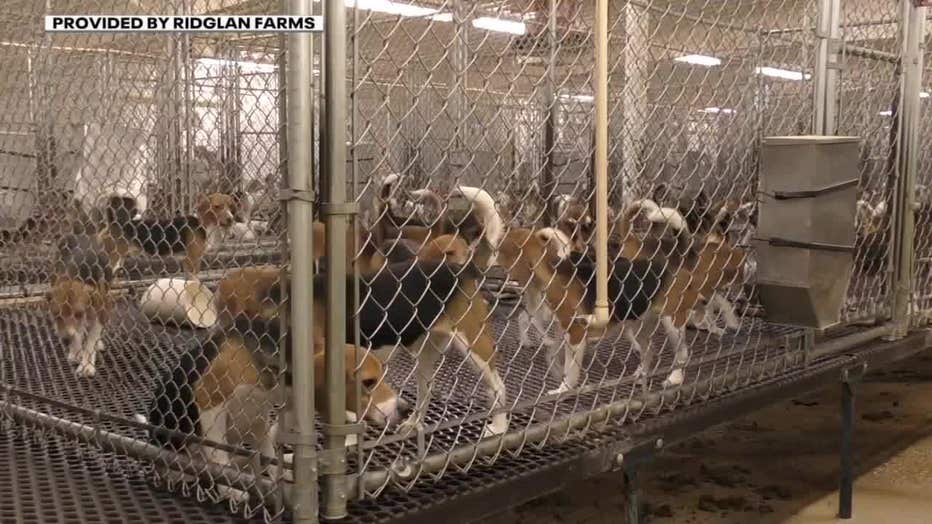
Courtesy of Ridglan Farms
Ridglan Farms on Tuesday provided FOX6 with a letter, signed by a state animal welfare official 13 years ago, that allows them to sell dogs as young as 5 weeks and transport them without their mothers – as long as they're being sold for biomedical research.
That ended on Tuesday.
State rescinds ‘variance’
Dig deeper:
When Ridglan Farms applied for the so-called "variance" back in 2012, it said "the sale of this age animal is important financially to our business as well as the future progress of healthcare."
FOX6 asked the Wisconsin Department of Agriculture, Trade and Consumer Protection if that variance was still legal in 2025. They said Tuesday that they have since rescinded the variance.
SIGN UP TODAY: Get daily headlines, breaking news emails from FOX6 News
Going forward, Ridglan Farms will no longer be allowed to sell beagles under seven weeks of age. FOX6 reached out to Ridglan Farms in response to the variance being rescinded but did not immediately hear back.
In a statement to FOX6 before DATCP rescinded the variance, Ridglan Farms said:
"When human and animal medications are being tested for safety and efficacy, you want to obtain information about whether there are side effects or varying/negative impacts in different age categories for the candidate patient population being studied. For instance, when conducting medical research with human subjects, you want to make sure a new vaccine performs the same way in infants as it does in the elderly and you also certainly want to be sure that it does not pose any danger to any specific age category. The reason why these kinds of research questions must be asked is because our human and animal immune systems differ greatly early in life, mid-life, and later in life. Therefore, if a company developing a vaccine or other treatment for a dog wants to ensure it is safe, it needs to test that medication in a variety of animals and age ranges. This way, we are certain our pets - including very young pets that are receiving their first vaccinations - are going to benefit and not be placed at risk or hurt by those medications."
Editor's note: This story was fully updated following a response from the Wisconsin DATCP.
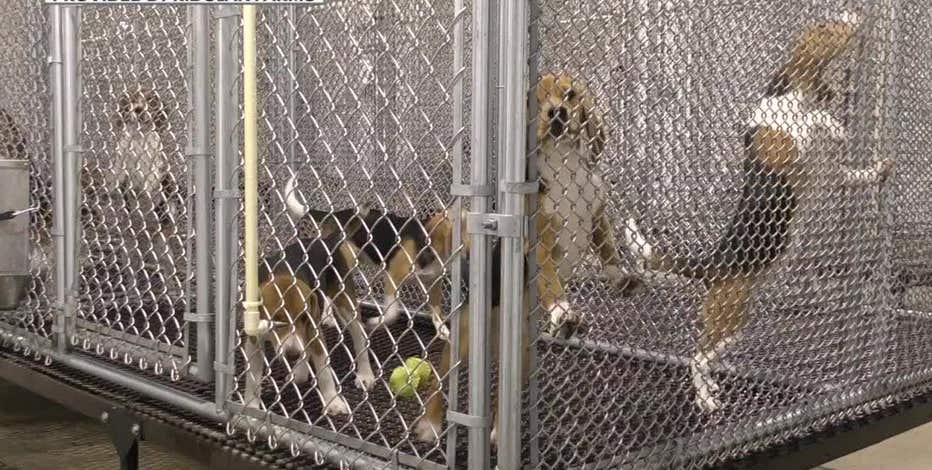
Wisconsin dog breeding farm under scrutiny after 5-week-old puppy shipment
A Dane County beagle breeding farm at the center of ongoing controversy is facing new scrutiny after records show it shipped puppies younger than Wisconsin law allows.
The Source: FOX6 News referenced a letter from Ridgan Farms and a statement from the Wisconsin Department of Agriculture, Trade and Consumer Protection. Some information is from prior coverage.