

Wisconsin bear attack in Barron County, woman injured; DNR investigating
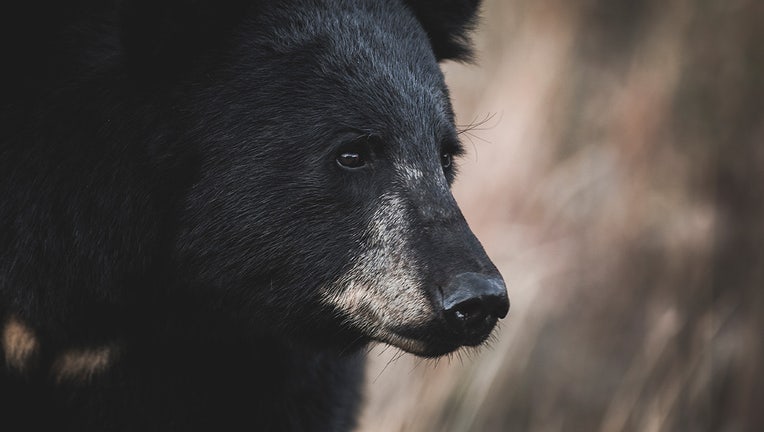
Close up portrait of male black bear (Ursus americanus), Yukon Territory, Canada. (Photo by: Peter Zenkl/VWPics/Universal Images Group via Getty Images)
BARRON COUNTY, Wis. - A 69-year-old woman was attacked by a black bear near the town of Comstock in Barron County in Wisconsin on Saturday, July 12, 2025, and the Wisconsin Department of Natural Resources (DNR) is investigating.
Bear attack
What we know:
According to the DNR, the victim reported the attack around 2 p.m. that day outside her rural home.
She was able to call 911 and was taken to a local hospital.
She was later transferred to another hospital where she is recovering and is in stable condition.
Officers from Barron County and the city of Cumberland initially responded to the 911 call.
Local DNR wardens and U.S. Department of Agriculture (USDA) Wildlife Services staff also responded to the incident. When they got there, they started looking for the bear and at that time they found a cub in a tree, indicating this involved a sow (female bear) and cub.
FREE DOWNLOAD: Get breaking news alerts in the FOX LOCAL Mobile app for iOS or Android

DNR wardens and USDA Wildlife Services staff attempted to track the bear with the aid of a trained bear hound dog, but the search was unsuccessful.
Efforts to capture the bear are ongoing. Several bear traps have been set at the scene. The goal is to euthanize the bear and assess its condition.
Although the investigation is ongoing, preliminary findings, including information coming from the family, suggest the bear exhibited a "sustained series of aggressive behaviors towards the victim."
Decision to euthanize the bear
What they're saying:
The DNR says black bears can behave defensively when feeling surprised, cornered or to protect their food or cubs. True aggressive behavior is both rare and distinctive from defensive behavior.
Black bears displaying aggressive behavior are at an elevated risk of repeating the behavior. While the investigation continues, the priority is human safety and the goal is to capture and humanely euthanize the bear involved.
"Humane euthanasia is not always the standard practice in human/bear conflicts. Our actions in these types of situations are very carefully determined based upon the totality of the known evidence of each event," said Randy Johnson, DNR large carnivore specialist. "Although we're still working to piece together every element of what transpired in this incident, we know enough to warrant attempting to livetrap at the location of the incident and humanely euthanize this bear if captured."
As of Monday, July 14, the bear had not yet been captured.
If captured, it will be assessed once euthanized, including conducting a rabies test to determine whether injury or illness may have contributed to the bear’s behavior and to help assess rabies exposure and risk to the victim per standard human health protocols.
If the cub is captured, it will be relocated and released into the wild. By this time of year, cubs are able to survive on their own and the cub will likely have a better opportunity to thrive in the wild without human intervention. Any other bears captured will be released unharmed.
Bear Conflict Information
Big picture view:
The DNR says it partners with USDA's Wildlife Services staff to respond to bear complaints.
USDA Wildlife Services responds to 500-600 nuisance bear complaints annually. Between 70-80% of those complaints are resolved by providing recommendations, most often the removal of something that is attracting the bear.
Trapping and relocation of bears is the primary option when direct control is needed.
Incidents of black bears attacking or killing humans are very rare but do occur both in Wisconsin and across the country.
No person has died from encounters with wild black bears in recorded Wisconsin history.
General bear information
Big picture view:
There are about 24,000 bears in Wisconsin.
Black bears are generally secretive, not aggressive, and tend to avoid humans as much as possible, but bears are sometimes known to be aggressive if cubs are present and feel threatened.
Bears primarily occupy the northern two thirds of the state, but are sometimes seen in the southern part of the state as well.
Bears are omnivores and eat both plants and animals. They are opportunistic feeders and will feed on natural foods as well as anthropogenic (human-made) foods.
SIGN UP TODAY: Get daily headlines, breaking news emails from FOX6 News
Best practices
What you can do:
Here are some tips to stay safe should you encounter a bear:
- Minimize food attractants around your residence or camps.
- Bird feeders should only be used in the wintertime or brought in at night and made inaccessible to bears. Deter bears by hanging feeders 10 feet from the ground and five feet out from any surface. If a bear does find the feeder, remove it immediately.
- Keep garbage cans secured, clean and inside sheds if possible. Do not leave loose garbage around.
- Do not leave pet food outside.
- Keep grills clean and secure.
If you encounter a bear in your yard or around your home, you should:
- Place yourself in a secure area, so the bear has a clear escape path.
- Make a lot of noise by yelling, honking a car horn or banging pots and pans.
- Consider installing motion-activated water sprinklers, lights or alarms.
If you encounter a bear while hiking, hunting or camping:
- Never approach a bear.
- Do not run.
- Do not lie down or play dead.
- Talk to the bear or start shouting if it doesn’t leave.
- Raise your arms above your head and wave them to appear larger than you are.
- Slowly back away and don’t turn your back on the bear.
- Always leave an escape route for the bear.
- Fight back if attacked.
The Source: The Wisconsin Department of Natural Resources (DNR) posted the information on its website. All the information on best practices for encountering a bear was provided by the DNR as well.