

African stork in Wisconsin: Latest sightings, what we know
MILWAUKEE - Marabou storks are native to Africa, but one appears to have made itself comfortable in northeast Wisconsin – the large bird's travels creating a buzz in several communities and on social media.
Where is the stork in Wisconsin?
Local perspective:
According to WLUK-TV, there have been several reported marabou stork sightings since May 12. That includes in Fond du Lac, near Park and Merrill, as well as Appleton and Green Bay. The most recent sighting was in Sheboygan.
FREE DOWNLOAD: Get breaking news alerts in the FOX LOCAL Mobile app for iOS or Android
"I was told that it isn't uncommon for it to maybe have a loop that it's making. It could really like our area and could be coming back to Fond du Lac," Jessica Saunders, a former wildlife rescuer, told WLUK-TV.
Steven Thompson shared photos of the stork with FOX6 News. He said he took the photos in Sheboygan on May 8, but would not share an exact location, and said the bird was eating, drinking and flying – apparently OK.
What is a marabou stork?
The backstory:
Marabou storks are native to sub-Saharan Africa but have an "extremely large range," according to SeaWorld – inhabiting savannas, grasslands, swamps and areas where fish are concentrated.
The Phoenix Zoo said marabou storks stand up to 5 feet tall and weigh nearly 20 pounds with typical wingspans up to 9 feet, though wider wingspans have been reported.
SIGN UP TODAY: Get daily headlines, breaking news emails from FOX6 News
For comparison, the Wisconsin Department of Natural Resources said sandhill cranes – one of the largest birds native to Wisconsin – can grow up to 5 feet tall with wingspans up to seven feet.
The large birds can live up to 20 years in captivity, SeaWorld notes, but it's unknown how long they live in the wild. As scavengers, their diet primarily consists of carrion – fish, some insects, small reptiles, rodents and even other birds.
Where did the stork come from?
What they're saying:
It's not clear where the stork came from, but Thompson has his suspicions. Based on its description and two bands on its left leg – which lack information – he believes it could be a bird that escaped captivity in Indiana in October 2023.
Featured
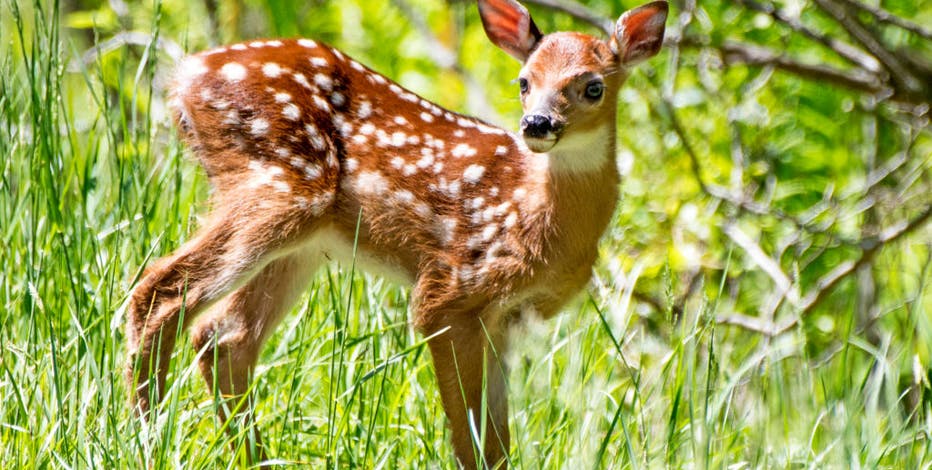
Wisconsin DNR urging people to leave white-tailed deer fawns alone
The Wisconsin Department of Natural Resources (DNR) reminds the public to protect white-tailed deer fawns by leaving them alone while out exploring this spring and summer.
The Source: Information in this story is from SeaWorld, the Phoenix Zoo, the Wisconsin Department of Natural Resources, WLUK-TV and social media reports.