

Hurricane Melissa: How global weather ripples into Wisconsin
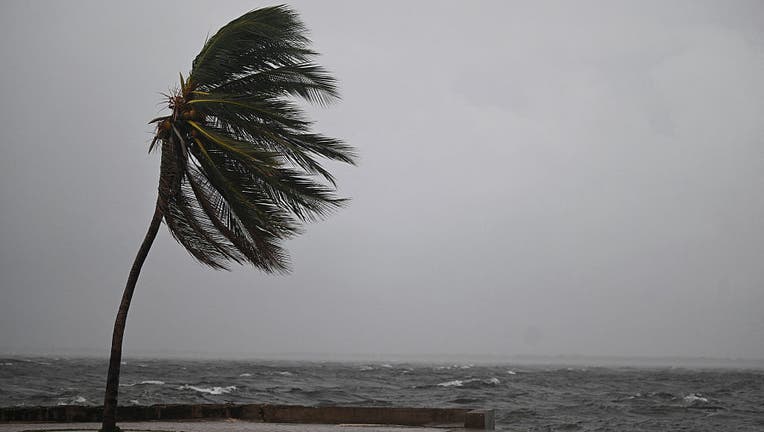
A coconut tree sways in the wind at the Kingston Waterfront on Ocean Boulevard in Kingston, Jamaica, as Jamaica starts to feel the effects of Hurricane Mellisa on October 26, 2025. (Photo by Ricardo Makyn / AFP) (Photo by RICARDO MAKYN/AFP via Getty
MILWAUKEE - As Hurricane Melissa roars through the Caribbean as a Category 5 storm, its winds of 160 mph and pressure near 917 millibars make it one of the most intense late-season hurricanes on record.
While the storm’s core is thousands of miles from the Great Lakes, the atmospheric setup behind it connects directly to the weather pattern shaping Wisconsin this week.
Meteorological Focus
What we know:
Rapid Intensification:
Melissa’s explosive growth into a Category 5 hurricane shows how Caribbean waters remain unusually warm, even this late in October. Those higher sea-surface temperatures feed storms with the extra heat energy they need to intensify faster and later in the season.
Slow Forward Speed:
Hurricane Melissa is moving very slowly at just 3 mph and that makes the situation even more dangerous for Jamaica and Cuba by compounding the flooding and storm surge risks. Other storms that have stalled over one region include Hurricane Harvey in 2017 and Dorian in 2019.
Potential U.S. Impact:
Current projections keep Melissa’s core well south of Florida, but the storm will send swells, rip currents, and coastal erosion northward along the Atlantic coast by mid to late week. Even far from the center, its vast wind field and ocean energy will ripple into other weather patterns.
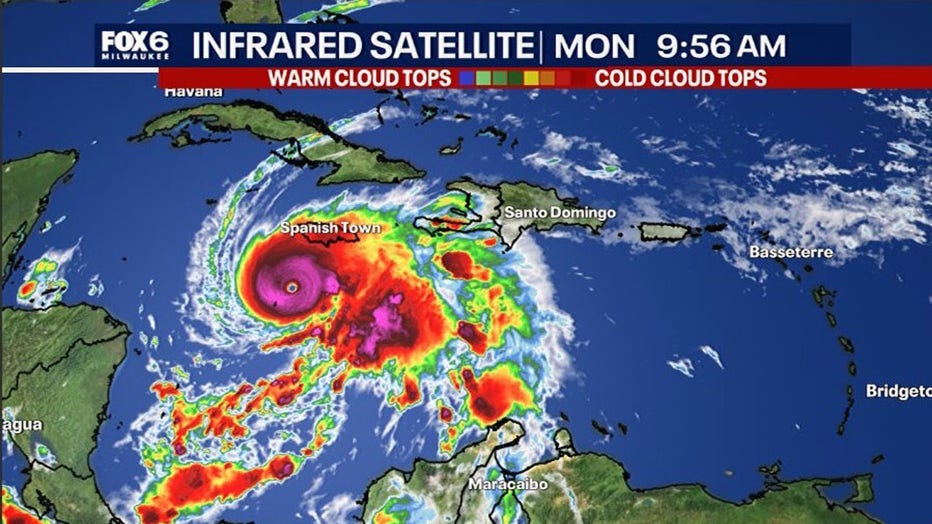
Hurricane Melissa
Ripples Felt on the Great Lakes
Why you should care:
While Melissa churns in the Caribbean, we sit here in Wisconsin under a massive blocking pattern with high pressure centered over Quebec and a low over the Dakotas and moving toward Missouri. That setup is creating the steady east winds you have likely noticed today, particularly along Lake Michigan. These patterns are not isolated but part of a connected global atmosphere.
Major tropical systems like Melissa can influence the jet stream, which in turn shapes the path of weather systems reaching the Great Lakes. That connection may help guide next weekend’s storm track into the Midwest, a reminder that even distant hurricanes can have subtle downstream effects here at home.
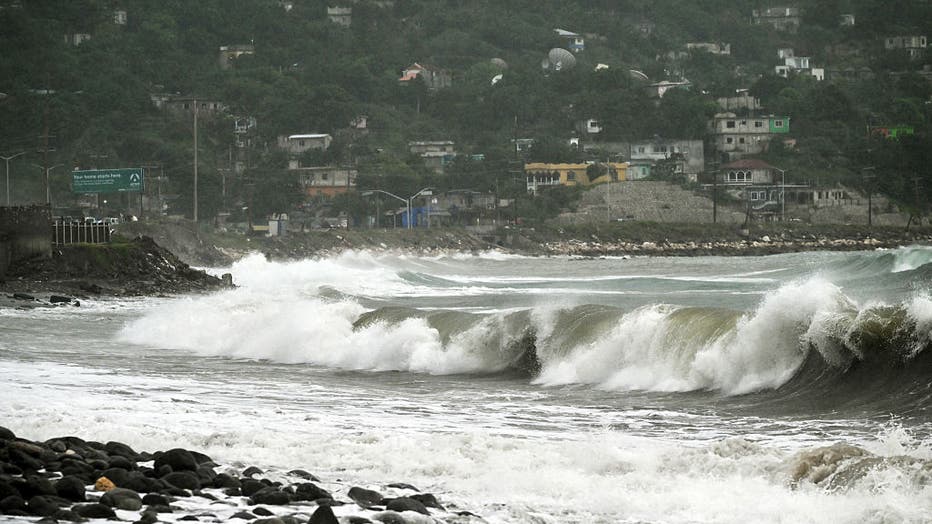
Storm surge is pictured before the arrival of Hurricane Melissa in the Caribbean Terrace area of Kingston, Jamaica, on October 25, 2025. (Photo by Ricardo Makyn / AFP) (Photo by RICARDO MAKYN/AFP via Getty Images)
Why It Matters in Wisconsin
What we know:
For Wisconsin residents, Melissa is much more than a headline. It is a preview of how global extremes ripple into local weather. This kind of atmospheric tug-of-war is becoming more common, with stronger highs, slower-moving lows, and sharper temperature contrasts. For Wisconsin, that means longer stretches of calm followed by quick bursts of rain or wind when the pattern finally breaks.
Bottom Line
What we know:
Hurricane Melissa may be battering the Caribbean, but its effects, from jet-stream shifts to community connections, extend all the way to Wisconsin.
It is another reminder that weather is not just local but part of a global system where every extreme leaves a mark, even far from the eye of the storm.
The Source: The information in this post was provided by the National Hurricane Center and the Wisconsin Weather Experts.