

MCTS bus fare evasion drops, major service cuts loom
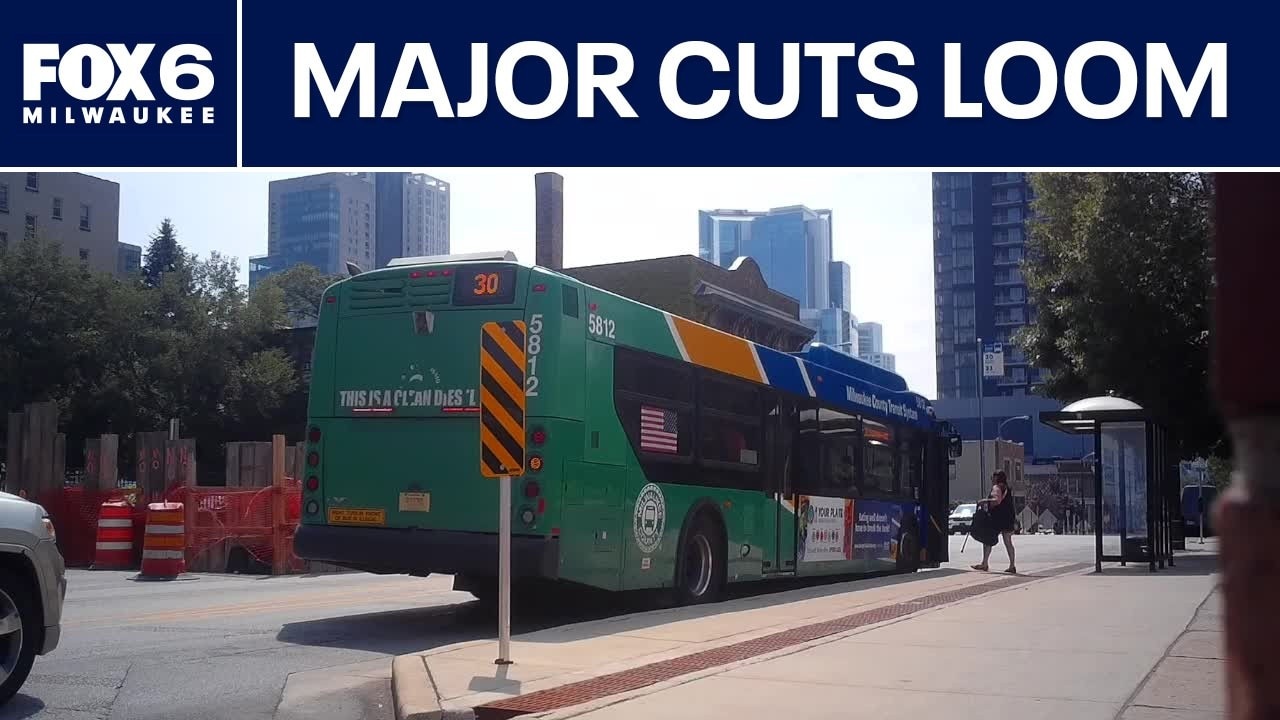
MCTS fare evasion drops, service cuts loom
MCTS said it is making progress on fare evasion, but transit leaders are still preparing to introduce a plan that calls for a 25% cut in bus service.
MILWAUKEE - The Milwaukee County Transit System said it is making progress on reducing fare evasion, but transit leaders are still preparing to introduce a plan to the County Board that calls for a 25% cut in bus service. It comes one year after a FOX6 investigation found MCTS giving away more than 8 million free rides per year.
Transit cuts loom
Why you should care:
For tens of thousands of Milwaukee County residents, public transit is indispensable.
FREE DOWNLOAD: Get breaking news alerts in the FOX LOCAL Mobile app for iOS or Android
"You got to go to the grocery store. You got to go to the bank," said a bus rider named Abraham, who declined to give a last name. "Everybody can’t afford no car."
"From home to school, school to home," student Asia Ragland said. "I'm going to be out of luck. That’s crazy."
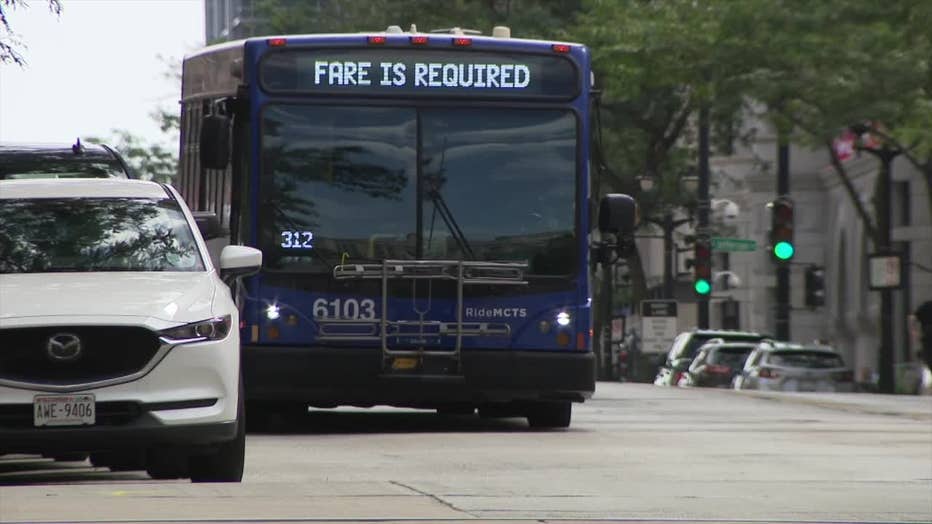
Milwaukee County Transit System (MCTS) fare evasion
"People have to get to work. They have to get to the family's house in the winter," Janice Baker of Milwaukee said.
Next year, those bus trips could be harder to come by. MCTS is facing a $15.7 million deficit in 2027. To close the gap, transit leaders say they plan to shrink the system by 25%.
"The last thing I want to do as CEO here at MCTS is cut service," said Steven Fuentes, MCTS CEO.
Fare evasion ‘first’ on CEOs list
The backstory:
The looming budget hole is a problem Fuentes inherited when he came to Milwaukee from the Chicago Transit Authority last year.
"I got hired at the end of August," he said. "Your first article, I think, came out Aug. 31 (2025)."
He's referring to a FOX6 investigation that found 33% of bus passengers were not paying to get on board. The story prompted U.S. Rep. Bryan Steil to call for increased federal oversight of MCTS.
"After your report, what we see is absolute mismanagement occurring at the county," Steil said. "We need to get fare evasion way down. We need to enforce the rule of law."
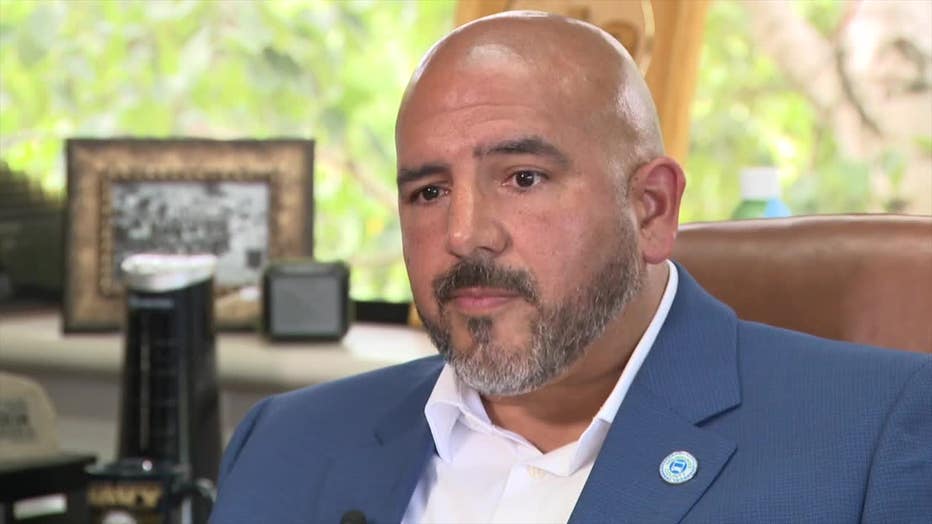
Steve Fuentes
When that happened, Fuentes had been on the job for six days.
"I was watching the news. Saw your ‘vodcast’ on it," he said. "You know, the longer one. Open Records."
He's referring to the FOX6 podcast Open Record, where we reported MCTS's fare evasion rate was costing the system more than $10 million per year in unpaid fares.
"It was one of the first things I knew I needed to address," Fuentes said.
SIGN UP TODAY: Get daily headlines, breaking news emails from FOX6 News
Last fall, the Milwaukee County Board approved $620,000 for increased security on buses.
"Part of their job on a weekly basis is to target high fare evasion areas," Fuentes said.
What has been done:
MCTS added new signage and audible recordings over the bus speakers to remind passengers that fare is required. And in February, Fuentes changed a controversial policy that had previously prohibited bus drivers from even asking passengers to pay. Now, he said, they expect drivers to politely remind passengers that fares are mandatory.
"We expect them to engage. ‘Sir, ma’am, the fare is $2.75’ or, if it’s a reduced fare, $1.25. We expect that," Fuentes said.
Fuentes said it is working. In the first six months of 2026, MCTS's internal data shows fare evasion has dropped from 33% in the first 6 months of 2025 to 24% in the same time period in 2026. That means instead of one out of every three passengers boarding for free, it is now one out of every four.
"We’ve made a pretty significant impact," Fuentes said.
Milwaukee County Supervisor Shawn Rolland said it's a start.
"It’s not perfect. It’s not zero. It’s not what any of us want," Rolland said. "None of us are declaring victory. But it’s progress over what we saw last year."
FOX6 Investigators ride the bus
Dig deeper:
When FOX6 Investigators took a hidden camera onto three MCTS bus routes last summer, we counted 52% of passengers skipping their fares. This year, we rode the same three routes and found an almost identical result – 51% evasion. Half of the passengers paid. Half did not. Some we counted as paying merely slipped a $1 bill into the fare box, while others inserted only coins.
"Unfortunately, a lot of areas only paying a dollar and fare is $2.75," MCTS bus driver Latray Dawson said at a transit meeting. "The majority of Whitefish Bay only pays a dollar."
That is even less than the reduced fare of $1.25 required for seniors, young children and those with disabilities.
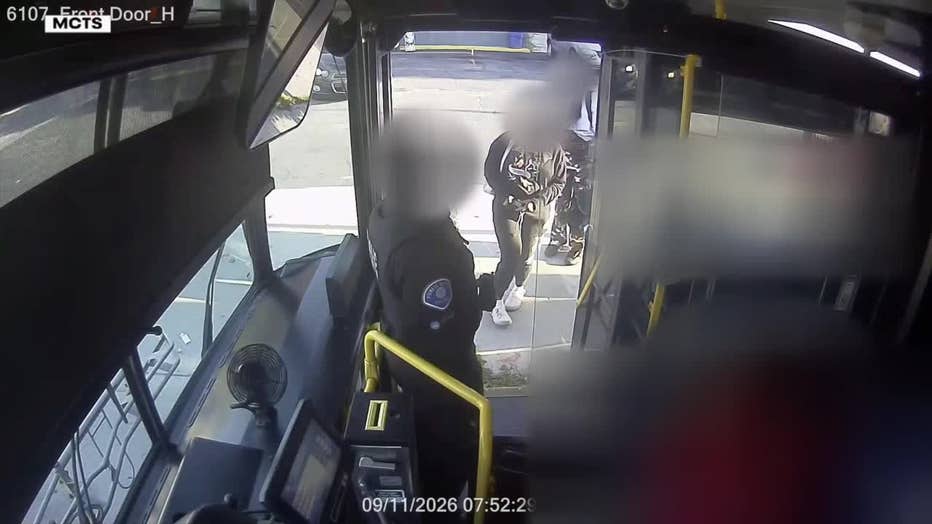
FOX6 Investigators look into fare evasion on MCTS buses
"What you saw, you saw. That was your observation," Fuentes said.
It's what we did not see that stood out most: No security officers, and no bus drivers reminding passengers to pay.
When asked, "Are you allowed to ask them for their fare?" one bus driver replied, "Not really."
"What you saw, you know, it shouldn’t be happening," Fuentes said. But he points out that fare evasion is just one piece.
Beyond fare collection
Big picture view:
"Even if 100% of our customers pay their fare, that doesn’t solve our long-term funding problem," Fuentes said.
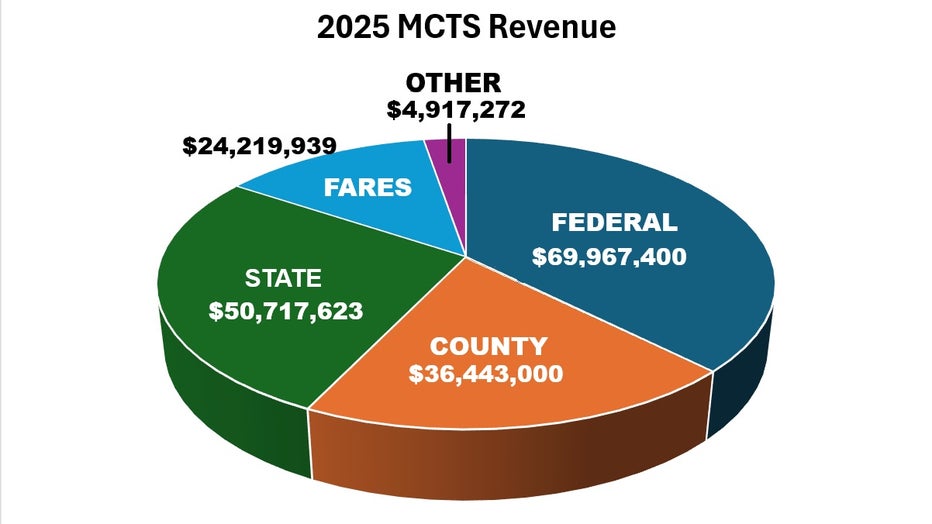
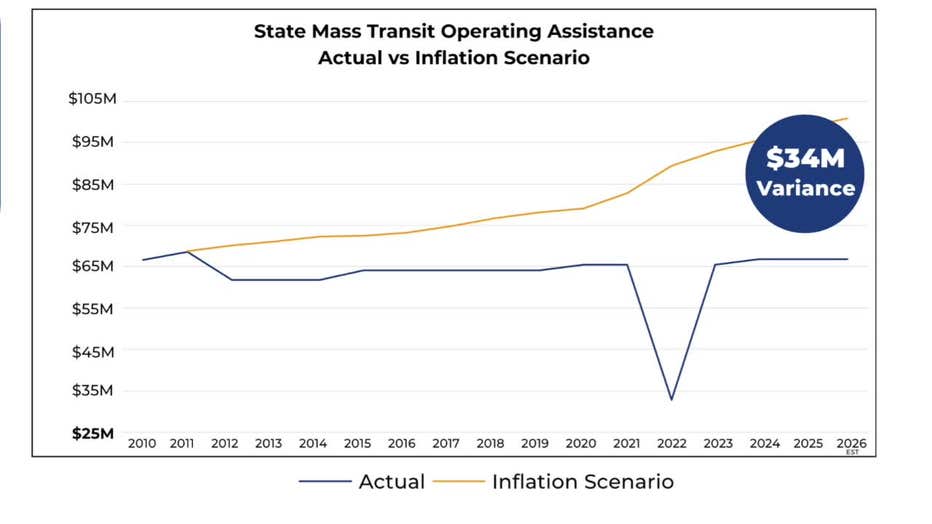
Passenger fares make up 13% of the MCTS budget. The rest comes from federal, state and local funding that changes year to year. Federal pandemic relief funds are now gone, and Fuentes said state funding has not kept up with inflation.
"State funding for transit has remained flat since 2011," Milwaukee County Executive David Crowley told reporters in June. He is calling for MCTS to get its own, dedicated funding source.
"We are one of the only major transit systems in the country that does not have dedicated funding."
"We don’t necessarily have any preference in whether that’s going to come from a local sales tax or a gas tax or any like that, tourism tax," Fuentes said.
Rolland said if they want support for a new tax, MCTS needs to keep reducing fare evasion.
"We shouldn’t be happy with 23%, 24% plateauing," Rolland said.
"We can always do more," Fuentes said.
FOX6 Investigators look into fare evasion on MCTS buses
A 24% evasion rate still equates to 5 million free rides per year.
"I didn’t never know you could ride a bus for free," Baker said.
She is not worried about losing bus service for herself. She is worried about her friends and neighbors who can't afford to miss the bus.
"I’m blessed enough to be able to drive now," Baker said. "You cut the bus service. How are people going to get around?"
Two versions of 25% cut
What's next:
On Sept. 16, a consultant hired by MCTS will present two versions of what a 25% service cut could look to the county's Transportation and Transit Committee. One map has more buses running on fewer routes. The other keeps more routes, but cuts bus frequency. MCTS said the final plan will not be completed until summer 2027. MCTS plans to host a series of open houses and informational sessions on the two proposed route maps in September and October.
Where do governor candidates stand?
What they're saying:
FOX6 Investigators asked both candidates for Wisconsin governor a series of questions about this investigation. Tom Tiffany's campaign did not respond. David Crowley's campaign referred us to the County Executive's office, which issued the following written responses:
Q. How would you characterize MCTS’ reduction in fare evasion from 33% to 24% over the past year?
A. MCTS has reduced fare evasion on buses by approximately 20% in the first half of 2026. While we know there is still work to do to continue this trend, it's encouraging to see the strategies that have been put into place are moving us in the right direction. My administration continues to collaborate with the Milwaukee County Board of Supervisors, the bus operators union, community partners, and MCTS to find fare evasion solutions that are both safe and sustainable.
Q. What else do you believe MCTS can or should do to ensure passengers pay to ride?
A. Every fare matters as our bus system balances sustainability with the safety of bus operators and riders. Continued efforts must improve compliance without creating safety risks or costing more than they recover. MCTS should take a data-driven approach to align recent public safety investments with the system's new fare collection policy. This includes enhancing public information about the importance of everyone paying their fair share.
Q. Should MCTS institute an income-based program that allows for free rides?
A. Free bus fares can offer short-term accessibility benefits, but they risk reducing service quality, straining already limited transit budgets, and overlooking the deeper causes of low ridership. A more effective and sustainable strategy is to invest in affordable, reliable, and high-quality transit service that meets riders’ needs and strengthens the system without compromising its financial stability.
Q. Do you support a dedicated funding source for MCTS?
A. Forty percent of people in Milwaukee County and thirty percent in Wisconsin don’t drive. Reliable and well-funded public transit is critical so these people can still get to work, to school, and access medical care. MCTS needs sustainable funding that is consistent with rising inflation.
Q. If so, should that be a sales tax, payroll tax, income tax, or some other revenue source?
A. To maintain and improve these essential services, agencies need sustainable and inflation‑resilient funding. Determining the right revenue mechanism requires a data‑driven, statewide analysis. Continued collaboration and careful evaluation of funding models will help ensure that public transit remains reliable and accessible.
Portions of this article were formatted using A.I. FOX6’s Bryan Polcyn and an editor reviewed it for accuracy and tone prior to publishing.