

Alzheimer's advocates want "truth-in-advertising" for memory care

Alzheimer's advocates want "truth-in-advertising" for memory care
Families put a lot of trust in what's called "memory care." However, the term has no legal definition in our state.
MEQUON, Wis. - Families put a lot of trust in what's called "memory care." However, the term has no legal definition in our state.
The Wisconsin Chapter of the Alzheimer's Association says that's creating confusion, inconsistent care and safety concerns.
The red flags
What we know:
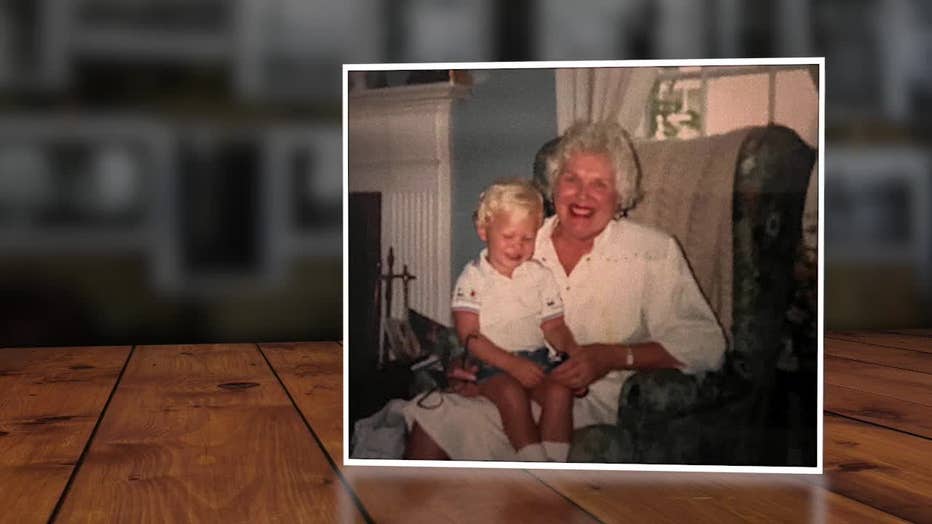
Marilyn Thiet's mother, Marilyn Brown, was meticulous about her appearance throughout her life.
"She showered every day. Her hair was done," said Thiet. "She wouldn't even go to the grocery store without her makeup done."

Marilyn Brown
When family noticed that Brown wasn't showering at her assisted living facility, it was like an alarm bell.
"She was constantly looking very disheveled," said Thiet.
In 2008, Brown moved into the facility following a hospitalization. Her family had been given three days to find her a new place to live.
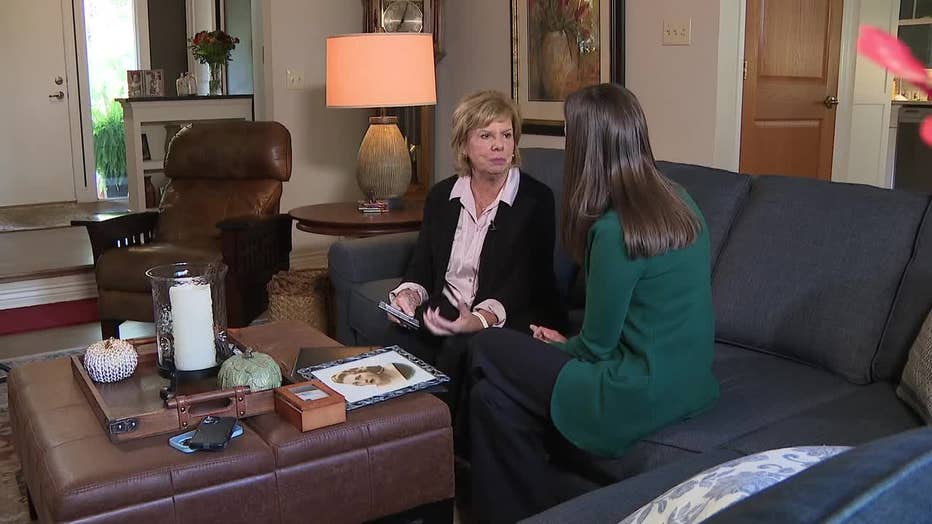
Marilyn Thiet
Thiet says her own home was not a safe option.
"We had a lot of stairs," said Thiet. "We knew it was dangerous for her."
Finding memory care
Dig deeper:
Brown had vascular dementia, so her daughter chose a facility that advertised memory care.
"The marketing and the hype was there. The facility looked beautiful," said Thiet. "Not too long after she moved in, I was starting to see things that I was questioning."
Thiet expected the facility's staff to have training in Alzheimer's and dementia care, and to motivate her mother to shower and brush her teeth.
"The staff was not trained," said Thiet.
Marilyn Thiet
Thiet says she grew concerned about the staff's lack of understanding about calming dementia patients and about how the disease progresses.
The final weeks
What we know:
In 2009, Thiet told staff she thought her mother might be unwell.
"She took a steep drop in her cognition," said Thiet. "They dismissed me."
Brown ended up falling and breaking her shoulder and hip. At the emergency room, doctors discovered she had a UTI, which can cause a fall. Brown died eight weeks later.
"She was in so much pain, physically and emotionally," said Thiet. "I really felt it didn't have to be like that."
Brown was on a waitlist for another assisted living facility at the time of her death.
Memory care today
What we know:
Fast forward to today, and the Wisconsin Chapter of the Alzheimer's Association says progress still needs to be made.
It wants a legal definition of what offering memory care actually means.
"It unfortunately is an advertising term," said Vanessa Kent, director of state affairs for the Wisconsin chapter. "That's why we want to see legislation and a truth-in-advertising bill."
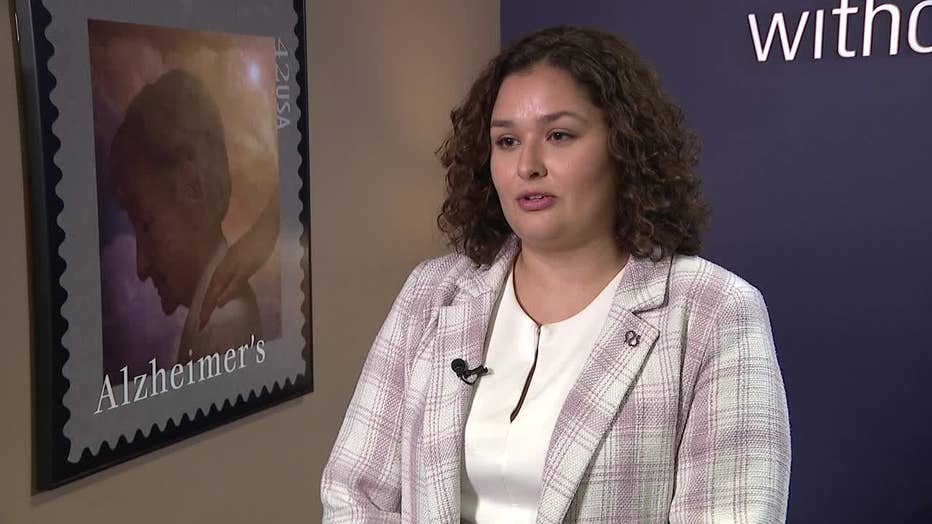
Vanessa Kent
A broader look
Local perspective:
In Wisconsin, any licensed Community Based Residential Facility (CRBF) can claim to offer memory care, but what that means for residents varies.
Among the twelve Midwest states, nine have laws requiring facilities get certification or meet specific requirements to operate a memory care unit or wing, according to the Legislative Reference Bureau.
Wisconsin is not one of them.
"It's up to the facility to decide whether it wants to take additional steps," said Kent. "It has led to real inconsistencies in quality of care."
Midwest states with memory care laws are Illinois, Indiana, Iowa, Michigan, Minnesota, Missouri, Nebraska, North Dakota and Ohio.
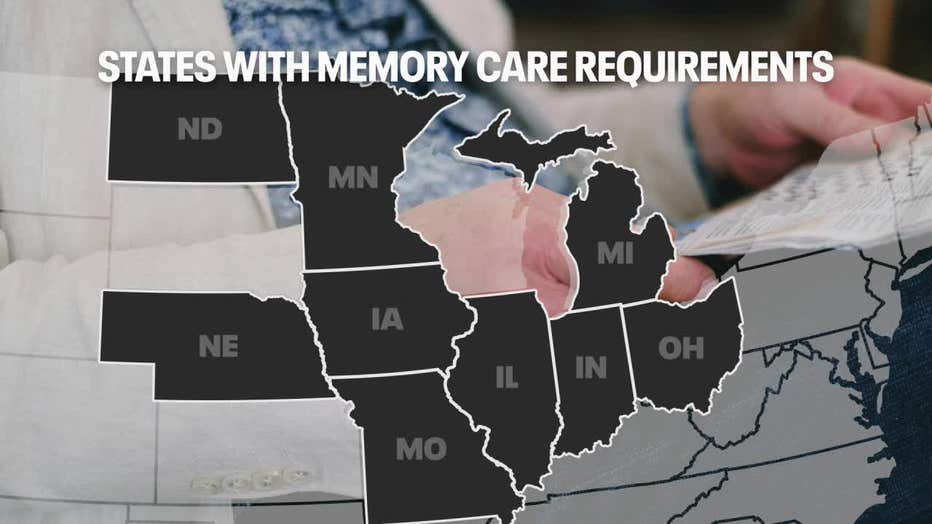
Nationwide, at least 37 states require assisted living facilities with memory care to have similar certifications or requirements.
There are 1,536 licensed CRBFs in Wisconsin, according to the Wisconsin Department of Health Services (DHS). https://www.dhs.wisconsin.gov/guide/cbrf.htm The Alzheimer's Association says the average cost of memory care in Wisconsin is $4,600 to $7,000 a month.
Push for legislation
What's next:
The Alzheimer's Association wants legislation in Wisconsin creating an official memory care designation for CRBFs.
Its proposed legislation would require CRBFs acquire the designation in order to use "memory care" in their name or advertising.
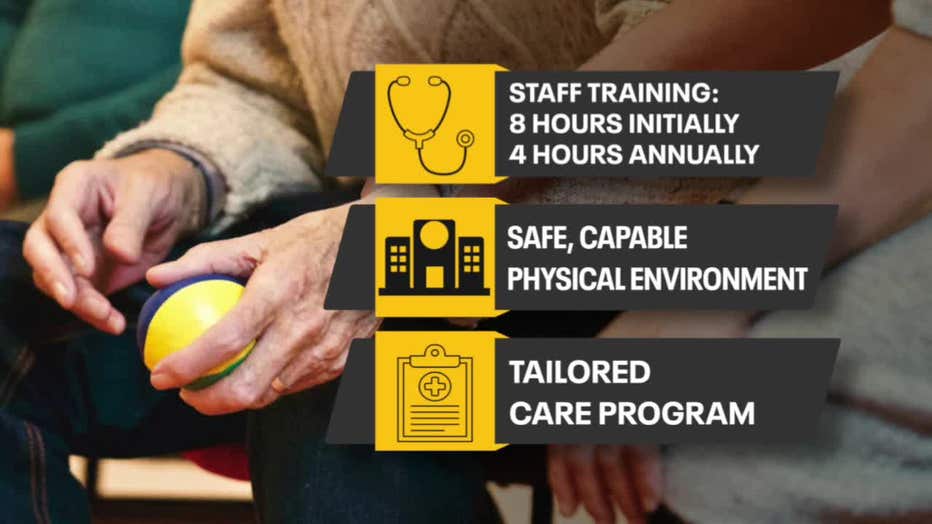
Under its proposal, a facility must have:
- An enhanced dementia-specific staff training of eight hours initially and four hours annually
- A safe, dementia-capable physical environment
- A care program tailored to the needs to dementia patients
"It's important because people with dementia require nuanced care," said Kent. "They're our most vulnerable and our most complex residents at these facilities."
Providers react
What they're saying:
Mike Pochowski, president and CEO of the Wisconsin Assisted Living Association (WALA) says he doesn't think families being misled about memory care is a widespread issue, but acknowledges it can happen.
"What we see from our member facilities is they're providing great care to their residents, including those with memory care or Alzheimer's," said Pochowski.
Mike Pochowski
Wisconsin law
What we know:
Facilities in Wisconsin must already provide "adequate training" to staff to become licensed as a CRBF.
Training must be "specific to the client group" and cover safety risks, disease processes, communication skills and more. https://docs.legis.wisconsin.gov/code/admin_code/dhs/030/83/iv/21
That training should be completed by staff within 90 days of starting employment. DHS oversees licensing and compliance.
A struggling industry
Dig deeper:
Pochowski says if the state requires further dementia training to use the term "memory care," it will be yet another strain on the industry.
"It just poses increased staffing challenges," said Pochowski. "How can we then pay these individuals more when they're potentially doing more?"
Pochowski says the industry is struggling due to low reimbursement rates from the Medicaid Waiver Program, also known as Family Care. He says the program pays less than the actual cost of care for low-income residents.
If facilities must take extra steps to qualify for a memory care designation, Pochowski predicts there will be fewer providing the services.
"It's almost like an unfunded mandate. How can we pay for that without an increased reimbursement from a Medicaid standpoint?" asked Pochowski.
Pochowski says he's open to continuing discussions about memory care legislation but wants funding to be part of the coversation.
Another disappointment
What we know:
Three years ago, Thiet was tasked with finding memory care again. This time, it was for her father-in-law.
"I thought I went about it much smarter," said Thiet. She was, again, disappointed.
"(The facility) said that their people were trained and they were gonna do activities specific to memory care," said Thiet. "We moved my in-laws in and they had none of that."
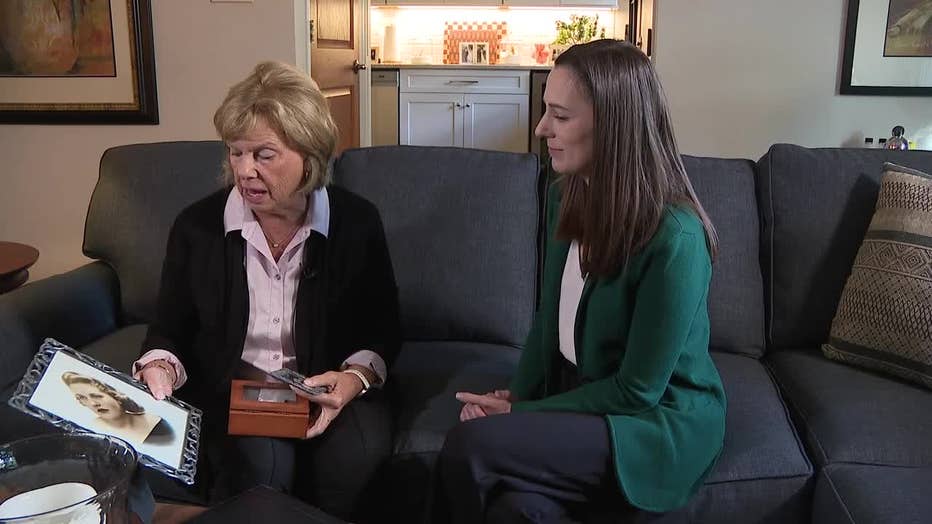
Her father-in-law, Dennis Thiet, had dementia and was supposed to be in a locked wing.
According to the Alzheimer's Association, about 60% of people with dementia wander at some point.
"On two different occasions, we went to visit and found him outside in the parking lot, wandering," said Marilyn Thiet.
Dennis Thiet died in January.
"I just don't want anybody else to go through it," said Marilyn Thiet. "It just wreaks havoc on everyone."
The facilities
Marilyn Thiet filed a civil case against her mother's assisted living facility in 2011. The case was settled out of court. The facility is now closed.
Contact 6 is not naming Dennis Thiet's facility because his wife still lives there. After multiple ownership changes and name changes, Marilyn Thiet believes care at the facility has improved.
What's next:
The office of State Senator Romaine Quinn in Rice Lake says he's looking into the issue and meeting with stakeholders, but it's too early to share any thoughts or plans.
LeadingAge Wisconsin, a statewide non-profit representing providers in long-term care and assisted living, says it "appreciates the opportunity to inform potential legislation focused on memory care."
It goes on to say, "While those discussions continue, we look forward to being a resource and partner on this important issue."
The Source: Information for this report comes from the Wisconsin Chapter of the Alzheimer's Association, the Legislative Reference Bureau, the Wisconsin Assisted Living Association, the Wisconsin Department of Health Services and Marilyn Thiet.