

Jimmy Hoffa mystery: 50 years after his disappearance

Jimmy Hoffa disappearance: one of America's greatest mysteries
When Jimmy Hoffa disappeared from Machus Red Fox, law enforcement was confident they'd find him or his body. 50 years later, there's still no sign of one of the most famous men in the mid 20th century.
DETROIT (FOX 2) - It's been 50 years since Jimmy Hoffa disappeared from the Red Fox restaurant in Bloomfield Hills. It's one of America's greatest mysteries and it has all the makings of a novel: power, politics, money, mob, and murder.
But it was all true.
As the president of the Teamsters Union, Hoffa was one of the most powerful and recognizable figures in America. But he was also tied to the mob during his later years.
But what, exactly, happened to Hoffa? Wednesday, July 30, will mark 50 years since he vanished, but the mystery endures.
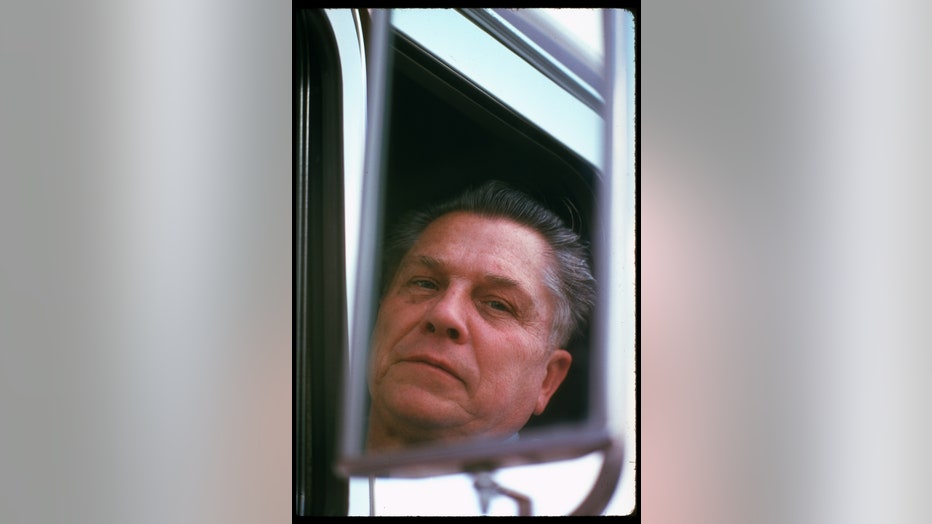
Reflection of former Teamster boss Jimmy Hoffa in rear-view mirror of truck which he's driving. (Photo by Lynn Pelham/Getty Images)
As the question hangs in the air, it helps to go back to the very beginning. The stunning story of the summer of '75 that was decades in the making.
When Hoffa disappeared, the FBI and other investigators said it was a crime that would be solved. They asserted confidence to his family and the American public that the union leader would see justice.
That was 50 years ago.
Who was Jimmy Hoffa?
The backstory:
What Hoffa lacked in stature – he stood just 5'5" – he made up for with a colossal persona.
"Because, fortunately, our men are strong militants willing to fight and will not surrender nor will they lay down," he said to the Transport Workers Union (TWU) in the 1960s.
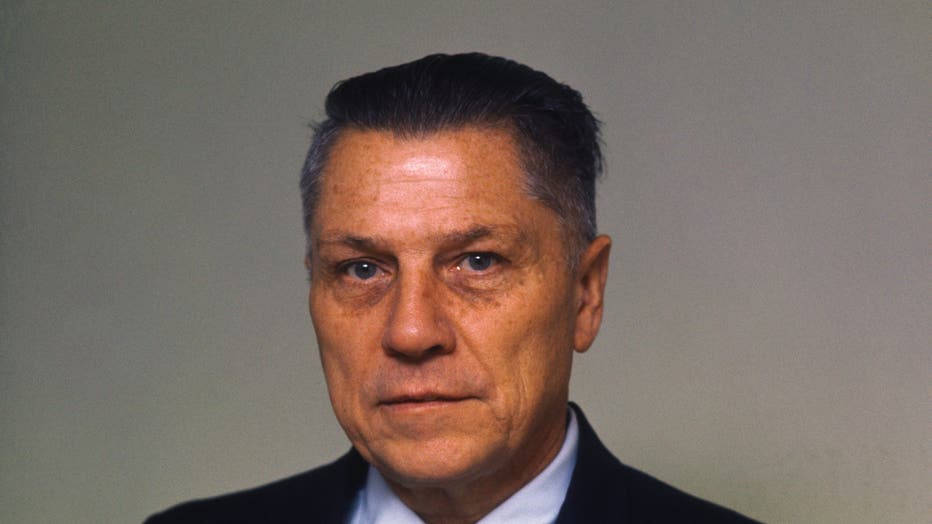
12/24/1971-St. Louis, MO-ORIGINAL CAPTION READS: Close-up of James R. Hoffa, former president of the International Teamsters Union, released from the Lewisburg Federal Penitentiary December 23, 1971.
The legendary labor leader could not be restrained by law and was unafraid of lawmakers or retribution.
He had his hair slicked back and palms greased while walking with the swagger of a gangster – fit for the company he kept.
He went toe-to-toe with future President John F. Kennedy in 1957 and his outsized ego led him to the center of labor power.
"I don't compromise to nobody in my position," he said in the 60s.
Despite all we know about Hoffa, the answer to the biggest question of all remains elusive.
"Where is Jimmy Hoffa? That's the real question that continues to fascinate people," historian Rebecca Salminen Witt with the Detroit Historical Society said.
Law enforcement – both local and federal – were perplexed by the question. But the questions went beyond ‘what happened’. How could it happen? And, perhaps just as important, who did it?
'A force of nature’
Hoffa moved to Detroit as a kid and got a job at a Kroger grocery store to support his family.
"They were moving strawberries off the dock. He felt like the working conditions were unfair. He convinced all of the adults around him to let all the strawberries sit out on the dock for a work slow-down, and management caved to their demands," Witt said.
That was just the beginning.
"Jimmy Hoffa was kind of a force of nature," Witt said.
In 1933, he began his career with the Teamsters, a union representing a broad range of workers with blue collars and white collars. They were craving a leader who'd give them the shirt off their back and Hoffa would be that guy.
In 1957, after years in the local union in Detroit, he would rise to president. Under his leadership, membership ballooned from 75,000 in 1933 to over two million in 1967.
He also amassed mountains of money in the pension fund – which he then turned into a bank for the mob by setting up low-cost loans when Las Vegas being built.
His connections eventually drew the attention of the feds - specifically attorney general Robert F. Kennedy.
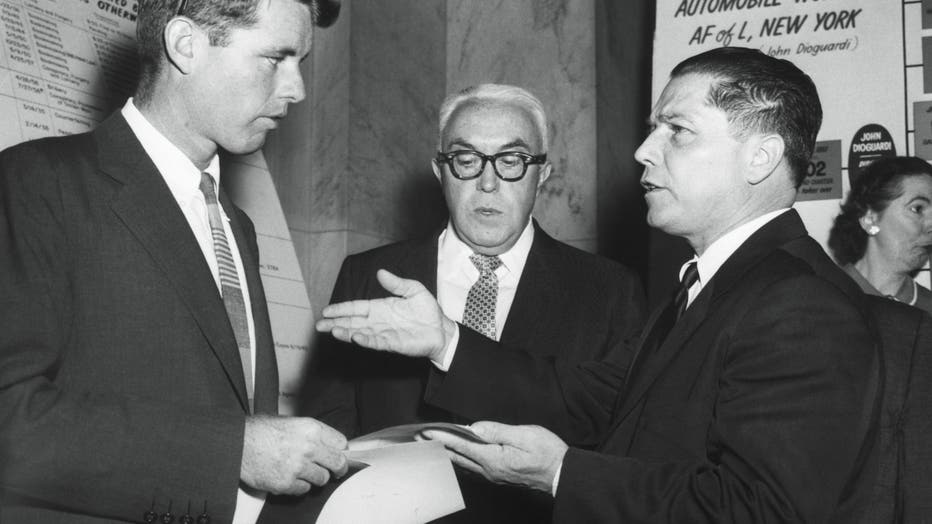
Robert Kennedy speaks with labor leader Jimmy Hoffa. Kennedy was chief counsel for the Senate Rackets Committee, and investigated Hoffa's ties to organized crime.
"I don't think he belongs as head of the International Brotherhood of Teamsters. I think that's a national disgrace," RFK said in 1959.
"It's another propagandized vehicle for Robert Kennedy to try to put through in the United States a wiretap bill,' Hoffa said.
He'd turn testy during his frequent Congressional testimony, specifically when RFK said there were ‘questions’ about him.
"There is no question about Hoffa and don't you say that either. Don't you say that I'm a communist, or even affiliated with one. You said enough around this country. And I want the American press to know that I resent the fact that there is any inference that I'm a communist, that I'm associated or controlled by any communist. And don't you use this as a sounding board for headlines for that purpose. And I appeal to the chair that it be taken out of the record. And that nobody cast any aspersions on my loyalty to this country," he said.
Hoffa convicted
In 1964, the law finally caught up with him, convicting him of fraud, jury tampering, and conspiracy – upsetting some union members, who said he got railroaded.
Three years later, he was sentenced to 13 years in prison – a sentence that was commuted by President Richard Nixon.
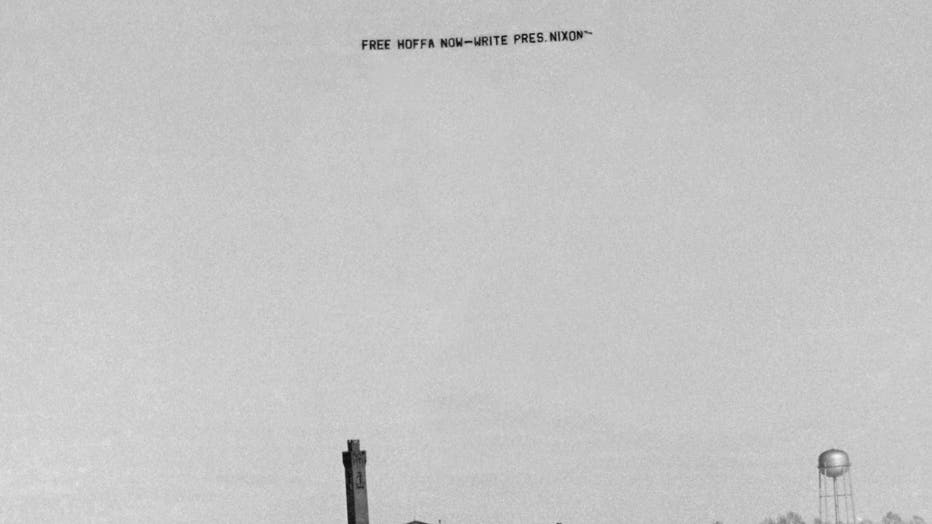
Jimmy Hoffa who is among the most famous residents of the Federal Penitentiary here received his combination birthday and Valentine greetings in the form of this banner drawn by a plane. (Photo by Bettmann Archive/Getty Images)
Once free again, he tried to reclaim the role as president of the Teamsters. However, that was in violation of the commutation terms - so he sued.
He publicly ripped the sitting head of the Teamsters and threatened to out him for connections to the mob.
In his own mind, he was untouchable: too important to go away, too brash to silence, an too tough to kill.
"Hoffa felt kind of invincible. He felt that nothing bad was going to happen to him in his hometown."
In 1975, Teamsters members were preparing to vote for their next president. The mob didn't want him, union leaders didn't want him, and he wanted to write as a write-in candidate and it was feared members would put him back in charge.
"When my restrictions are removed, I would leave it up to the membership to determine whether they want James R. Hoffa to be president of the international union," he said in 1975.
Before the vote could happen, on July 30, 1975, he agreed to meet Tony Giacalone (Tony Jack) at the Machus Red Fox in Bloomfield Township. Tony, and his brother, Billy, were intermediaries with the mob.
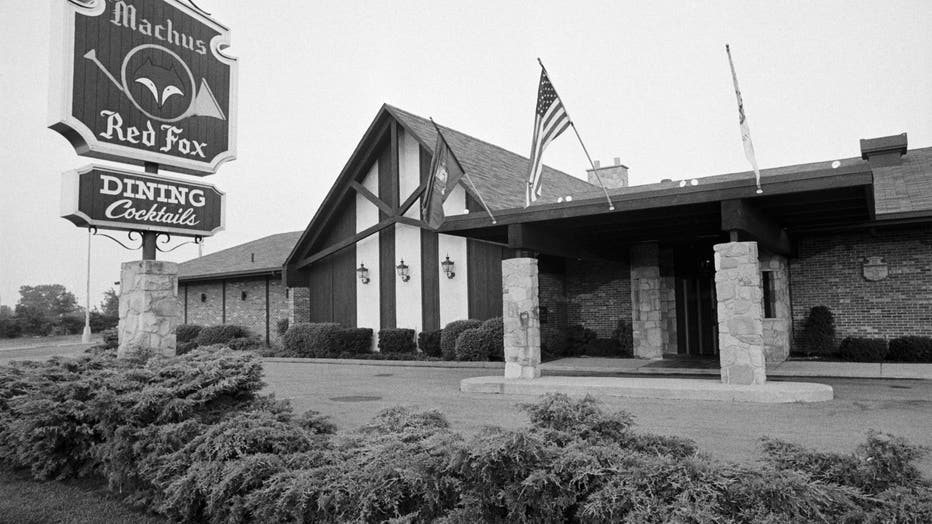
(Original Caption) Bloomfield Township, MICH:James R. Hoffa was officially declared a missing person 7/31 by his family and speculation that he was kidnapped or slain swept the Teamsters Union he once ruled with an iron fist. Hoffa was last seen stan
"Tony Jack had been trying to arrange a meeting with Hoffa for a long time. He wanted him to meet another guy out of New Jersey, Tony Provenzano. Hoffa didn't want to meet him," Witt said.
He knew and trusted Tony Jack so he agreed to meet him. But Tony Jack didn't show up on time.
At 3 p.m., another car pulled up and Jimmy Hoffa got in.
"After Jimmy drives away in the burgundy Mercury Marquis, everything after that is a theory," Witt said.
What's next:
This is just part one in our four-part specials - culminating a 30-minute special next Wednesday that you will not want to miss.
On Thursday, we're going back to the moment Hoffa disappeared. The reaction to the stunning news of an American leader vanishing, the media frenzy that exploded, and the feds and the public go digging for clues, literally.
Then, on Tuesday night at 10 p.m., Taryn Asher has an exclusive and revealing interview with James P. Hoffa about his father's life and legacy.
The Source: Previous interviews and footage from the FOX 2 archives were used in this report, and a new interview with historian Rebecca Salminen Witt were all used in this report.