

Southeast Wisconsin: How the wind and Lake Michigan impacts the weather

MILWAUKEE - Lake Michigan heavily influences the weather in Wisconsin, especially areas that are closer to the lake.
With the water temperatures cycling from warmer in the summer to cooler in the winter, this can help drive temperature changes and even precipitation type.
Summer influence
What we know:
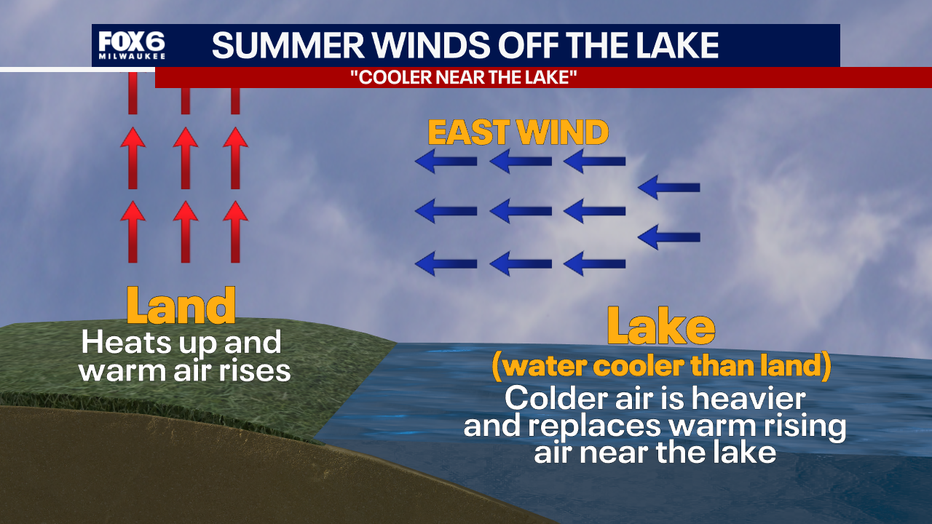
During warmer months, the sun heats up both the water and the land. Solar radiation from the sun heats up the land which then heats up the air. The warm air rises upwards, creating summer-like temperatures over land.
However, the land heats up quicker and is warmer than Lake Michigan, making the lake cooler than land. In Milwaukee, when winds come out of an easterly direction (north-east, east, south-east), it helps push the relatively colder and heavier air, sitting over the lake, to move over land.
This is defined as a lake breeze where temperatures become "cooler near the lake," as meteorologists say.
Winter influence
Dig deeper:
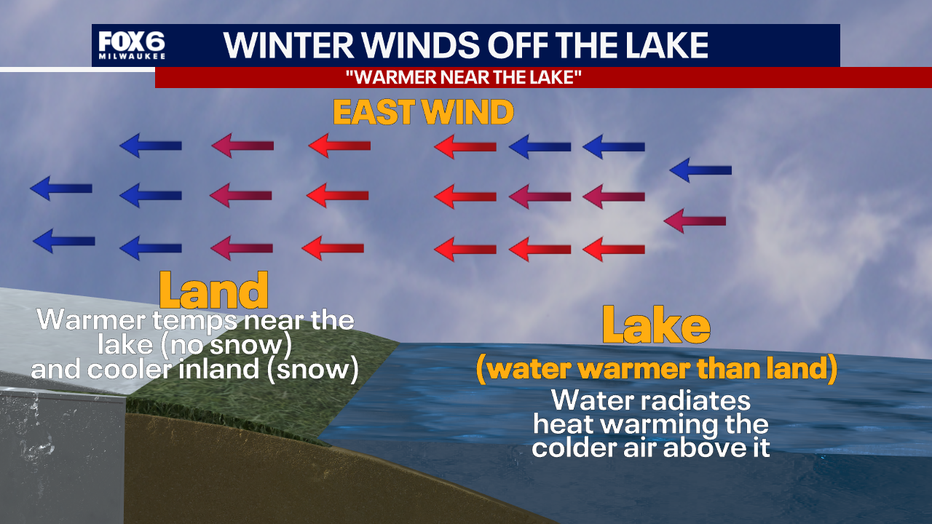
During colder months, the sun still heats up both the water and the land. However, Lake Michigan is warmer than land in the winter because it holds the heat in the summer and releases it very slowly while land releases heat faster.
The relatively warmer water radiates heat into the cooler air above it, warming the air temperatures. Sometimes this creates fog as warmer air cools and condenses as colder air moves over the lake. When an easterly wind is present, the warmer air is then transported over land near the lake.
This creates temperatures to be warmer for lakeshore areas and cooler for inland areas in the winter.
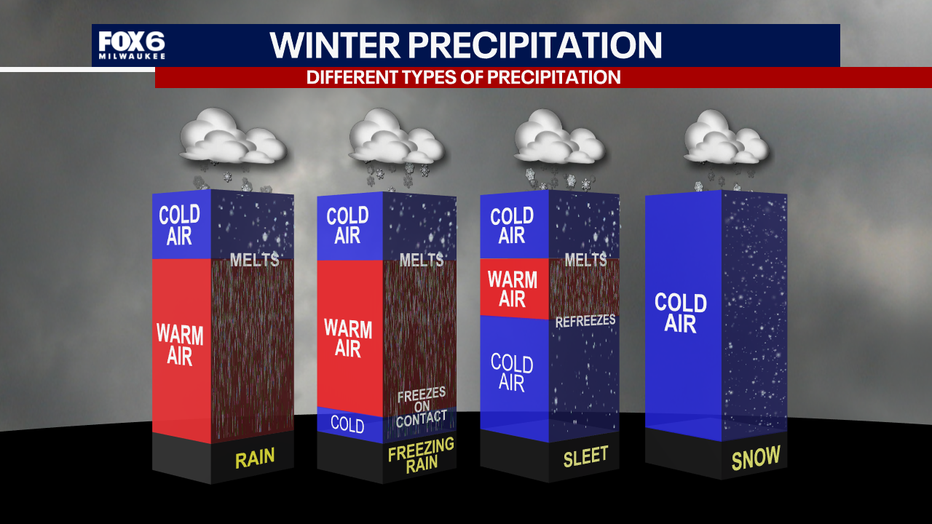
The overall temperature in the winter is important because that can influence the type of precipitation that falls. If temperatures are warmer near the lakeshore, this typically melts falling snowflakes from the clouds aloft as they enter warmer air near the surface.
This reaches the ground precipitation in the form of rain. Conversely, in areas inland that remain cooler, snowfall falling from the clouds aloft does not melt, which means precipitation reaches the ground as snow.
This is the reason, especially in early winter, that inland areas see snow accumulate and lakeshore areas do not experience as much.
Needless to say, this is just one of many factors that Lake Michigan has regarding the weather which can make forecasting tricky.
The Source: Information in this story is from the FOX6 Weather Experts.