

1965 Palm Sunday tornado outbreak; violent storms struck Wisconsin
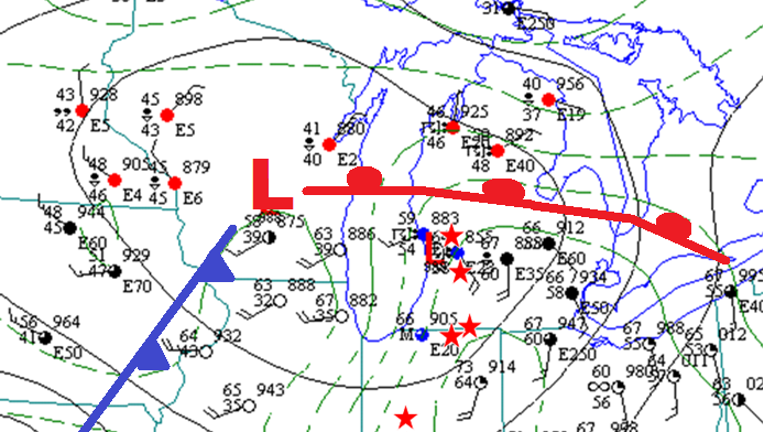
MILWAUKEE - April 11, 1965, is a day that still echoes across the Midwest. Known as the Palm Sunday tornado outbreak, this historic event unleashed a swarm of violent storms across the Great Lakes region, including parts of Wisconsin, leaving behind devastation and reshaping how we forecast severe weather.
The day severe weather changed the Midwest
The backstory:
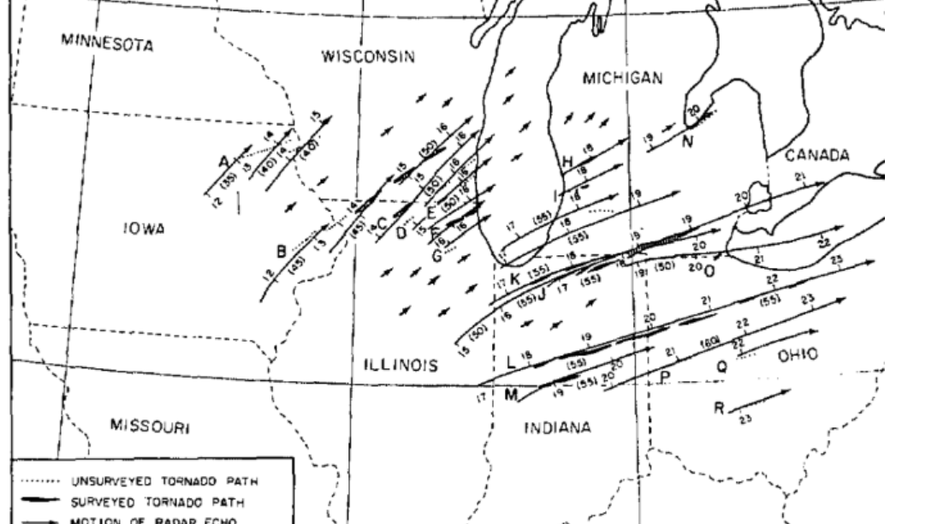
At least 37 tornadoes touched down that day across six states, including Wisconsin, Illinois, Indiana, Michigan, Ohio, and Iowa.
Seventeen of those tornadoes reached F4 intensity, marking one of the most intense single-day outbreaks in U.S. history.
Wisconsin’s role in the outbreak
Dig deeper:
While the most catastrophic damage occurred in Indiana and Ohio, southern Wisconsin was directly in the path of multiple tornadic storms as the system surged northeast.
FREE DOWNLOAD: Get breaking news alerts in the FOX LOCAL Mobile app for iOS or Android
The first tornadoes connected to the outbreak crossed from Iowa into southwest Wisconsin during the early afternoon. By mid-afternoon, several tornadoes had developed or tracked into southern Wisconsin, including:
- A tornado moving from northern Illinois into the Monroe area
- A tornado near Evansville tracking toward Lake Koshkonong
- An F2 tornado that formed west of Jefferson and moved toward Watertown
Additional brief tornadoes were reported in far southern Wisconsin near Lake Geneva during the late afternoon hours.
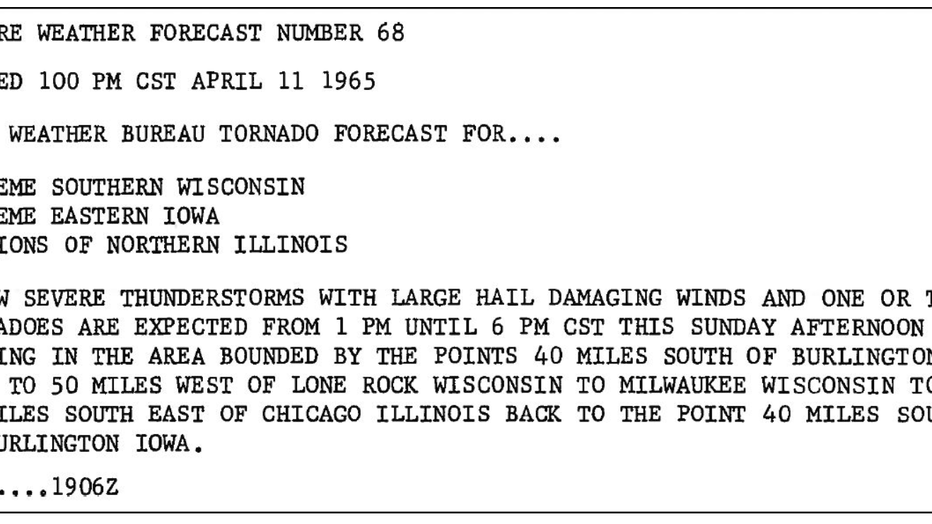
This is a copy of the forecast dicussion sent out by the Weather Bureau (now known as the National Weather Service) for that day in Wisconsin.
These storms were part of a larger, fast-moving outbreak where multiple supercells tracked along a warm front draped across southern Wisconsin.
Perfect setup for severe weather
By the numbers:
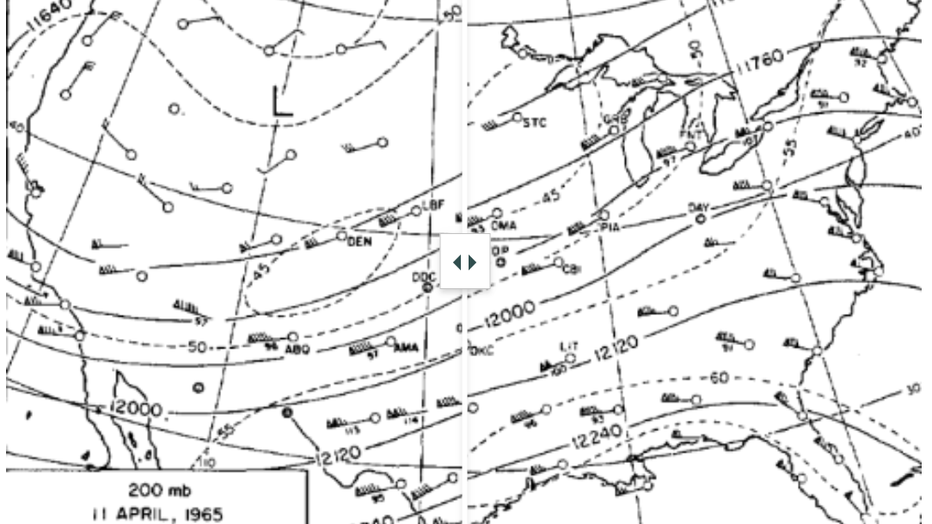
From a meteorological standpoint, the setup was about as volatile as it gets.
- A powerful jet stream with winds over 100 mph surged into the Midwest
- Strong low-level winds transported warm, moist air into Wisconsin
- A dryline and advancing cold air created explosive instability
This combination produced extreme wind shear, high instability, and strong atmospheric spin, creating an environment highly favorable for supercells and tornadoes.
SIGN UP TODAY: Get daily headlines, breaking news emails from FOX6 News
In modern terms, it was a textbook high-end severe weather day. The difference? Forecasting tools in 1965 were far more limited.
When the storms hit Wisconsin
Timeline:
The severe weather threat ramped up quickly across the state:
- Early Afternoon: Storms develop in Iowa and track toward southwest Wisconsin
- Around 2–3 p.m.: Tornadoes cross into southern Wisconsin, impacting areas near Monroe and Evansville
- Mid to Late Afternoon: Additional tornadoes form near Jefferson and Lake Geneva
- Evening: The most violent tornadoes shift east into Indiana and Michigan
The outbreak unfolded rapidly, with little warning compared to today’s standards.
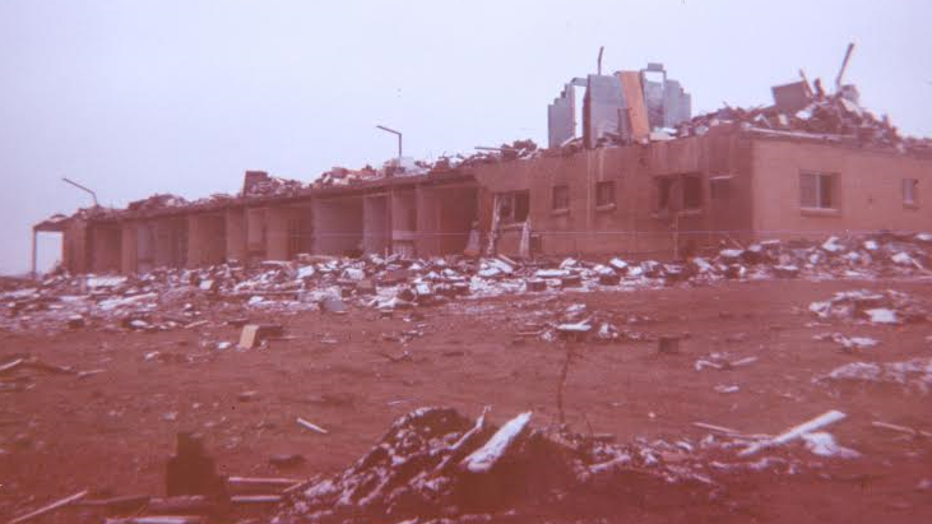
Swan Inn Demolished.The building was at the intersection of Alpine Avenue and 6 Mile Road. One of the guests was fatally injured. Photo credit: Walter L. Nelson. and NWS.
Aftermath, lasting impact
Dig deeper:
The Palm Sunday outbreak caused over $1 billion in damage in 1965 dollars, equivalent to nearly $12 billion today.
But its legacy goes far beyond the damage.
Key changes that followed include:
- The introduction of the term "Tornado Watch" (replacing "Tornado Forecast") to reduce confusion
- Expanded use of outdoor warning sirens
- Major advancements in radar technology, including Doppler radar
- Improved severe weather outlooks with clearer risk communication
Why this still matters
Why you should care:
The 1965 Palm Sunday outbreak is more than a historical event. It was a significant turning point.
In Wisconsin, it serves as a reminder that even early spring can bring high-end severe weather. It also underscores how far forecasting has come, from limited outlooks and basic radar to today’s highly detailed, days-in-advance severe weather guidance.
Forecasters in 1965 couldn't even dream of being able to detect Tornado Vorticity Signatures or track flying debris in real time, but the core message remains the same today as it was in 1965.
When the atmosphere lines up like it did on April 11, the risk is real and every second of preparation matters.
The Source: Information in this post was provided by the National Weather Service and the FOX6 Weather Experts.