

Wisconsin schools, teachers sue Legislature seeking more funding
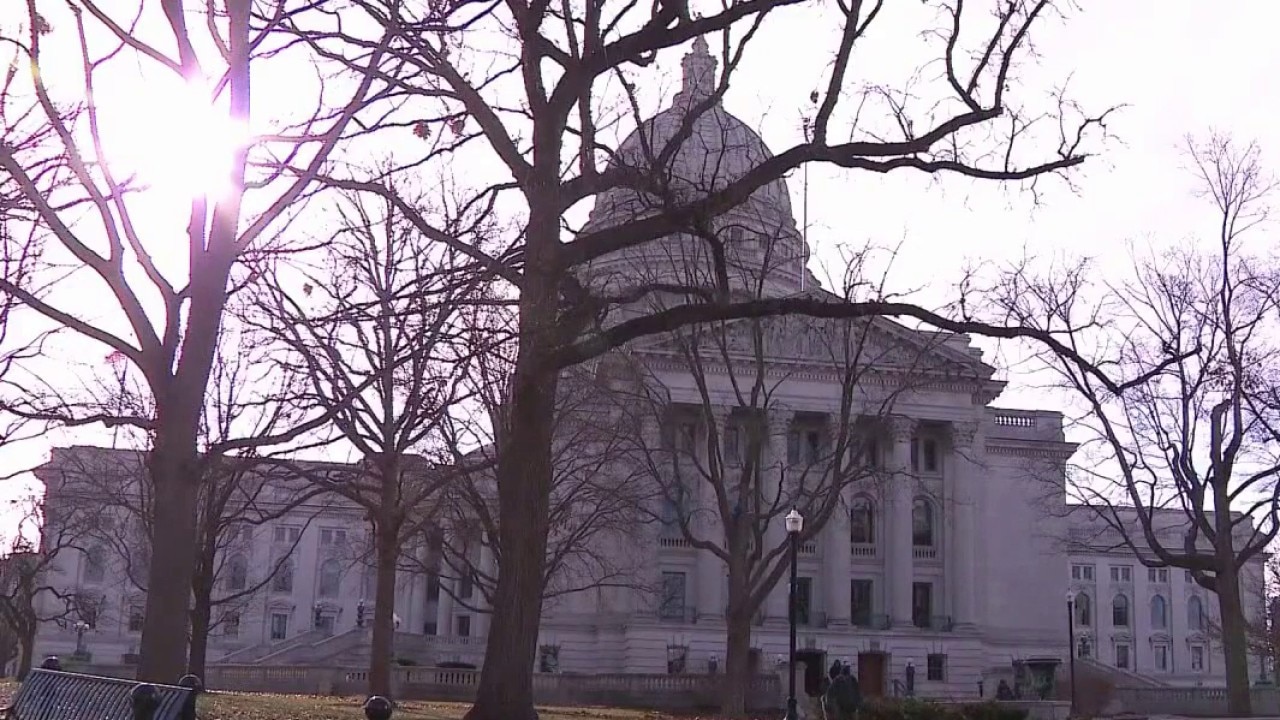
Legislature sued over school funding
A coalition of Wisconsin school districts, teachers' unions and others announced a lawsuit Tuesday against the state Legislature.
MADISON, Wis. - A new lawsuit alleges the Wisconsin Legislature isn’t giving enough money to public schools, calling funding levels unacceptably and unconstitutionally low.
School funding lawsuit
What they're saying:
The lawsuit, filed Monday in Eau Claire County Circuit Court, argues that schools are in crisis, with high-needs students facing the greatest risk. It asks the court to adopt a new finance system that meets the needs of districts unless the Legislature and governor enact one first "in a timely fashion."
FREE DOWNLOAD: Get breaking news alerts in the FOX LOCAL Mobile app for iOS or Android
The lawsuit alleges that the state is violating the Wisconsin Constitution's requirement that all children be provided with an equal opportunity for a sound, basic and uniform education.
It also argues that the constitutional rights of students with high needs is not being met and cannot be met unless the Legislature changes the public school finance system and increases funding for them. The lawsuit further contends that the current special education reimbursement rate is unconstitutionally deficient.
"The funding that the state is providing schools is making it impossible for school districts to fully prepare those students," said Jeff Mandell with Law Forward, which brought the lawsuit on behalf of a coalition of school districts, teachers’ unions and others.
"These folks are not magicians. They are not Rumpelstiltskin; they can’t turn straw into gold. And we don’t have what we need for our schools to thrive."
SIGN UP TODAY: Get daily headlines, breaking news emails from FOX6 News
The Wisconsin PTA is taking lead on the lawsuit and is joined by 18 others individuals and entities, including school districts in Beloit, Green Bay, Eau Claire, Adams-Friendship and Necedah. Other parties include teachers unions in Beloit, Eau Claire, Necedah and Green Bay and eight teachers, parents, students and community members.
"The funding system has not kept up with the needs of our children and the needs of our current realities," said Tanya Kotlowski, Necedah superintendent. "It is through faithful stewardship today that we move forward with litigation. We are currently facing our third operational referendum in our small community."
The Legislature and its budget-writing committee are named as defendants. The lawsuit does not target Gov. Tony Evers, who signed those budgets.
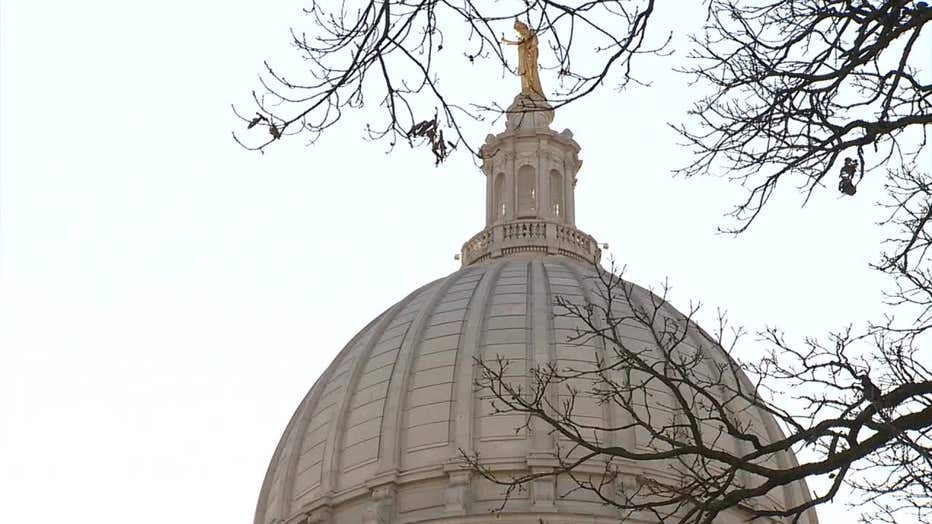
Wisconsin Capitol, Madison
"The Legislature and the Joint Finance Committee, specifically, are the defendants because the constitution charges the Legislature with creating and funding our schools," Mandell said. "The governor cannot appropriate money without the Legislature. The governor can't just hand money out."
What's next:
The lawsuit does not ask for a specific dollar amount, but does ask the court to step in.
"It's not up to the court to decide exactly how we should fund our public schools. There are almost an infinite number of options for how the Legislature could do this," said Mandell. "What we're asking the court to do is to look at it and say to the Legislature, ‘not good enough, try again,’ and give a little bit of guidance on the parameters for that."
Criticism of lawsuit
The other side:
The Wisconsin Institute for Law & Liberty criticized the lawsuit on Tuesday. The organization's Cory Brewer said, while the school funding formula could be changed, that does not mean it's unlawful or unconstitutional.
"WILL views this, honestly, as an attack on choice schools and charter schools, and there are tens of thousands of children utilizing those programs," said Cory Brewer with WILL. "In addition to that, there's no evidence that throwing more money at this problem is going to improve the academic outcomes of students.
"This could be one of the most fiscally consequential lawsuits that we've seen in the history of the state of Wisconsin. It's demanding a level of spending that's essentially unlimited, while attacking choice and charter schools in the process."
In response to the lawsuit, Assembly Speaker Robin Vos (R-Rochester) said in a statement:
"This complaint is another meritless attempt by liberal activists to defund the State’s highly successful school-voucher program and interfere with the Legislature’s authority to fund public schools. We will vigorously defend against this suit and are confident that the courts will soundly reject it."
Negotiations and referendums
The backstory:
School funding lawsuits have been brought for decades in states across the country with varying degrees of success.
Fights over how and whether to reshape Wisconsin's complex school finance system have usually taken place in the Statehouse. Now it will move to the courthouse, where this challenge will almost certainly end up before the liberal-controlled Wisconsin Supreme Court.
In 2000, the last time the state’s school funding formula was challenged, the Wisconsin Supreme Court upheld the system as constitutional. But attorneys argue that so much has changed since then that a new challenge was warranted.
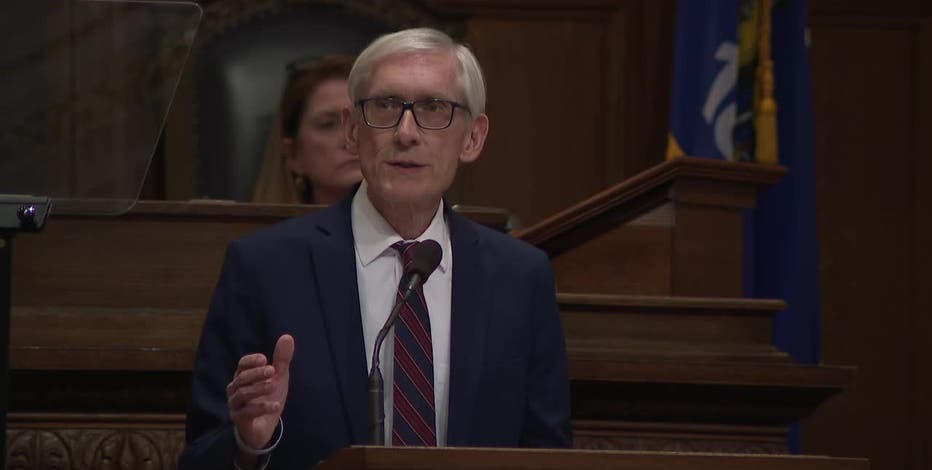
State of the State; Gov. Evers gives final address, talks surplus debate
Wisconsin Gov. Tony Evers delivered his final State of the State address on Tuesday, pressing lawmakers to reach a bipartisan deal on the $2.3 billion surplus and announcing a gerrymandering special session.
Big picture view:
The lawsuit comes as Democratic Gov. Tony Evers and the Republican-controlled Legislature have been negotiating tapping the state's $2.5 billion surplus to cut taxes and potentially increase funding for schools.
As recently as 2003, the state paid two-thirds of the cost of each student’s education. But now districts are paying about half the costs.
Evers, a former state schools superintendent, angered Republicans in 2023 when he used the governor’s extensive veto powers to ensure that districts can increase per-pupil spending annually for the next 400 years. However, without increased funding from the state, districts are forced to raise property taxes.
And when schools can't raise enough under the allowable spending limits to meet expenses, they have been increasingly asking voters to increase property taxes to fund their local district.
In 2024, a record-high 241 referendums were put before voters for approval to fund schools, with 169 approved, according to the Wisconsin Policy Institute.
Anger over the most recent property tax bills, mailed in December, has motivated lawmakers and Evers to try and enact a property tax cut this year. They have yet to reach a deal.
Official statements
What they're saying:
FOX6 News received statements from a number of officials in response to the lawsuit.
State Superintendent Jill Underly:
"Public education is central to Wisconsin's identity and future. Our state's founders recognized its importance by enshrining in the Wisconsin Constitution a shared state and local responsibility to provide a system of education 'as nearly uniform as practicable.' Every child, regardless of zip code, deserves that promise to be kept.
"Our current funding formula is not working. Some districts thrive, while others struggle to meet basic needs. Opportunity should not depend on geography, but too often it does.
"This is not a partisan issue. Leaders across the political spectrum, from the School Finance Network to the Blue Ribbon Commission on School Funding, have studied the issue and put forward practical, common-sense solutions. Supporting public education is bipartisan. Fixing how we fund it should be, too."
The Source: FOX6 News interviewed and received statements from the subjects quoted in this story. Details of the lawsuit include contributions from The Associated Press.