

Race-based scholarship unconstitutional, Wisconsin Supreme Court rules
Race-based scholarship unconstitutional, Wisconsin Supreme Court rules
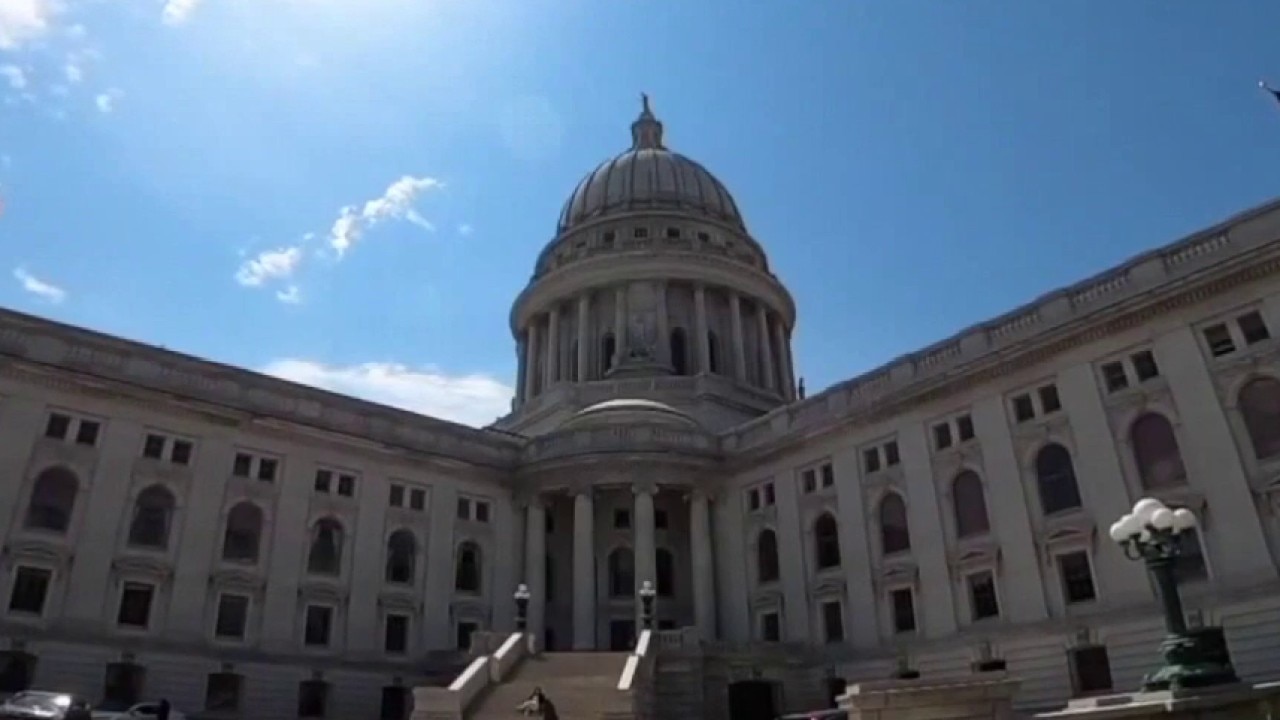
The Wisconsin Supreme Court ended a taxpayer-funded, race-based scholarship. It ruled unanimously that the program is unconstitutional after the U.S. Supreme Court ruled against race-based admissions.
MILWAUKEE - The Wisconsin Supreme Court ended a taxpayer-funded, race-based scholarship. It ruled unanimously that the program is unconstitutional after the U.S. Supreme Court ruled against race-based admissions.
For now, it means that this particular Wisconsin scholarship is no more. That could mean a hole for hundreds of Wisconsin students who get this money. The law firm that challenged it said it is going to go after other taxpayer-funded race-based programs.
FREE DOWNLOAD: Get breaking news alerts in the FOX LOCAL Mobile app for iOS or Android
Taxpayer-funded grant
The backstory:
In the 1980s, Wisconsin law set up the taxpayer-funded Minority Undergraduate Retention Grant for Wisconsin students who are Black, Native American, Hispanic, or Laotian, Vietnamese or Cambodian. It provides a maximum grant of $2,500 per academic year for a total of eight semesters. It is for students who finished their first year of college and are attending either a Wisconsin technical college or a private college or university.
Featured
Trump administration to cut student loan interest rates
With millions of student loan borrowers in default, the Trump administration announced a plan for a slight reduction in student loan interest rates to provide some relief for borrowers paying back their loans.
Scholarship challenged
What they're saying:
It helped State Sen. Dora Drake graduate from Marquette University.
"I grew up in the 53223 ZIP code in Milwaukee, and I was a first generation student," Drake said. "And for me and my family, they valued education, but my parents were working hard and did a lot to take care of my siblings, just for me to even get an opportunity."
SIGN UP TODAY: Get daily headlines, breaking news emails from FOX6 News
Conservative law firm the Wisconsin Institute for Law & Liberty sued to challenge the scholarship.
"What this program used to do before today is it assumed that every black student is disadvantaged and needs help," Dan Lennington of the Wisconsin Institute for Law & Liberty said. "Every Hispanic student needs help just because of their race. It says that people who are certain races can't get the money because of the color of their skin. That's the definition of racism."
The state Higher Education Aids Board (HEAB) said the grant fixes a "crisis" in minorities not finishing school and helps with compelling interests of diversity and equal educational opportunity.

Wisconsin Supreme Court
On Thursday, the Wisconsin Supreme Court unanimously agreed the program was unconstitutional.
"Frankly, I'm pissed, honestly, because tomorrow we're about to celebrate Juneteenth, and it's a day when we celebrate our freedoms to address what we have overcome, and yet we continue to pull back so many programs that have established opportunities for equity, the ones that I receive personally, and frankly, it's frustrating that we continue to make the same mistake over and over," Drake said.
"This scholarship and all scholarships should be available to all students regardless of their race, and students who need help should get help. We shouldn't presume that kids need help just because of the color of their skin," said Lennington.
Court's decision
What they're saying:
The Wisconsin Supreme Court ruled the program violates the 14th Amendment’s Equal Protection Clause. It follows the U.S. Supreme Court’s decision in Students for Fair Admissions, Inc. v. Harvard.
Conservative Justice Annette Ziegler wrote the majority opinion: "The statute discriminates against students of nonpreferred classes by precluding them from eligibility for taxpayer-funded financial aid under the Grant Program."
"Consequently, with race being the sole decisive factor, HEAB does not conduct a highly individualized, holistic review of each student employing race as one ‘factor of a factor of a factor’ in the holistic-review calculus," Ziegler added.
Liberal Justice Jill Karofsky wrote that the court is obligated to strike it down because of the U.S. Supreme Court ruling in the Harvard case, but she criticized the higher court, writing: "In short, the Court ruled that it is racist to remedy racism."
"Why, instead of wielding the Equal Protection Clause as a sword against racism, do we employ it to shield against the promise of equality for all?" Karofsky wrote.
Karofsky pointed out that, as a whole, Wisconsin has the largest math and reading achievement gaps between White and Black students in the entire country.
What's next:
The Wisconsin Institute for Law & Liberty said it plans to go after other taxpayer-funded, race-based scholarships and programs. Drake told FOX6 News she plans to introduce legislation to bring back the grant program, making sure it focuses on income and ZIP code, not on race.
The Source: Information in this report was gathered from the Wisconsin Supreme Court, the U.S. Supreme Court, State Sen. Dora Drake, the Wisconsin Institute for Law & Liberty, Dan Lennington, the Higher Education Aids Board, Justice Annette Ziegler, Justice Jill Karofsky and past FOX6 News reporting.