

Map: How much are federal, state gas taxes?
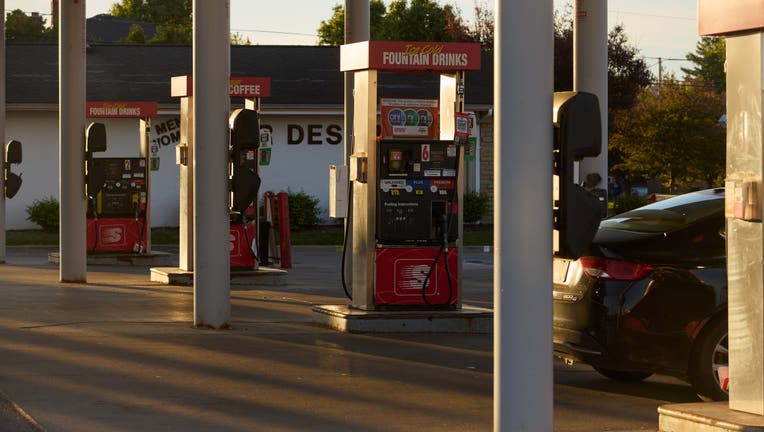
Fuel pumps at a Speedway gas station in Columbus, Ohio, US, on Monday, May 11, 2026. Photographer: Brian Kaiser/ Bloomberg via Getty Images
Federal and state gas taxes are added at the pump and help maintain infrastructure at a national and state level.
Here is a breakdown of the taxes:
What is the federal gas tax?
Big picture view:
Federal taxes include excise taxes of 18.3 cents per gallon on gasoline and 24.3 cents per gallon on diesel fuel, and a Leaking Underground Storage Tank fee of 0.1 cents per gallon on both fuels.
Excise taxes are indirect taxes imposed on certain goods, services, and activities, according to the Internal Revenue Service.
Dig deeper:
The tax provides more than $23 billion per year in revenue for federal highway and public transit programs.
RELATED: Ways to save money on gas
Has the federal gas tax ever been suspended?
Big picture view:
A gas tax holiday is a temporary suspension of the federal gas tax that must be approved by Congress.
Dig deeper:
Congress has never suspended the federal gas tax, according to the Bipartisan Police Center.
President Trump said in May of 2026 that he was aiming to suspend it amid increasing fuel prices due to the war in Iran.
RELATED: Trump says he aims to suspend gas tax amid high fuel prices
Gasoline taxes by state
Local perspective:
Gas taxes are determined by state, and are made up of excise taxes, environmental taxes, special taxes and inspection fees, according to the U.S. Energy Information Administration.
Excise taxes are indirect taxes imposed on certain goods, services, and activities, according to the Internal Revenue Service.
By the numbers:
The states with the highest gas tax include:
- California: $0.71
- Illinois: $0.66
- Washington: $0.59
- Pennsylvania: $0.58
- District of Columbia: $0.54
The states with the lowest gas tax include:
- Alaska: $0.08
- New Mexico: $0.18
- Arizona: $0.19
The average state tax is $0.33 per gallon.
The Source: Information in this article was taken from the U.S. Energy Information Administration, the Internal Revenue Service and the Bipartisan Police Center. This story was reported from Detroit.