

Extreme cold weather: Safety tips for you, your pets, and property
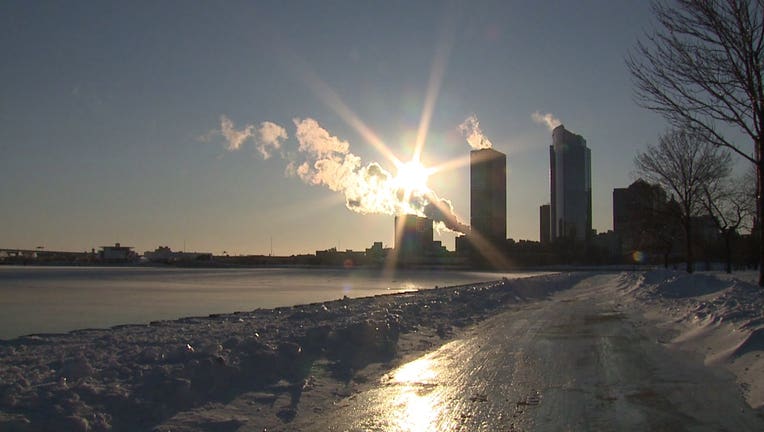
MILWAUKEE - The extreme cold can be lethal in just minutes, and it can cause problems to your vehicle and your home.
Sam Kraemer was inside and outside the FOX6 studios, talking about a variety of cold weather topics to help keep you prepared.
Cold weather tips
What we know:
Topics covered in this story:
- Preventing frostbite
- Pets and the cold
- Vehicle care
- Vehicle cold weather kit
- Cold weather tips for your phone
- Preventing pipes from freezing
- Home heating safety
Preventing frostbite
What we know:

The biggest threat the extreme cold brings is frostbite, and it won't take long for it to develop with the low temperatures on Friday and Saturday.
Doctors agree that the best thing you can do is stay inside. That's why most of our schools are closed.
But if you are outside, keep it short. Frostbite can develop in as little as five to ten minutes.
The most vulnerable areas are your nose, ears, toes, cheeks, chin and fingers.
And layers matter. Beyond your jacket, hat and gloves, water-resistant boots and a scarf that can also protect your face are key.
FREE DOWNLOAD: Get breaking news alerts in the FOX LOCAL Mobile app for iOS or Android
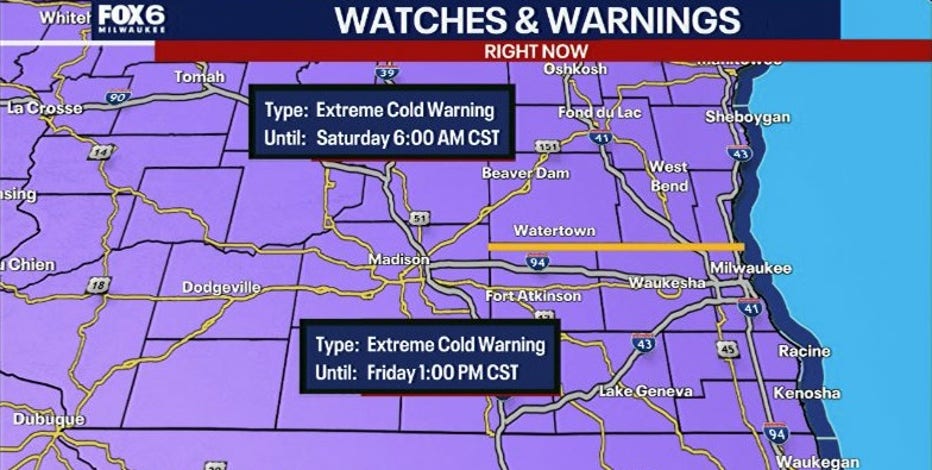
Wisconsin extreme cold warning Friday, advisory to follow
The National Weather Service has issued an extreme cold warning for all of southeast Wisconsin, followed by a cold weather advisory.
What they're saying:
"When we're exposed to extreme cold, the body goes into survival mode. The blood vessels in our hands and our feet, our nose and our ears start constricting," said Dr. Ben Weston, Milwaukee County Chief Health Policy Advisor. "And that's to protect and keep the warm blood for our vital organs, like our heart and our brain. Now that response certainly helps preserve our core temperature, but it also means that those areas, our hands, our feet, can freeze rapidly."
The warning signs: your skin may turn red or even a grayish-yellow, and can become numb.
You should call 911 and get somewhere warm quickly and use warm-to-touch water. But anything too hot can cause further harm.
Pets and the cold
What we know:

Keeping pets safe in the cold weather
FOX6's Sam Kraemer explains what you can do to help keep your pet safe when they're outside.
As temperatures tank, veterinarians warn pet owners of potential hazards for their pets.
First, if you're going out, you should bundle them up too. Little booties or a coat can make a big difference for your four-legged friend.
Second, give your dog a place to go to the bathroom that isn't deep snow or frozen. You can use straw or just shovel a spot out.
Third, playing with them before going out can get them ready so they aren't wasting their time outside.
Fourth, you can try to keep it short by using a leash if you're someone who typically lets them roam in the backyard.
And lastly, consider an indoor option, whether that's a puppy pad or a litter tray, just for the short term.
The humane society says you shouldn't punish your pet if they go to the bathroom indoors during this extreme cold, especially if they're older or have medical issues.
Milwaukee garbage, recycling pickup delayed due to extreme cold weather
Due to the extreme cold forecast for Friday and Saturday, Jan 23–24, all garbage and recycling pickup, along with sanitation collection work in Milwaukee will be suspended on those days.
Vehicle care
What we know:

Car care in the extreme cold
FOX6's Same Kraemer is back with some tips for keeping your car in tip-top shape as the cold weather impacts everything from the battery to your tire pressure.
If you do have to go to work in the morning, starting your car could be an issue.
We'll start with your battery. The rule of thumb is that the colder it is, the harder it is for your battery to start.
Depending on where you park, you should position the front of your car so that it's easily accessible for someone to use jumper cables and jump it.
As for your tires, the low pressure warning light might already be on, right?
That happens because air generally contracts in colder temperatures — it's taking up less space in your tire.
Your car tells you the PSI (pounds per square inch) you should pump your tires to — on the frame near your driver's side door.
And it's better to take care of this sooner rather than later.
Vehicle kit
What we know:

Cold weather kit for your vehicle
Driving in the dangerously cold weather? Sam Kraemer shows us what you should have in your vehicle at all times.
These items aren't just for the extreme cold, these are good things to have during winter.
First, the jumper cables. Your car's battery weakens as temperatures plummet, so these could help jump-start your car in the morning with help from someone else.
It's always good to have extra pieces of warm clothing like hats, gloves, socks, and blankets are helpful.
Your tires may lose pressure with the cold. So some retailers now make portable air pumps that can fix that issue without a trip to the gas station.
Otherwise, snacks, phone chargers, a shovel, and of course, an ice scraper should be there too.
Phone tips for the cold weather
What we know:

Phone tips for the cold weather
Make sure your phone is charged and stays charged in the cold weather. Sam Kramer has some tips.
The extreme cold can be problematic for the lithium-ion batteries our phones use, just like the heat can. UScellular has four tips for us.
First, it's important to keep your phone's battery charged.
You can use a portable charger, like a power bank.
Second, use a heavier case. UScellular says it's like a jacket for your phone.
Third, if you're outside, you should put your phone as close to your body as possible, not just in a jacket pocket. The heat your body generates can keep your phone from freezing.
And lastly, don't race to turn your phone back on if it does turn off while outside.
The company says it's best to return it to room temperature first so that it doesn't do more damage.
Don't let your pipes freeze
What we know:

Protecting pipes in the cold weather
FOX6's Sam Kraemer explains the simple steps you can take to prevent your pipes from freezing during the bitter cold weather.
So, what can you do to prevent the pipes in your home from freezing?
From a science perspective, it's almost the exact opposite of the car tires we talked about earlier.
When water freezes — it expands, which can lead pipes to burst. Here's what you can do now and in the future.
Long-term, you can buy 'pipe sleeves' from your home improvement store of choice to protect those pipes.
As for now, there are a couple of things. In the kitchen and bathroom, you can open your cabinet doors to get warm air around your plumbing.
If you have a water pipe you know is exposed to the cold — you should let that faucet drip.
Even just a little water flowing through the pipe can help with prevention.
Home heating safety
What we know:

Space heater safety
When it gets bitterly cold, many people take advantage of space heaters. While there's nothing inherently wrong with that, there's some info you should know in order to operate them safely.
Half of all home fires in the U.S. happen between December and February. That's according to the National Fire Protection Association.
If it's at all possible to rely on your furnace and thermostat, the U.S. Department of Energy says 68F is the optimal temperature to keep your home warm and balance your energy bill.
If that's an issue, space heaters are an option, but they can also be dangerous.
So if you're going to be using one of these, you want the heater to be the only thing plugged into its outlet, and NEVER plug it into an extension cord. A space heater will likely draw more current than what the cord is rated for.
Fire officials say you should set it up on the floor and keep a three-foot buffer around it to prevent anything from catching fire.
Turn it off before you go to bed, and never use your stove or oven as a means of heat.
A cheaper option is to use blankets as a barrier to cold sources like windows and doors.
You can hang them or tape them to curtain rods.
The Source: This story was produced by FOX6.