

Why Abdul El-Sayed called JD Vance 'habibi' in his victory speech
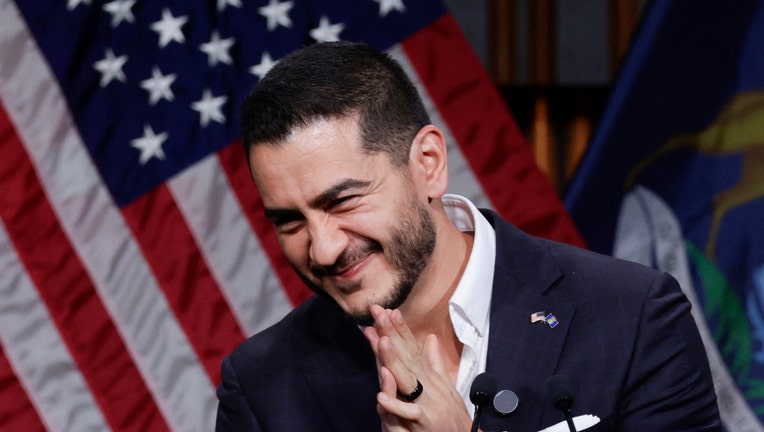
Democratic US Senate candidate Abdul El-Sayed speaks onstage after declaring victory in Michigan's US Senate race. (Photo by Jeff Kowalsky / AFP via Getty Images) ((Photo by Jeff Kowalsky / AFP via Getty Images) / Getty Images)
DETROIT - Progressive Democrat Abdul El-Sayed defeated Republican Mike Rogers on Tuesday in the high-profile race for Michigan's open Senate seat.
He will be the nation's first Muslim senator, and is the son of Egyptian immigrants.
Taking the stage to celebrate his victory, he called Vice President JD Vance "habibi."
So, what does "habibi" mean?
Why did El-Sayed call Vance ‘habibi’?
Big picture view:
El-Sayed and Vance have verbally sparred for months on the campaign trail.
Vance, who campaigned for Rogers, called El-Sayed "very, very evil."
Meanwhile, President Donald Trump called him a "jihadist."
El-Sayed, who was attacked for his name and faith during his campaign, turned an Arabic term endearment into part of a punchline.
"JD, habibi, there is this delicious irony in the fact that you're constitutionally obligated to swear me in in January," El-Sayed said.
The backstory:
According to dictionary.com, habibi is an Arabic word that literally means "my love," but is sometimes translated as "my dear," "my darling," or "beloved."
It's often used as a pet name for friends, significant others or family members.
El-Sayed also took a jab at Vance while calling out the rivalry between his college, the University of Michigan Wolverines, and the Ohio State University Buckeyes.
Vance has a degree from Ohio State.
"So you know what that means? Wolverine 1, Buckeye 0," El-Sayed said.
The Source: This story used information from a dictionary.com post and Fox Local reporting.