

Wisconsin's Peregrine Falcon Recovery Project restores species
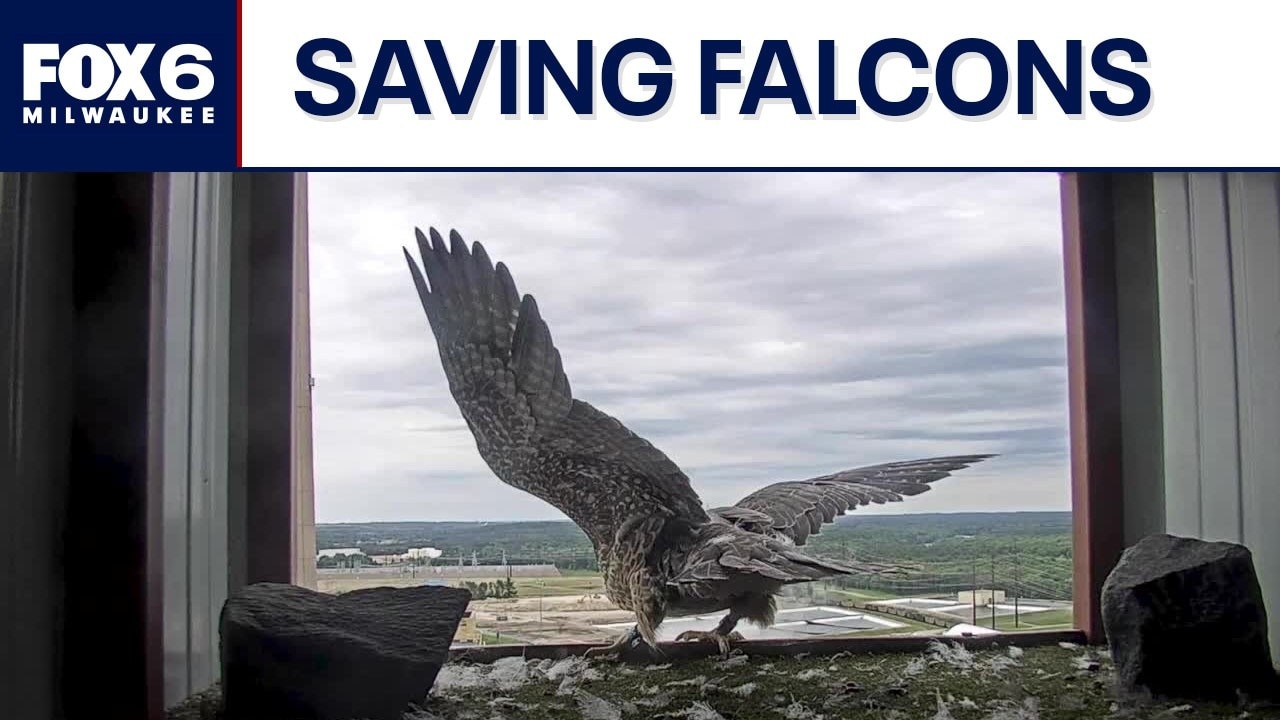
Wisconsin's Peregrine Falcon Recovery Project
Greg Septon founded Wisconsin's Peregrine Falcon Recovery Project in 1986 to restore the species, a small conversation effort that now has a growing legacy.
MILWAUKEE - What started as a small conservation effort is now a growing legacy, still lifting off in new ways today. The focus is peregrine falcons.
Peregrine falcon project
What they're saying:
Forty years ago, Greg Septon scoured the lakefront noting any and every tall structure from the Illinois state line to Door County.
FREE DOWNLOAD: Get breaking news alerts in the FOX LOCAL Mobile app for iOS or Android
"I thought we could form a population along the lakefront. That was my goal," Septon said. "These human-built cliffs are filling in the voids."
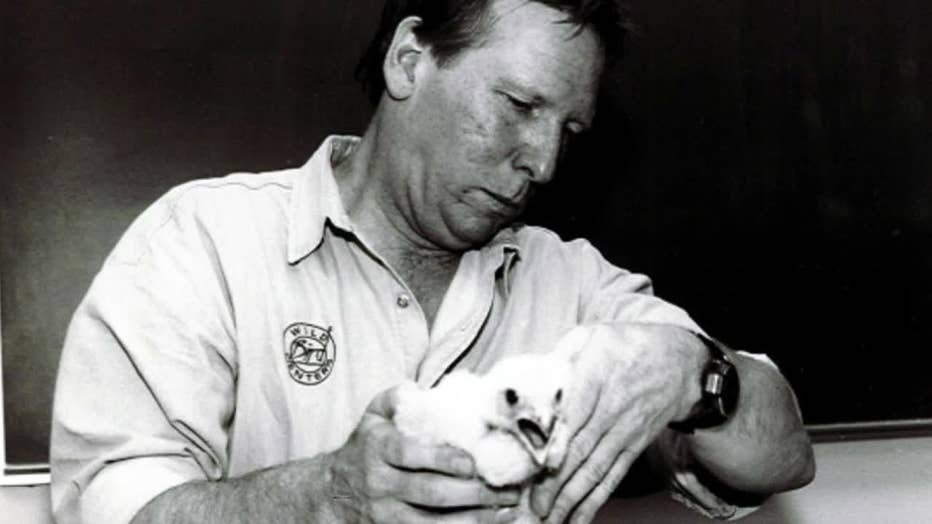
Greg Septon
Lake Michigan's shoreline is a major migration route for all birds. His focus: the peregrine falcon.
"When I was a kid in high school there were no peregrines in the state. They’d been gone for quite a few years. And I’d always dream of seeing peregrines nesting and had some weird ideas on how to make it happen," Septon said.
Peregrine falcons nearly extinct
The backstory:
Peregrine falcons are native to Wisconsin but almost became extinct in the 1960s because of the pesticide DDT, which is now banned because of its toxicity.
"We were all realizing we weren’t going to get these birds back if we don’t prime and pump. We need to get captive-produced birds back and get them to survive and produce birds on their own and that takes time," Septon said.
In 1986, Septon founded Wisconsin's Peregrine Falcon Recovery Project. From 1987 to 1992, he released captive-bred falcons into the wild.
"Here we are 40 years later, with interestingly, 40 pairs last year producing 103 young," Septon said.
A big part of that journey is We Energies and Wisconsin Public Service. Septon partnered with the utility companies to install nesting boxes on power plants across the state. Every spring, he bands every falcon chick that hatches in those nest boxes statewide.
SIGN UP TODAY: Get daily headlines, breaking news emails from FOX6 News
"They can travel great distances and having these bands allows us to document that," Septon said.
In February, Septon was presented with a Certificate of Commendation from Gov. Tony Evers. The We Energies Foundation surprised him and donated $15,000 to name a raptor recovery cage at the Wisconsin Humane Society's Wildlife Rehabilitation Center in Septon's honor.
"It’s gratifying to see all these sites producing young finally, you know, and regularly," Septon said.
Technology saving peregrine falcons
Why you should care:
Septon conditioned the peregrine falcons to camera movements so that through that lens – anyone at home can see the birds up close. The program took off, gaining popularity and interest across Wisconsin.
"Taking 10 minutes out of their life to do this benefits the species as a whole. It allows us to find out what is going wrong. If they are dying, what’s happening to them," Septon said.
This year, Septon added a solar-powered tracking system – like an AirTag – to see where the peregrine falcons go when they leave the nest site.
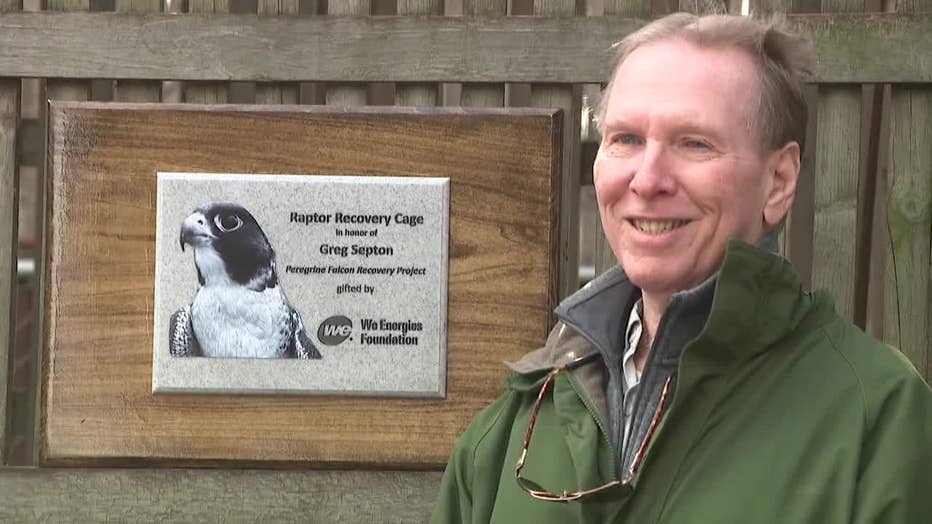
Greg Septon
"There are new transmitters that are about as big as my thumbnail, and they clamp on the back of the band on their legs," Septon said.
Septon said there is a high mortality rate during the first year of life. More than half of the falcons die. Despite that, he has always wanted to know where they go after they leave the nest.
"Once they get beyond that first year, chances of living three-to-five years are good. I have a lot of birds that lived to be seven to 10 (years old), some female birds that lived to be 13, 14. So they can live a healthy, long life," Septon said.
How many falcons are banded?
What's next:
A healthy life, and a longstanding program. After four decades, the work isn't finished – but the skies are a little fuller than they used to be.
"I am happy with the fact that if I want to take my daughter out and show her a peregrine, now I can do that," Septon said.
Septon has banded more than 1,500 falcon chicks across the state. As for the trackers, We Energies said they continue to get signals from the falcons and will update FOX6 News if a public map becomes available.
Portions of this article were formatted using A.I. FOX6’s Christina Van Zelst and an editor reviewed it for accuracy and tone prior to publishing.
The Source: Information in this story was gathered from Greg Septon, We Energies, Wisconsin Public Service, Gov. Tony Evers' Office, the We Energies Foundation and the Wisconsin Humane Society's Wildlife Rehabilitation Center.