

Wisconsin DNR urging people to leave white-tailed deer fawns alone
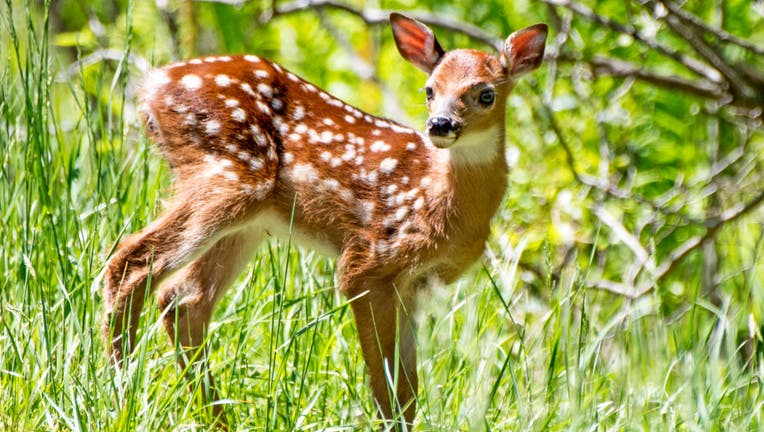
White-tailed Deer Fawn. (Photo by: Arthur Gurmankin/Education Images/Universal Images Group via Getty Images)
MADISON, Wis. - To protect the local white-tailed deer population, the Wisconsin DNR advises the public to refrain from interacting with or moving fawns encountered during the spring and summer months.
If you find a fawn, please do not touch or move it – there’s a good chance it’s right where it’s supposed to be, and its mother isn’t far away.
The DNR says fawns spend their first weeks staying quiet and out of sight while their mothers search for food close by.
What they're saying:
"Young fawns are often left alone for most of the day to keep them safe," said Jenna Fastner, DNR captive wildlife health specialist. "Although their mother can return at any time, white-tailed deer are crepuscular, or more active at dawn and dusk, which means the fawn can be alone for long periods between feedings. By the Fourth of July, most fawns are on the move alongside or near their mothers."
FREE DOWNLOAD: Get breaking news alerts in the FOX LOCAL Mobile app for iOS or Android
What to do if you find a fawn
- Unaccompanied fawns have rarely been abandoned. If you find a seemingly healthy fawn lying quietly by itself, do not touch it, and leave the area as soon as possible.
- Do not bring other people or pets to look at the fawn. The mother will not return while people or other animals are around. Giving the fawn and its mother space is the best thing you can do to support their natural behavior.
- Do not feed the fawn. Wild animals have specialized dietary needs that are not easily met, and providing nonnatural food sources puts them at risk of suffering nutritional deficiencies that can lead to deformities or death.
- Call a licensed wildlife rehabilitator for guidance before intervening. Wildlife rehabilitators often specialize in one or a few species. Make sure you are contacting a wildlife rehabilitator licensed to provide rehabilitative care to fawns.
For more information on keeping Wisconsin’s wildlife wild, visit the DNR website.
The Source: The information in this post was provided by the Wisconsin Department of Natural Resources (DNR).