

Wisconsin board reviews prison commutations for first time in decades
Commutation, pardon process in Wisconsin
Some Wisconsin prisoners, including some convicted of homicide, look to have their sentences cut short. It is the first time in decades the state has reviewed commutations and pardon applications. FOX6's Jason Calvi dug into what you need to know.
MADISON, Wis. - Some Wisconsin prisoners, including some convicted of homicide, look to have their sentences cut short. It is the first time the state has reviewed commutations in decades.
The Commutation Advisory Board on Aug. 21 considered the requests of 12 prisoners, including six convicted of homicide.
The last Wisconsin governor to issue commutations was Governor Tommy Thompson. Governor Tony Evers, in his last year in office, restarted the process.
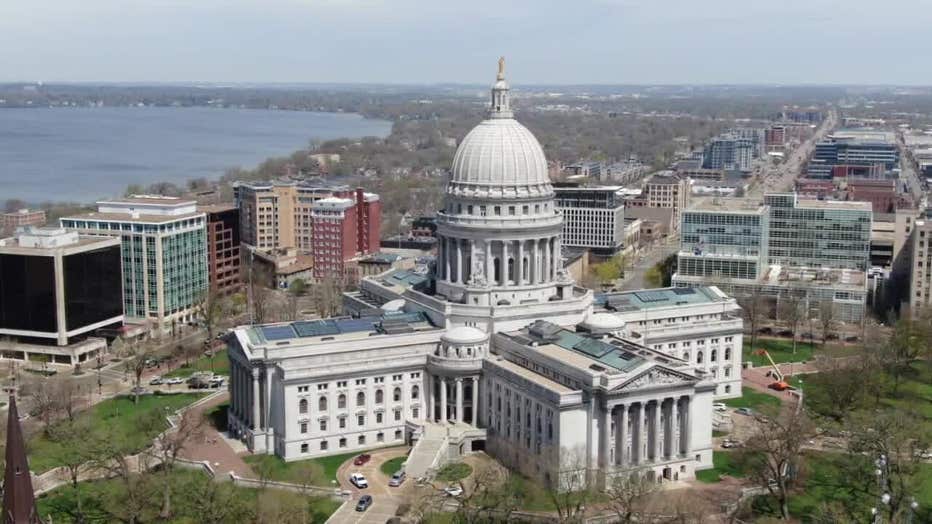
Wisconsin State Capitol, Madison
What is commutation?
What we know:
The Wisconsin Constitution gives the governor power to issue pardons and commutations. Evers' office said he issued the most pardons with more than 2,000. He restarted the pardon process in 2019. Then, in April 2026, he restarted the commutation process.
SIGN UP TODAY: Get daily headlines, breaking news emails from FOX6 News
So, what is the difference? Evers gives a pardon after someone has completed all their sentence, including prison and supervision, and has been off supervision for five years or more. A commutation would cut a sentence a prisoner is currently serving.
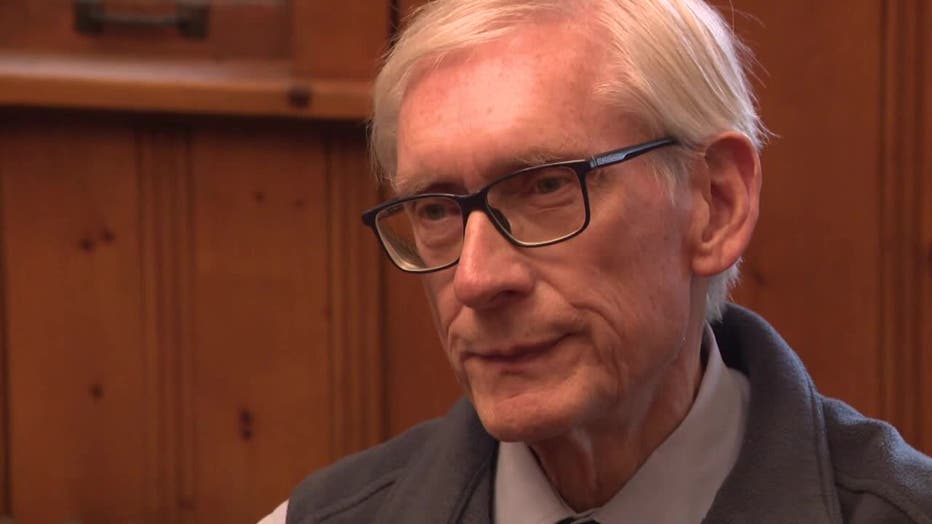
Gov. Tony Evers
Who is the commutation board considering?
What we know:
Today, the commutation board weighed whether to recommend commutations for 12 prisoners: two prisoners serving time for selling drugs, including cocaine and heroin; three prisoners serving time for armed robbery; one prisoner serving time for burglary; and six in prison for homicide, including Michael Maldonado.
The 12 people up for review include Sharif Green, Mighty Howell, Aaron Smith, Natalie Murphy, Sammy Cole, Michael Maldonado, Christopher Sutton (Smith), Daniel Cerney, Amanda Weaver, Demian McDermott, Lawrence Northern and Sabir Wilcher.
Maldonado was convicted in 1995 in a murder-for-hire case. Educator Diane Borchard was convicted of hiring students to kill her husband. Maldonado’s cousin, Douglas Vest, originally accused Maldonado of pulling the trigger, but later Vest admitted he did it. Maldonado today still said he bought the gun.
"I can’t even image the emotional suffering and heartache that was placed on that family because of this traumatic event. After three decades, I had the opportunity to speak with the family in person, and it was evident that their emotional turmoil continues to through to this day. The harsh impact that they have had to live with is clear from the emotions that spread across each one of their faces," Michael Maldonado told the commutation board.
Wisconsin Department of Corrections (DOC)
Response to the commutations board
What they're saying:
The governor's executive order in April set up the commutation process and laid out his rationale for restating it.
"The availability of executive clemency reflects a recognition that individuals are capable of rehabilitation, redemption, and can earn a second chance," said Governor Evers in his April executive order. "The granting of commutations promotes rehabilitation by providing a system that rewards the positive efforts of incarcerated individuals who demonstrate personal growth and a commitment to change with the possibility of a second chance to contribute to society, become productive members of their communities, make amends, and improve their lives and those of the people around them."
Republican State Senator Van Wanggaard criticized the governor and pointed to the more than 800 prisoners now seeking commutations.
"For four months, Evers’ plan to release criminals early has been clouded in secrecy. The public has a right to know which dangerous criminals Evers is considering releasing. And it’s clear it’s some of the worst-of-the-worst," said Wanggaard. "The people who prosecuted and heard these cases oppose the commutations nearly unanimously. Now, Governor Evers is using hand-picked, unelected bureaucrats to second guess the people actually involved in the case to overturn their sentences years later! That should upset everyone in Wisconsin."
Where the candidates stand
What they're saying:
Candidates for Wisconsin governor now offer their perspectives on what they would do with commutations.
"David believes clemency is an important tool for correcting past wrongs, but also that clemency must be done with respect for victims and communities. David will not support commutations or pardons for anyone previously convicted of murder or other violent crimes. As governor, David will approach executive clemency with a clear sense of responsibility to both justice and public safety," said a campaign spokesperson for Milwaukee County Executive David Crowley.
"I will rescind the executive orders that allow murderers, including those serving life sentences, to be released back into the community after just 20 years. I am making a commitment to the people of Wisconsin that, as governor, I will not release violent criminals early and will ensure victims and their families receive the full measure of justice. We will end the soft-on-crime board that overrides the justice system and gives violent criminals another avenue for early release. The fact that six convicted murderers are among those being considered for early release by Governor Evers only reinforces my concerns with this board," said Congressman Tom Tiffany.
FREE DOWNLOAD: Get breaking news alerts in the FOX LOCAL Mobile app for iOS or Android
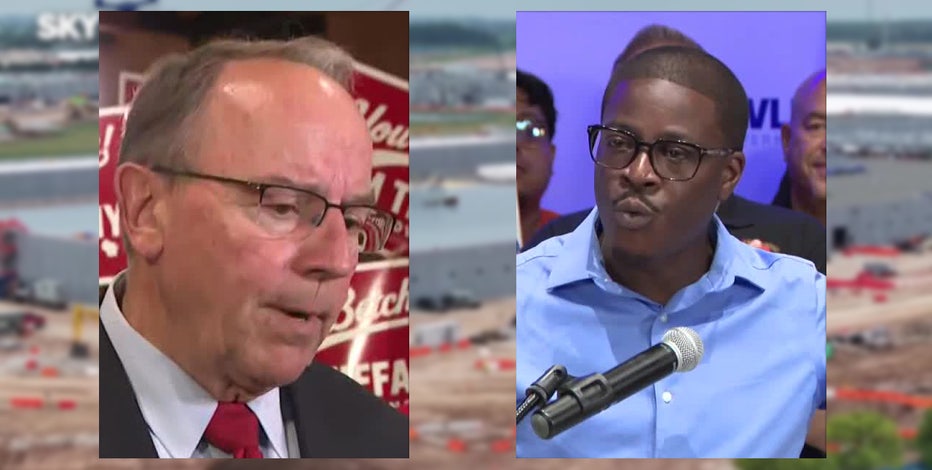
Wisconsin governor race: Candidates differ on data center guardrails
Data centers are heating up in the race for Wisconsin governor. The issue is already hitting your TVs, with Republican Tom Tiffany’s new ads calling his Democratic opponent "Data Center David Crowley," while Crowley fires back.
Commutation process
What's next:
The board will make a non-binding recommendation to the governor, but it is the governor who decides.
The governor tasked the board to consider the impact a commutation would have on victims, survivors and the community. The board is also to consider whether a commutation is consistent with public safety and the interests of justice, the person's record in prison, and their personal growth and development since conviction, including the completion of rehabilitative programs, treatment, education and work history.
The board includes the governor's legal counsel, former Dane County and former Waukesha County judges, a former Madison police chief, a law professor, a domestic abuse counseling executive and a rehabilitation expert.
People convicted of sexual assault, physical abuse of a child, sexual exploitation of a child, trafficking of a child, incest and soliciting a child for prostitution are not eligible for commutation.
Portions of this article were formatted using A.I. FOX6’s Jason Calvi and an editor reviewed it for accuracy and tone prior to publishing.
The Source: Information in this story was gathered from the Wisconsin Constitution, the Legislative Reference Bureau, Governor Tony Evers' executive order, Michael Maldonado’s testimony to the commutation board, statements from the campaigns of David Crowley and Tom Tiffany, along with the office of Van Wanggaard.