

Milwaukee County Judge Dugan new trial request filed with court

Milwaukee County Judge Dugan new trial request filed with court
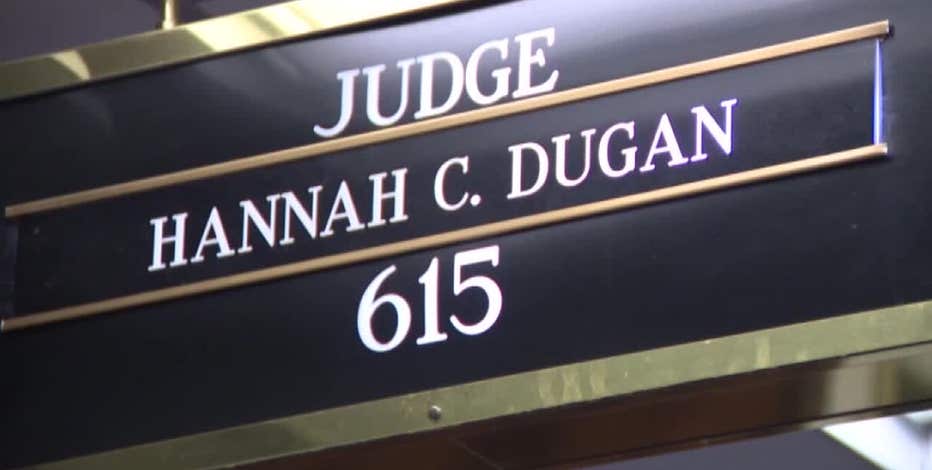
Milwaukee County Judge Hannah Dugan is asking for a new trial. She's already asked a federal judge to overrule the jury that found her guilty.
MILWAUKEE - Milwaukee County Judge Hannah Dugan is asking for a new trial. She already asked a federal judge to overrule the jury that found her guilty of obstructing federal agents.
Motion for new trial
In Court:
Court filings show Dugan's legal team filed a motion for a judgment of acquittal and, in doing so, moved for a new trial. The filings also sought to extend the deadlines for post-verdict motions.
FREE DOWNLOAD: Get breaking news alerts in the FOX LOCAL Mobile app for iOS or Android
The Dugan case sparked questions about courthouse arrests, and policies surrounding I.C.E. were a significant topic during Dugan's trial.
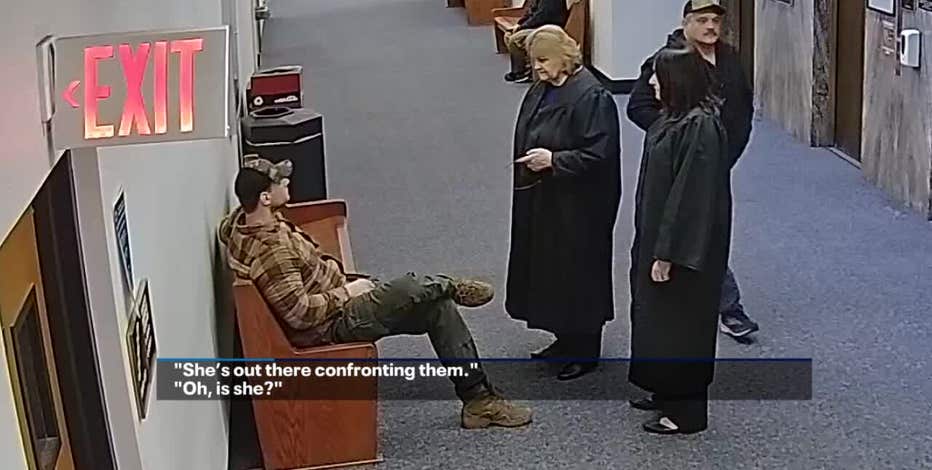
On April 18, federal agents said they planned to arrest Eduardo Flores-Ruiz, who was in the country illegally, in the public hallway outside Dugan's courtroom. Federal agents testified during the trial that Dugan ordered them to Chief Judge Carl Ashley's office. Ashley testified that nothing in the draft would stop I.C.E. from making arrests in public hallways, and there is no requirement for I.C.E. to check in with him.
Judge Dugan misconduct; despite guilty verdict, Dugan still being paid
Milwaukee County Judge Hannah Dugan still has her job, which means your tax money is going to her bank account, even after a jury found her guilty of obstructing federal agents.
Chief judge's draft policy
The backstory:
Milwaukee County Chief Judge Carl Ashley has said he's been working on a policy about I.C.E. at the courthouse for months and, a couple of weeks ago, told FOX6 to wait a few more weeks – but never-before-seen exhibits from the Dugan case reveal what those drafts said.
On April 3, Ashley wrote to fellow judges alerting them to two I.C.E. courthouse arrests – one on March 20, and another on April 3. Judge Laura Gramling Perez responded with information that I.C.E. could legally arrest people in public areas, and she suggested a court-wide policy that would include having agents check in with the chief judge before an arrest.
SIGN UP TODAY: Get daily headlines, breaking news emails from FOX6 News
Dugan responded to that email, saying: "I have seen in my court more people not showing up for court dates."
The judge said it would be helpful to have a "consistent set of protocols," adding: "Optimally, it would be great to have at least a draft of written protocols for the safety building, the courthouse and for children’s court. We are in some uncharted waters with some very serious and even potentially tragic community interests at risk in the balance. Given the effects on the justice system, all the parties, witnesses, jurors, litigants and the individual cases each of us hears it would be helpful to be clear on the new parameters within which we are to work and which a fair and efficient justice system can operate."
Ashley hosted a video call for judges on April 9. He also sent them a draft policy that was "just the initial discussion regarding the potential policy that must be vetted with our system partners."
In that draft policy, the chief judge stated worries about I.C.E. arrests in courthouses, saying: "U.S. Immigration and Customs Enforcement (ICE) agents detaining individuals within the courthouse complex pose significant concerns regarding the integrity and impartiality of the judicial system. Courthouses are traditionally places where individuals can seek justice and legal recourse without fear of retribution or apprehension."
What could ICE, judges do?
Dig deeper:
The draft then laid out I.C.E. policies on the topic, including that agents should generally avoid arrests in areas of the courthouse dedicated to non-criminal proceedings. It said victims of domestic violence, sexual assault, stalking, child abuse, battery, extreme cruelty and human trafficking were not to be arrested when in court related to their victimization.
Ashley's draft called for immigration officers who planned to arrest a victim to follow protocols and confirm for the court with evidence that approval was obtained by the field office director, special agent in charge or a designee.
Judge Dugan trial audio reveals moment ICE agents arrived at courthouse
Audio recordings from inside Judge Hannah Dugan’s courtroom were central to a federal trial that ended with her conviction for obstructing ICE agents during an attempted arrest.
An I.C.E. administrative warrant, signed by any I.C.E. officer, authorizes arrest but does not grant access to non-public areas and does not require courthouse staff to cooperate. A federal judicial warrant would allow agents entry into non-public areas.
The draft from the chief judge said: "Court personnel may not allow immigration agents into nonpublic areas of the courthouse and must promptly refer immigration agency personnel to their immediate supervisor or manager. If an immigration enforcement officer insists on access to a non-public area, the employee should not resist but should say, ‘I do not consent, but because I have no choice at this time, I will not interfere with your order.’"
Judges were also to notify the chief judge and court administrator of any immigration activity. After the April 9 meeting with judges, Ashley made changes to the draft, adding: "The agents will certify that they have followed their agency protocols prior to any enforcement action taking place"
SIGN UP TODAY: Get daily headlines, breaking news emails from FOX6 News
The chief judge added: "The chief judge for Milwaukee County, District 1 and the district court administrator for Milwaukee County will be informed prior to arriving at courthouse/courthouse complex including the Vel R. Phillips Juvenile Justice Center when an immigration enforcement action is to take place. U.S. Immigration and Customs Enforcement (ICE) agents will provide identification to court personnel so we know who is taking enforcement action."
Then, after the Dugan incident, Ashley sent a copy of his draft policy to the I.C.E. assistant field office director for Chicago, Cassandra Kubiszewski. He said the draft was vetted by the county executive's office, sheriff's office, corporation counsel, Milwaukee Police Department, clerk of courts, district attorney and state public defender's office.
Ashley also wrote his hope was to "reconcile any concerns you may have regarding the policy" and that "all of the agent’s actions were consistent with our draft policies."
The Source: FOX6 News reviewed records, including exhibits in the Dugan case, and referenced prior coverage.