

High levels of tick activity in Wisconsin; what you need to know
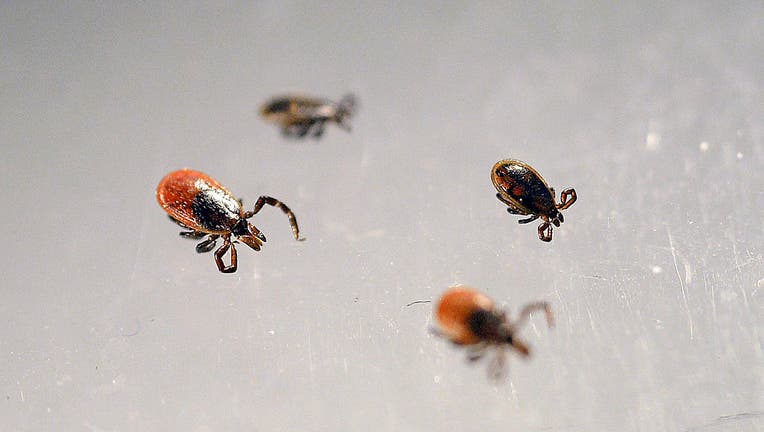
Deer ticks on a tray as Maggie Welch, a research Assistant at Maine Medical Center researches ticks. (Photo by Shawn Patrick Ouellette/Portland Portland Press Herald via Getty Images)
MILWAUKEE - As tick activity peaks for the season, the Wisconsin Department of Health Services (DHS) reports that nymphal deer (blacklegged) ticks are currently driving the surge in activity.
Though they are only the size of a poppyseed, these young (not yet adult) deer ticks are responsible for spreading more human tickborne illnesses than adult deer ticks, including Lyme disease.
About nymphal deer ticks
What they're saying:
"Nymphal ticks are harder to spot due to their small size, making them more likely to go unnoticed, and remain attached for longer, so they have a higher potential to transmit disease," said Vectorborne Disease Epidemiologist Rebecca Osborn. "Fortunately, there are many ways to prevent tick bites, including using insect repellent, wearing clothes and gear that have been treated with permethrin, and doing daily tick checks when you are outdoors."
If Wisconsinites do find a tick on themselves, family, or friends, and want to learn more about it, they can submit it to DHS through the DHS Tick Identification Service, a fast and simple service to identify the tick based on a few questions and photographs submitted online.
SIGN UP TODAY: Get daily headlines, breaking news emails from FOX6 News
Heading outside?
What you can do:
Planning to head outdoors? Wisconsin DHS suggests taking these steps:
- Wear long sleeves, long pants, and socks when outdoors to help keep ticks away from skin. Wear light-colored clothing to make ticks easier to spot.
- Apply insect repellent with DEET, picaridin, oil of lemon eucalyptus, or IR3535 to exposed skin and clothing.
- Treat clothing with permethrin prior to heading outdoors. Do not apply permethrin directly to skin.
- Walk in the center of trails and avoid wooded and brushy areas with tall grass and leaf litter.
- Do daily tick checks after being outdoors in areas where ticks may be present.Check all parts of the body carefully. Pay special attention to the armpits, behind the knees, scalp, in and around the ears, inside the belly button, and groin.Parents should check their children for ticks.
- Check all parts of the body carefully. Pay special attention to the armpits, behind the knees, scalp, in and around the ears, inside the belly button, and groin.
- Parents should check their children for ticks.
- Take a bath or shower within two hours of spending time outdoors to help find and remove any ticks.
- Place your clothes in the dryer on high heat for 10 minutes to kill any ticks you may have picked up after spending time outdoors.
FREE DOWNLOAD: Get breaking news alerts in the FOX LOCAL Mobile app for iOS or Android
Found a tick?
What you can do:
If you find a tick, the DHS recommends taking these immediate steps:
- Remove the tick properly as soon as possible.
- Grasp it with a narrow-bladed tweezer as close as possible to the skin using steady pressure. If tweezers are not available, they should use fingers shielded with tissue paper or rubber gloves.
- Use rubbing alcohol or soap and water after removing the tick to clean the bite site and hands.
- Take a picture of the tick to identify it. Never crush a tick after removing it. Get rid of the tick by one of the following:Putting it in alcohol.Placing it in a sealed bag or container.Wrapping it tightly in tape.Flushing it down the toilet.
- Putting it in alcohol.
- Placing it in a sealed bag or container.
- Wrapping it tightly in tape.
- Flushing it down the toilet.
The Source: The information in this post was provided by the Wisconsin Department of Health Services (DHS).