

'A pacemaker for the brain:' West Bend woman gets new lease on life with Deep Brain Stimulation

West Bend woman gets new lease on life with Deep Brain Stimulation
West Bend woman gets new lease on life with Deep Brain Stimulation
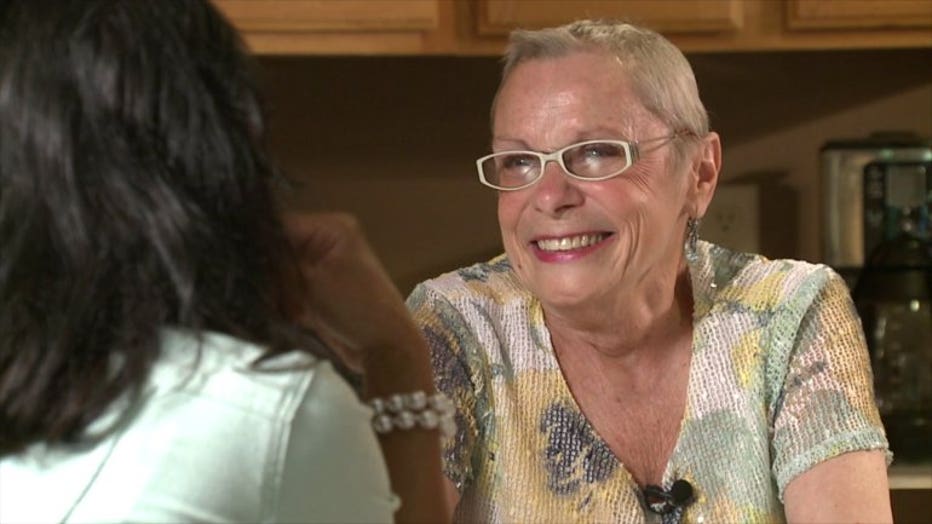
WEST BEND — On a warm summer day, Sandy Ploor of West Bend is steady on a walk through her neighborhood. There are no signs of the 74-year-old slowing down.
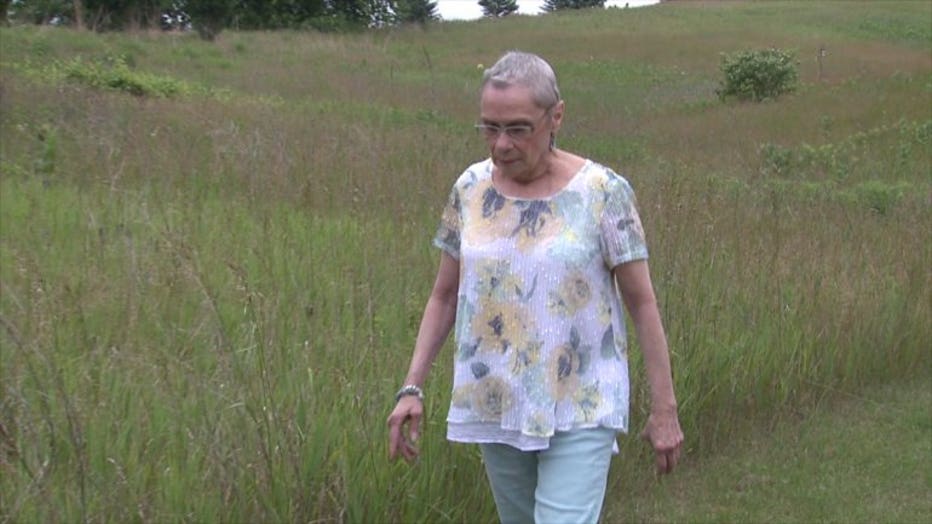
Sandy Ploor
In fact, she's just getting started.
"You have to learn to laugh at yourself that`s how it got me through a lot of that," Ploor said.
Just a few months ago, Ploor says holding a glass of water was nearly impossible.
About 20 years ago, Ploor started getting the shakes. At first, it was only slightly in her right hand.
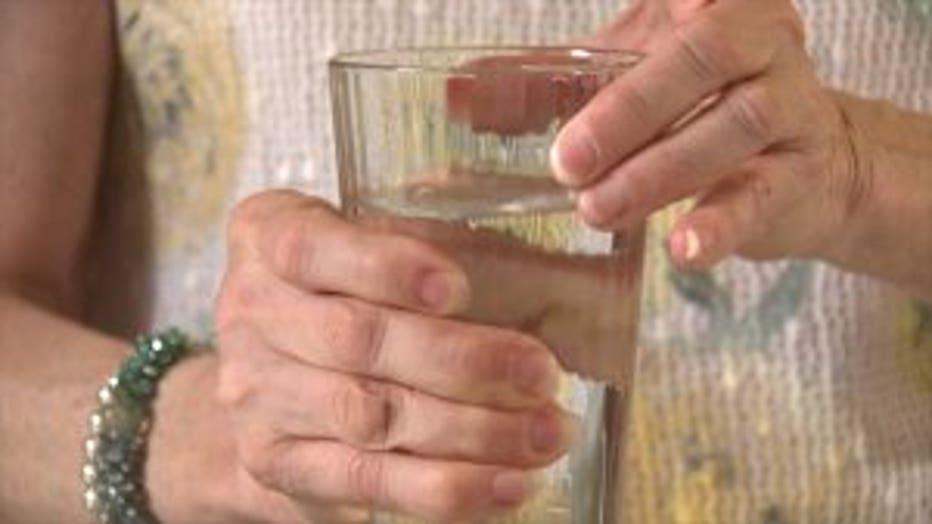
"I used to be right-handed and I trained myself to write with my left hand," Ploor recalled.
But even that didn't work for long.
"I could never read what I wrote and that was so frustrating," Ploor said.
Ploor was diagnosed with essential tremor. The symptoms are often mistaken for Parkinson's disease and are quite similar. Essential tremor is commonly associated with shaking and trembling.
Ploor was on medication, but it wasn't helping.
"I was carrying some cookies, Christmas cookies, and it was on a tray and all of a sudden and I'm walking along and the cookies are bouncing along, really up high in the air," Ploor remembered.
Ploor's condition was getting worse and worse.
"Getting the food into your mouth. You couldn`t. It`s almost like I had to stick my tongue out to steady the utensil," Ploor said.
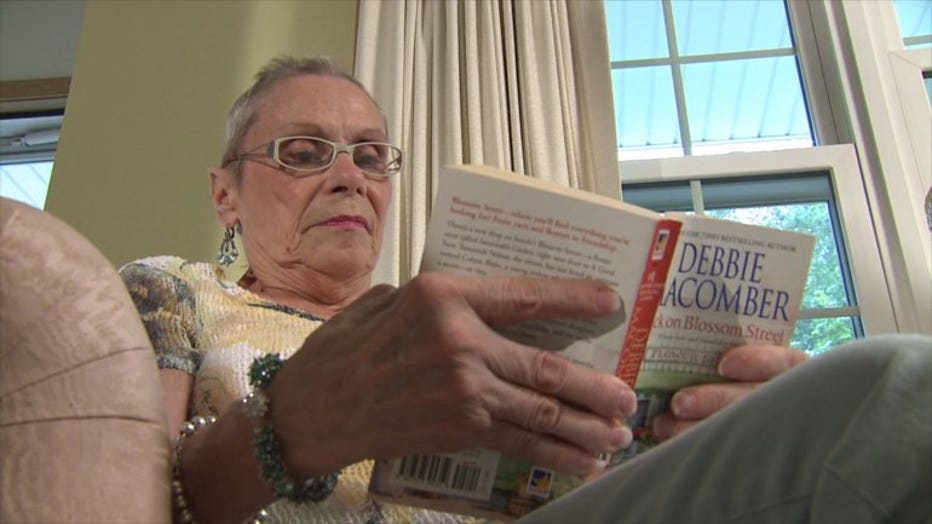
She knew she needed some to turn the page. So, she headed to Aurora St. Luke's.
After several tests and consultations, Ploor met Dr. Kyle Swanson. Dr. Swanson is a neurosurgeon who introduced Ploor to a different option to help her tremors -- Deep Brain Stimulation (DBS).
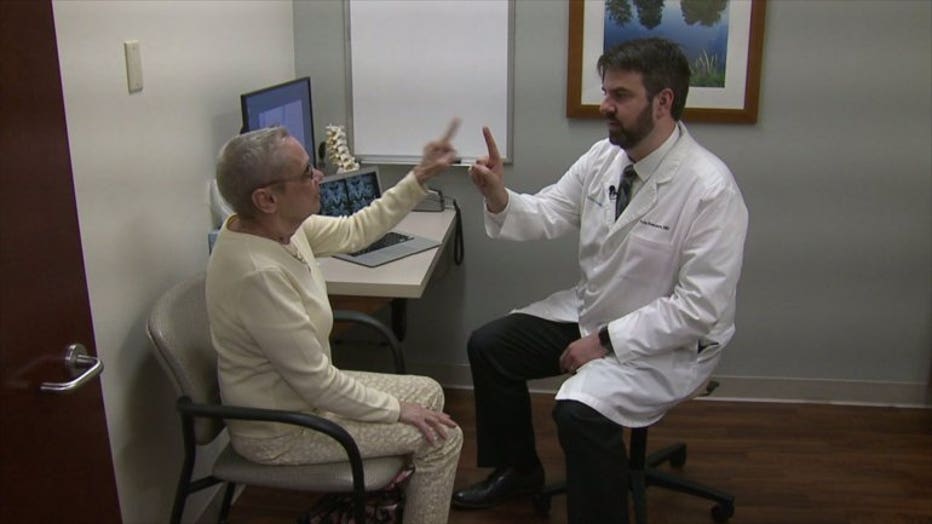
Sandy Ploor and Dr. Kyle Swanson
"Sometimes people describe it sort of as a pacemaker for the brain. It's changing the firing of the brain in order to
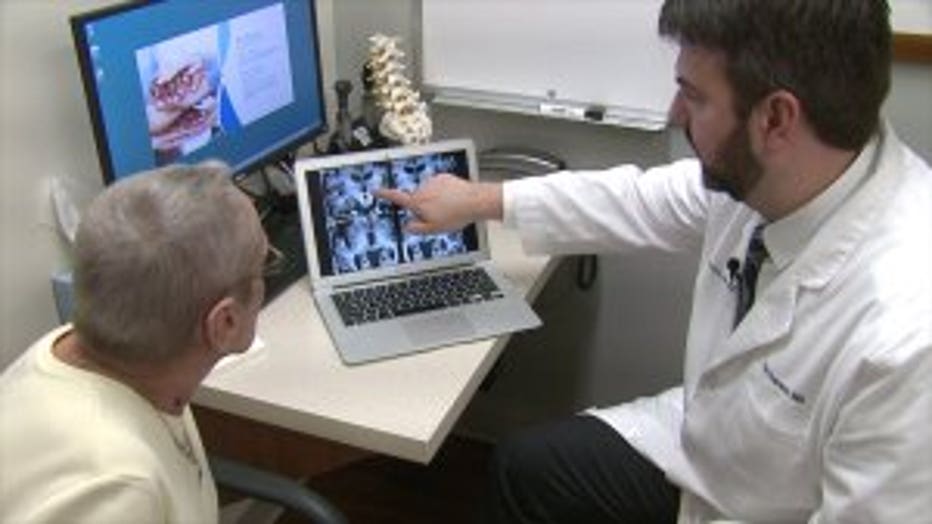
make it work more the way that it should and get rid of the things that are abnormal," Dr. Swanson explained.
DBS requires doctors to implant small electrodes onto the brain to help control irregular impulses -- like shaking.
"We're trying to get within 2 millimeters of our target. We use that CT scan to verify that we've hit the target immediately after we replace the electrodes," Dr. Swanson said about the DBS surgery.
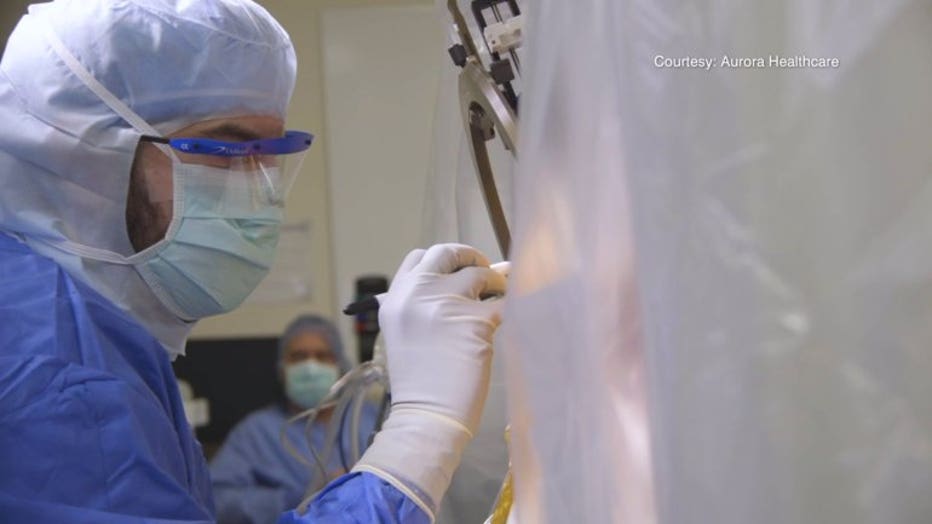
Patients, like Ploor, are then connected to a device in their chest.
"We connect the electrodes which go in the front of the head here down underneath the skin to a battery similar to a pacemaker that`s implanted just below the collarbone," said Dr. Swanson.
After her surgery, Ploor says she saw a difference right away.
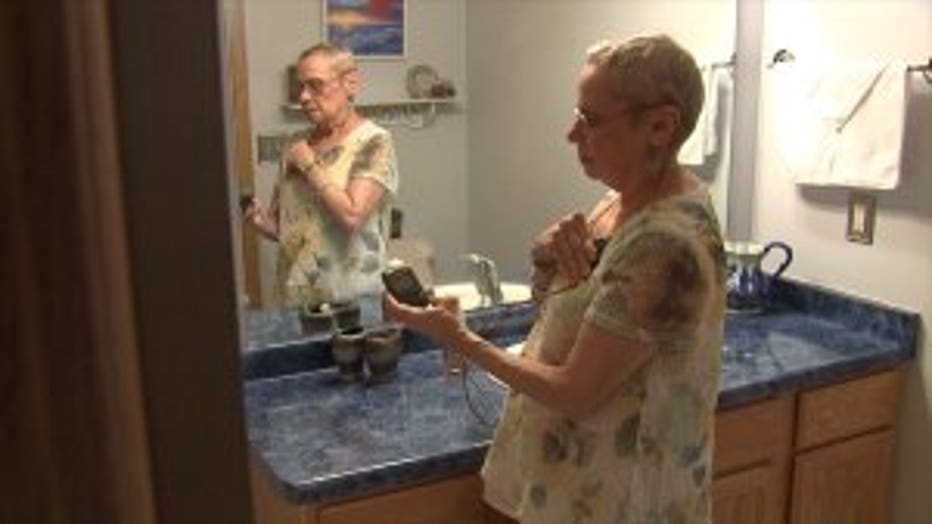
"I came out of there and I was steady as a rock. And I was not even hooked up to my stimulator," Ploor said.
The stimulators can't be turned on for about two weeks after surgery so the brain has time to heal. After that, patients can leave it on all the time or turn it off to preserve the battery. They, also, are monitored by their doctors to ensure the device is working properly.
"The quality of life is just awesome," Ploor said.
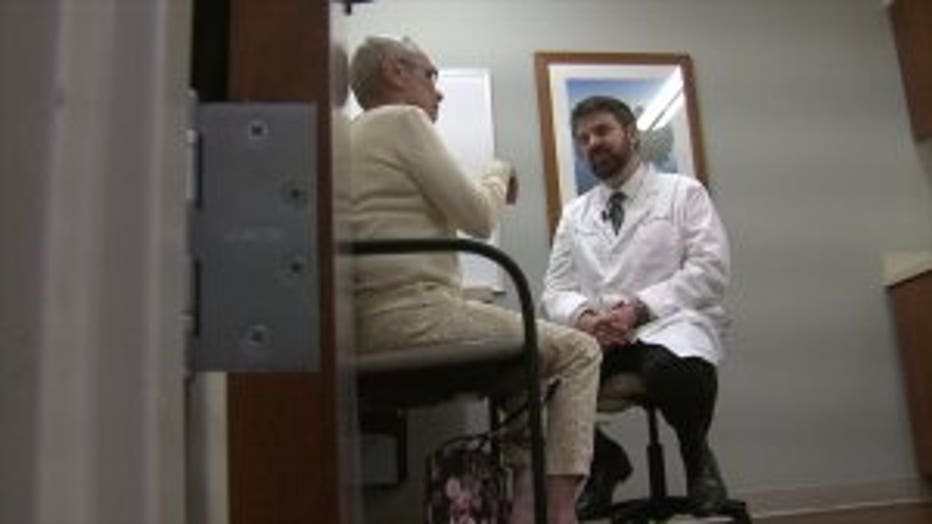
After nearly two decades of living with shakes and trembles, Ploor is almost back to normal after only three months.
She even enjoys eating out again.
"And I didn`t have to stick my tongue out to hold my food on a fork. And I`m like, 'Wow,'" Ploor said.
It's given ger everything she had hoped. Well, except for one thing she asked from her doctor.
"When I went for a checkup I looked at him and I said, 'So, Where's my blonde curly hair?' and he said, 'You're not getting it,'" Ploor joked.
There's no cure for essential tremor. The DBS just eases the symptoms.
Ploor is gaining strength every day. Her number one goal is to get her handwriting back to where it used to be.