

Wisconsin Weather: Is Canadian wildfire smoke the new normal?
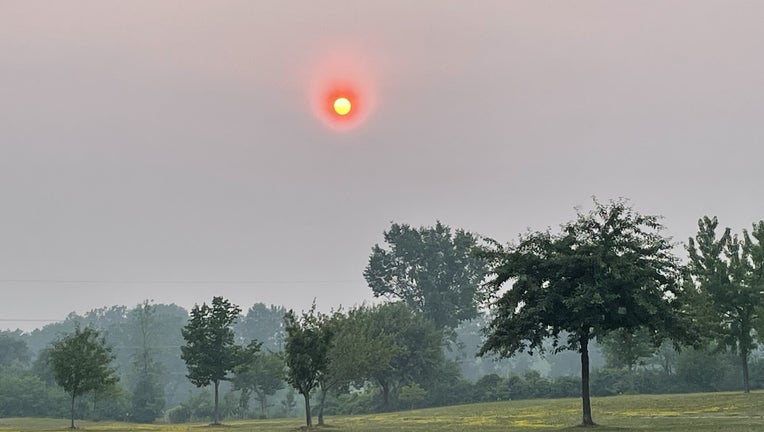
Smoky skies in South Milwaukee (Credit: Mike)
MILWAUKEE - In July 2026, Wisconsin dealt with a long stretch of dense wildfire surface smoke. Extremely poor air quality made it hazardous to go outside, and low visibility captured the attention of many.
This was not the only time wildfire smoke penetrated the state. In 2023, a historic year of wildland fires in Canada, Wisconsin was greatly impacted in the summer.
Unfortunately, the number of increased smoky days across the Badger state may be the new norm in the future.
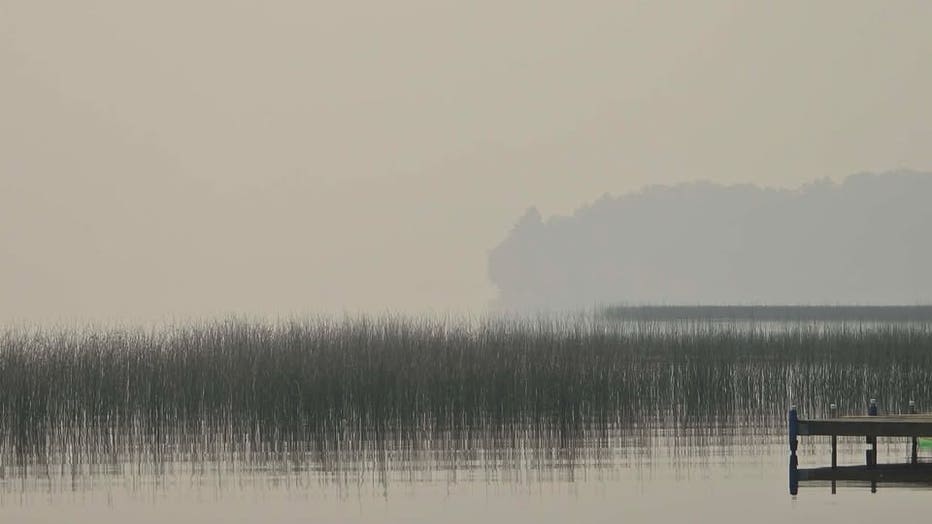
(Credit: Jennifer Miller in Pelican Lake)
According to the Canadian Council of Forest Ministers, a wildland fire is an "unplanned fire within forested landscapes, including industrial and agricultural areas, and where communities and build infrastructure mix with forests." This term will be used frequently throughout this article.
Why is there more smoke recently?
Big picture view:
The simple answer —climate change! Warmer than average temperatures, decreased snowpack plus snow melting earlier in the season, and low soil moisture from drought conditions—these are all signs that climate change is affecting the frequency, size, and intensity of wildfires in Canada.
There are not more fires occurring, but rather, the fires are burning longer, growing larger, getting hotter, and are overall more intense, creating more smoke.
The graph shows the number of annual fires in Canada dating back to 1980. There were more fires back then than over the past 15 years.
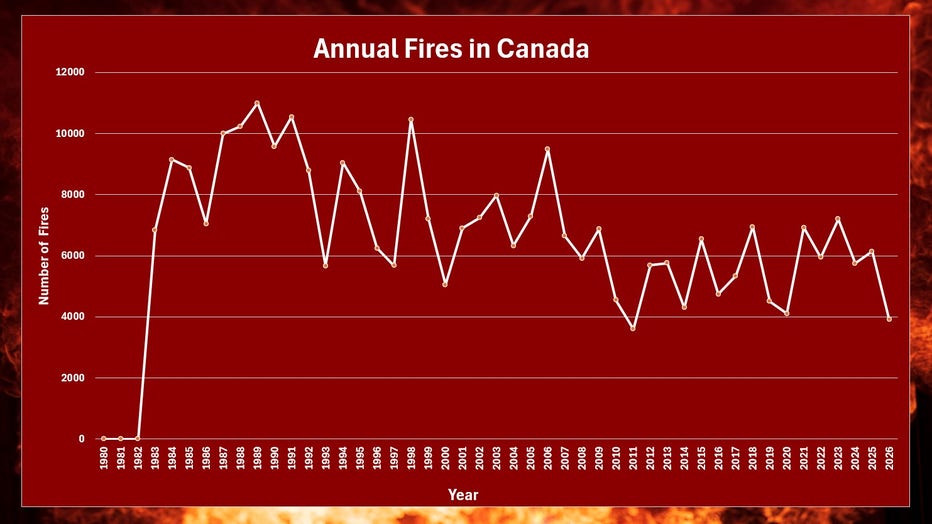
Number of annual fires in Canada (Data: Canadian Interagency Forest Fire Centre Inc. )
The growing intensity of fires has caused a significant increase in the amount of area burned (see graph below). In the past three years, there have been more acres of land burned annually than ever recorded. 2023 hit a historic high with 45,786,106 million acres burned in Canada.
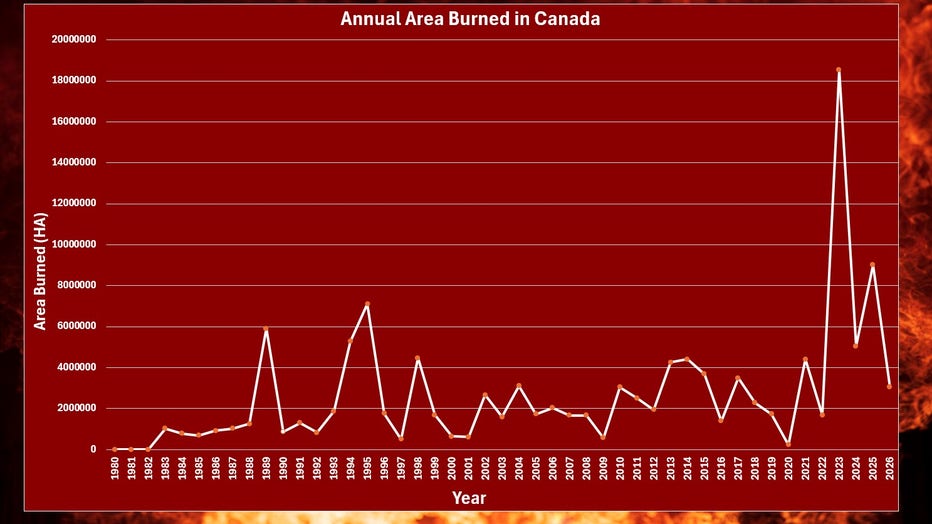
Annual area burned(HA) due to fires in Canada (Data: Canadian Interagency Forest Fire Centre Inc. )
Why can't the fires get under control?
Dig deeper:
Most of the wildland fires are in remote areas of the boreal forest where there is little to no road access and no water system to help fight the fumes.
Firefighters rely on aircraft or specific transportation to reach the fires, making it almost impossible to fight the large blaze.
Due to this challenge, they often let the fires burn, while monitoring them, of course, to make sure they aren't nearing towns, infrastructure, or life. When fires do have an impact on those, firefighters jump into action.
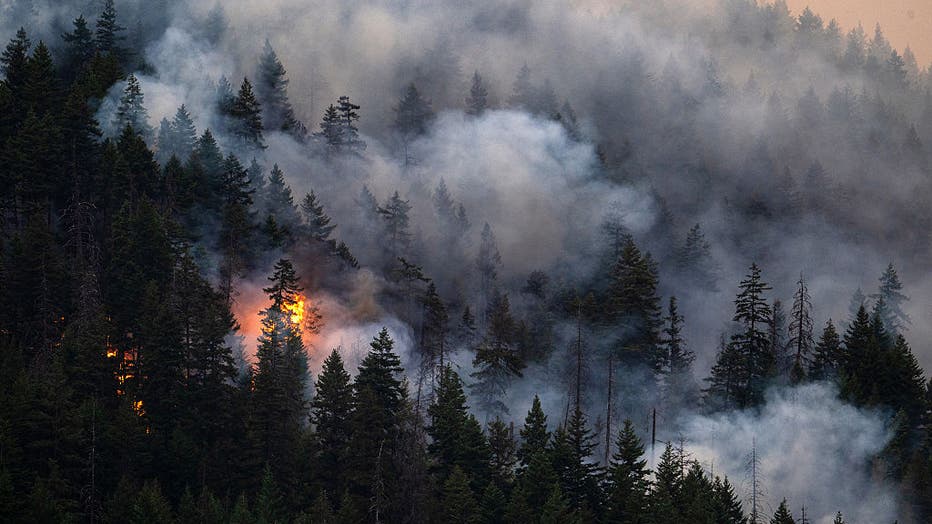
The Brunswick Creek Wildfire from Boston Bar, British Columbia, Canada, on Tuesday, July 7, 2026. The Brunswick Creek wildfire has grown from about 100 hectares on Saturday to more than 1,200 hectares, according to the B.C. Wildfire Service, CBC repo
The majority of remote fires are typically sparked by lightning. In fact, lightning causes 46% of all fires, but makes up for 83% of the annual areas burned.
Fires thrive in Canada due to the plentiful fuel in the forests such as needles, leaf debris, and additional underbrush that may have been there for decades.
What does this mean for the future?
Looking Ahead:
Wildland fires are part of the natural cycle of regenerating the ecosystem. Stopping fires all together would be nearly impossible to control, and actually harm the environment.
Climate change impacts on Canada will continue to create warmer temperatures, causing drought conditions, leading to a longer fire season.
Alas, more smoke will be produced with larger and longer fires in the future years. We will have to live with fires and smoke in the atmosphere, but that does not always mean the smoke will come into Wisconsin.
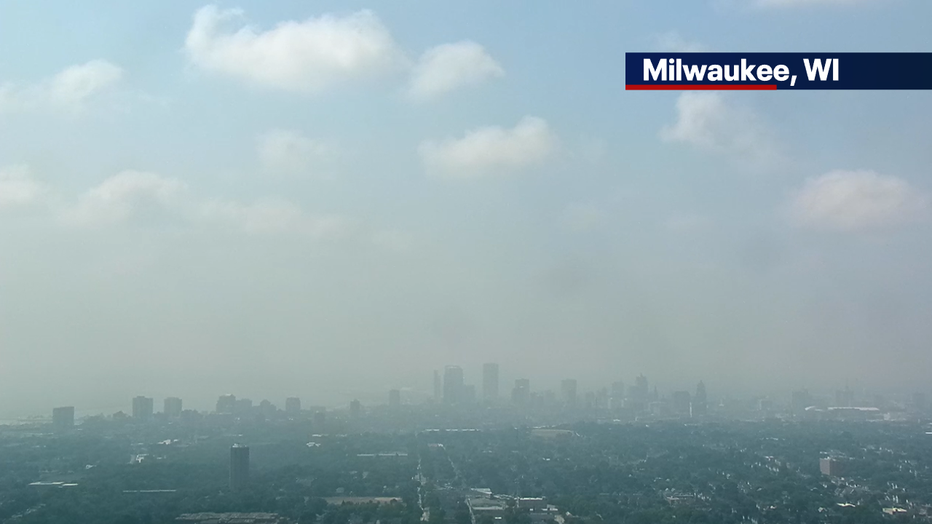
Wildfire surface smoke over Milwaukee
The location of the fires will determine where the smoke billows up into the sky and the winds and jet stream determine where the smoke will blow.
What brings the smoke to the surface can be weather fronts and sinking air, also known as subsidence.
Managing the fires going forward
What's next:
Managing the wildfires is going to be a challenge. According to the Natural Resources of Canada, nearly 40% of Canada is covered by forest. According to the US Forest Service, nearly 34% of the United States is covered by forest.
While these numbers do not appear drastically different, managing wildfires in Canada is a greater challenge since it is harder to navigate through the forests, and they are generally further from away from urban areas.
The key to moving ahead will be:
- Educate the whole of society
- Analyze data on how to better manage fires
- Focus on roles of prevention and mitigation
- "Calling a friend' by having international arrangements to fight fires
- Sharing knowledge and building partners around the world to further understand managing wildfires
Prevention and mitigation include:
- Reducing highly flammable vegetation and growing better climate adapting plants
- Assess wildland fire hazards through data and modeling
- Adopting standards for community expansion/development (especially in wildland-urband interface structures)
- Engaging and educating people
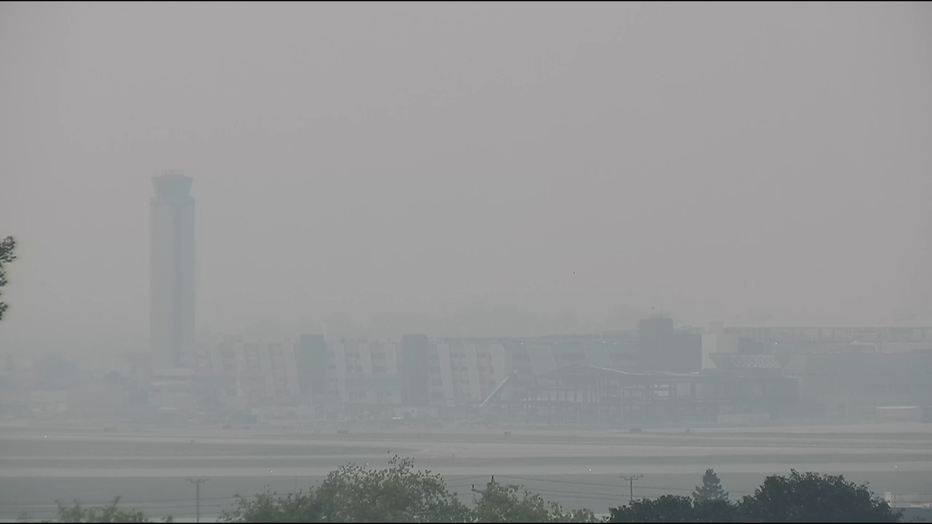
Wildfire surface smoke over Milwaukee Mitchell International Airport
Destructive fires will continue to impact Earth and the atmosphere, but people must come together to create healthier air for the future
The Source: FOX6 Weather Experts, Canadian Council of Forest Ministers, Government of Canada, Canadian Interagency Forest Fire Centre Inc., and Sustainable Forestry Initiative