

Army postpones Iowa detonation of bomb-making chemicals
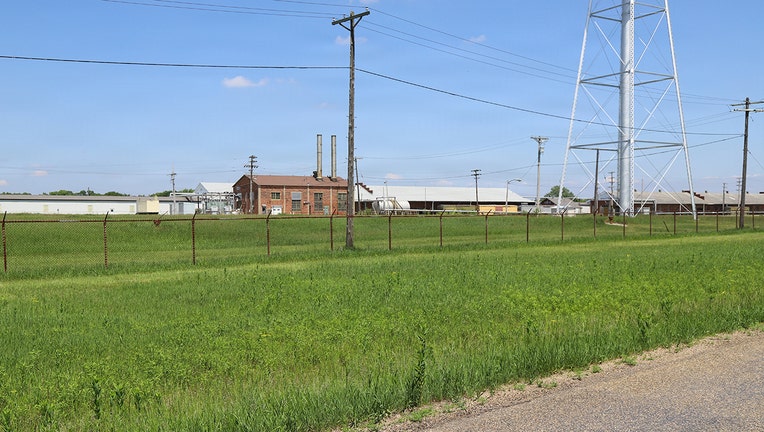
Outside perimeter of Iowa Army Ammunition Plant. (U.S. Army photo by Shawn Eldridge, U.S. Army Sustainment Command via DVIDS)
CHICAGO - U.S. Army officials have pushed back plans to detonate old, unstable explosives at an ammunition plant in Iowa.
Previously, the Army planned to set off two controlled blasts and destroy the bomb-making chemicals on Friday, Nov. 20.
Now, in a social media post, Acting Secretary of the Army Adam Telle said the blasts will be postponed until Monday, Nov. 23.
Iowa detonation is delayed
The backstory:
According to the Associated Press, Iowa Gov. Kim Reynolds spoke directly with Telle and asked him to push back the detonation.
Environmental groups also filed a lawsuit in an effort to stop the explosion, the Associated Press reports.
The planning process for the detonation began as officials found 68 barrels of degraded lead azide at the Iowa Army Ammunition Plant in Middletown, a small town of about 320 people just west of Burlington and the Mississippi River.
Routine inspections found that this specific batch had degraded to the point where normal handling was no longer safe.
The Associated Press reports that lead azide is sensitive to temperature changes.
As a result, the Army decided to delay the detonation "until the latest possible moment prior to a forecasted temperature drop, which would risk further destabilization of the material," Telle wrote on X.
While public health officials have expressed concerns, the Army has said the operation will have "no significant impact" on the surrounding environment. Crews plan to stack two-story sand barriers around the blast site, wet the soil and spray water to trap dust and contain debris.
What is lead azide?
Dig deeper:
Lead azide is a sensitive chemical compound used to ignite military ammunition. Since it's not being used, the U.S. Environmental Protection Agency describes it as "hazardous waste."
Over time, old lead azide breaks down and becomes sensitive to friction and shock.
"This means that even a small quantity of lead azide can detonate with friction or heat, making it inherently dangerous to transport," Matthew McConnell, an assistant professor of chemistry at Western Illinois University, told FOX TV Stations.
READ MORE: Planned Iowa blast could send lead dust into Illinois, health officials warn
Because loading it onto a truck and hauling it elsewhere is too risky, the Army obtained an emergency permit from the EPA on Nov. 13 to destroy it at the plant.
The blast could break windows and send a plume of toxic lead particles several miles into the air, the Army advised.
Tracking maps previously released by the Army showed dust plumes could travel dust could travel across the Mississippi River into western Illinois. Newer maps showed the plume staying mostly on the Iowa side, drifting north through the southeastern part of the state. The outer edge was still projected to pass roughly 10 miles west of New Boston, Illinois, though.
McConnell said the dust cloud from a lead azide explosion is primarily made up of debris from the blast—such as dirt, plastic containers and building materials—mixed with solid lead and lead ions.
What happens if you inhale the dust?
What they're saying:
If you briefly breathe in lead particles, you likely won't feel sick right away — but even tiny amounts can build up in your body over time and pose health risks.
"The important thing to understand is that a small, one-time exposure would not typically cause immediate symptoms. Most people with elevated blood lead levels have no noticeable symptoms at all," said Dr. Bernard "Ben" Weigel, a medical director for the Illinois Poison Center.
"The primary concern is the cumulative effect of lead exposure over time, particularly in young children, whose developing brains are especially vulnerable," he added. "There is no known safe level of lead exposure."
Children under 6 and pregnant women face the greatest risks because lead can affect brain development, Weigel said.
To limit exposure, the Illinois Department of Public Health urged nearby residents to stay indoors with windows closed for up to 48 hours, wash outdoor surfaces with soap and water, and wash their hands before eating or drinking.
Closer to the plant, the U.S. Army has asked people in Middletown's City Park neighborhood to temporarily evacuate and offered temporary shelter at the Armed Forces Reserve Center.
The Source: Information from the U.S. Army, Environmental Protection Agency and an email interview with Western Illinois University assistant chemistry professor Matthew McConnell contributed to this story. This article was reported in Eden Prairie, Minnesota.