

Strangulations overwhelm Milwaukee domestic violence high risk team
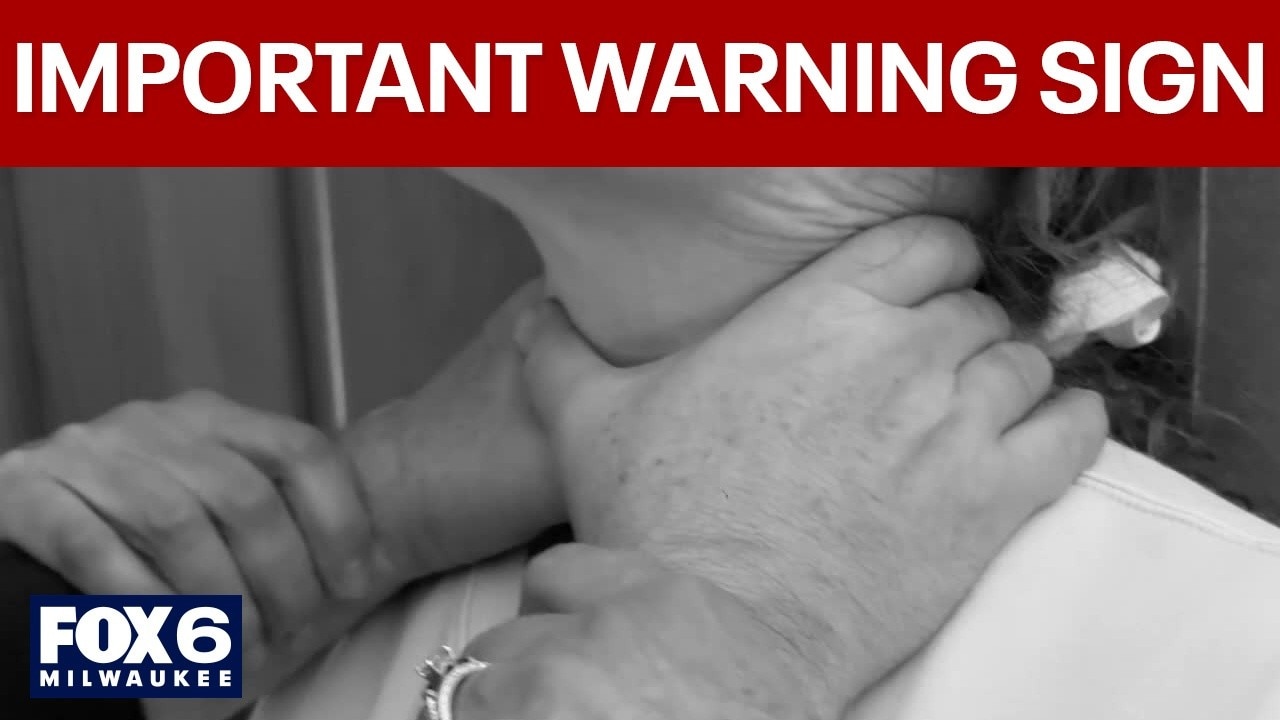
Strangulations overwhelm Milwaukee domestic violence high risk team
Trial is looming for a Milwaukee man charged with stabbing his wife to death and then fleeing to Minnesota. A family violence expert says it is a homicide that should never have happened.
MILWAUKEE - Trial is looming for a Milwaukee man charged with stabbing his wife to death and then fleeing to Minnesota. A family violence expert says it is a homicide that should never have happened.
Red flags were there
What we know:
Prosecutors said Jerrod Stewart stabbed his wife 49 times, then stuffed her body in the trunk of her own car. A family violence expert focused on what happened three months before her death: a warning shot that Stewart was more likely to escalate to lethal violence.
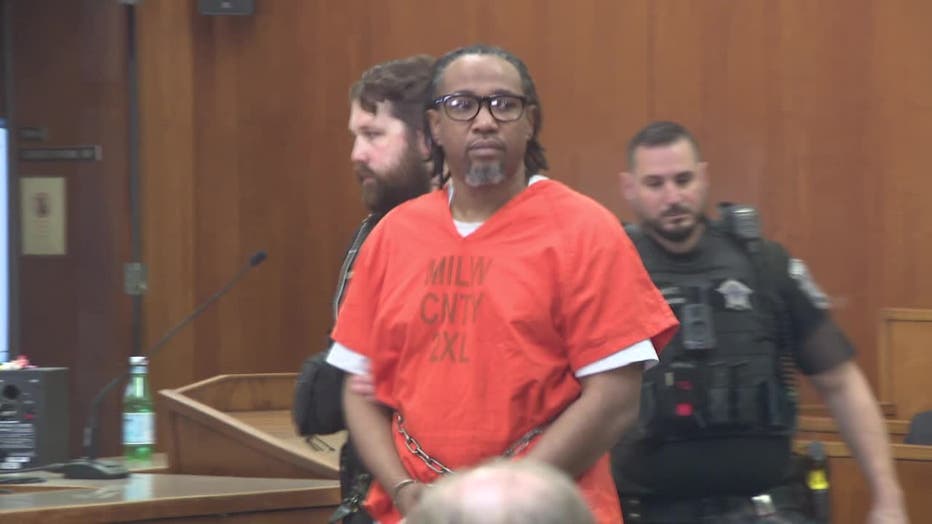
Jerrod Stewart appears in Milwaukee County Circuit Court
"He’s been sending off so many red flags for so long it’s almost stunning!" said Casey Gwinn of the Alliance for Hope International.
A jury will soon decide if 43-year-old Jerrod Stewart is guilty of murdering his wife. One thing is certain –Tomitka Stewart is never coming home.
SIGN UP TODAY: Get daily headlines, breaking news emails from FOX6 News
"She had the restraining order," said Elizabeth Houston, Tomikta’s younger sister. "She had the ankle monitor. She went to the police. And it just wasn’t enough."
"When victims come forward for help, they should not die," Gwinn said. "And when victims come forward and they die, we have failed!"
Last warning shot
Big picture view:
Gwinn is a family violence prevention expert who travels the country training nurses, emergency medical technicians, police, and prosecutors on how to recognize the clues that an abuser is likely to become a killer.
"The majority of all women in America are killed with firearms," Gwinn said.
But guns are not what he’s focused on. Rather, it is something most abusers do to victims before the violence escalates.
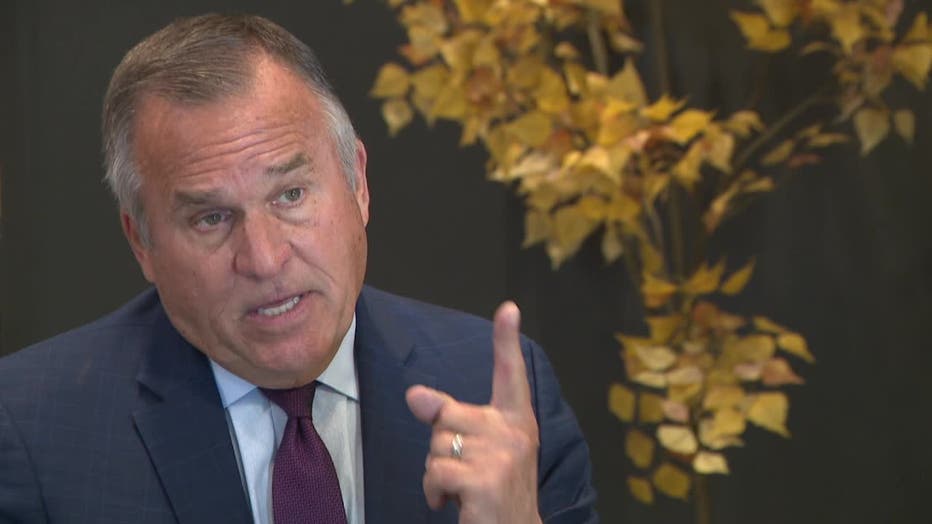
Casey Gwinn, Training Institute on Strangulation Prevention
"The victim is suffering brain damage by the second," Gwinn said.
They strangle them.
"Men who strangle women are the most dangerous men on planet earth," said Gwinn, who co-founded the Training Institute on Strangulation Prevention.
Research published in 2008 shows men who strangle their partners are seven-and-a-half times more likely to commit a future homicide than other abusers.
History of domestic abuse
Timeline:
Jerrod Stewart’s history of abusing women is long and well-documented. He once shot a woman in the arm, punched another in the face, and faced accusations from a third of kicking in a door and making death threats. In 2018, he was convicted of pulling his wife’s hair, stepping on her face, and threatening to kill her and everything she loves.
"He raised his hand a long time ago and said he was more likely to kill," Gwinn said.
Gwinn said the most troubling charge came in January 2024. Milwaukee police said Stewart was angry that Tomitka was withholding sex. According to court records, he barricaded her inside the bedroom of their 10th Street home and battered her while at least five of her children helplessly listened. An 11-year-old called 911 anyway, and officers said they caught Jerrod Stewart trying to jump from the bedroom window.
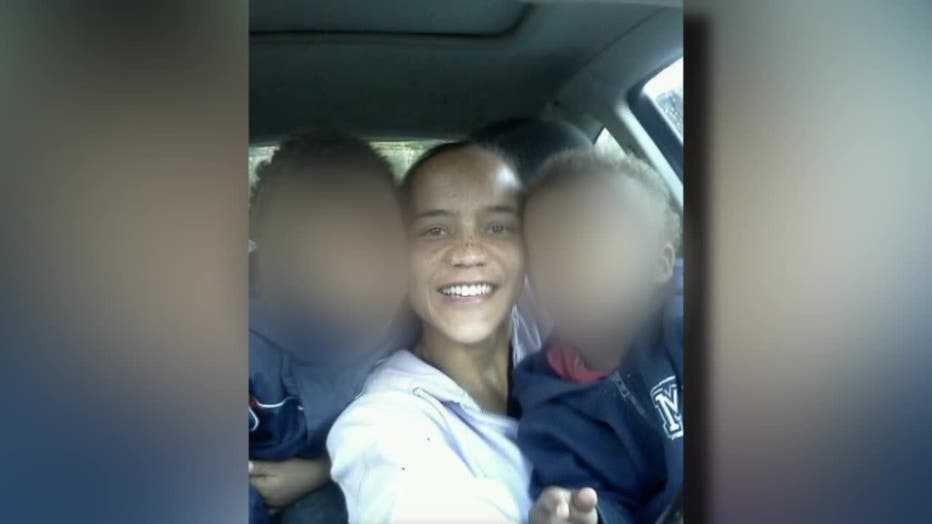
Tomitka Stewart, homicide victim
In the midst of the ordeal, Tomitka said her husband wrapped one hand around her neck and squeezed until she could not breathe.
"They’re telling the victim, ‘I can kill you. I am God. And I will decide if you live or die,’" Gwinn said.
Prosecutors charged Jerrod Stewart with five crimes, including strangulation and suffocation. Based on published research on strangulation, Gwinn believes that was Stewart’s last warning shot.
"Men who strangle women are more likely to be the killers of women," Gwinn said.
‘Substantial risk’ of homicide
Dig deeper:
A family court commissioner found a "substantial risk" Jerrod would eventually kill Tomitka and imposed a 10-year no-contact order. Still, the criminal court judge set him free on $5,000 cash bail.
"There was an ankle monitor. He couldn’t be within so many feet of her house and her job and things like that," Houston said.
On April 2, 2024, his GPS bracelet tracked him inside the prohibited zone. Stewart said he was taking a detour near Hadley and 10th Street going that way, which happened to take him about 50 steps from Tomitka’s house.
"That sounds exactly like what someone would do to intimidate and scare somebody. I’m still going to come close. This ankle monitor can’t stop me," Houston said.
Justice Point – the pre-trial services contractor charged with keeping tabs on Stewart – logged the violation, but nothing else happened.
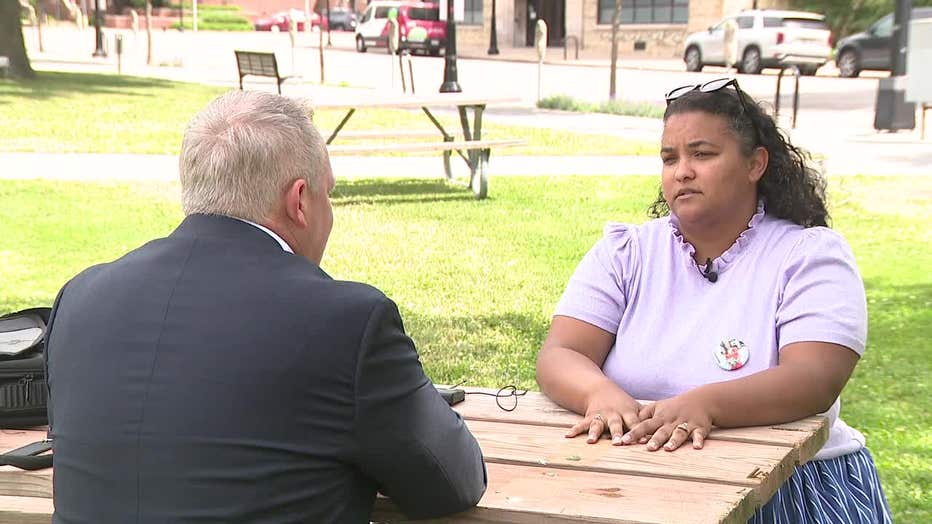
Elizabeth Houston, victim's sister
"What’s the point? It serves no purpose," Gwinn said.
Justice Point’s violation report was placed in the court file 15 days later, on April 17 – the same day police found Tomitka with stab wounds to almost every part of her body. Police found her car abandoned after family members had been urging them to search for Tomitka for three days.
"Nobody deserves to die like that," Houston said.
"It’s a total system failure," Gwinn said.
So many strangulations
The other side:
"We’re doing good work, but there are moments when there are gaps," said Carmen Pitre, executive director of Sojourner Family Peace Center, Milwaukee’s nonprofit clearinghouse of domestic violence intervention services.
"Strangulation is one of the most lethal acts that a person can do. It’s right before a homicide occurs," Pitre said.
Pitre said the sheer volume of strangulation cases in Milwaukee County is overwhelming. Over the past eight years, prosecutors in Milwaukee County have charged more than 2,000 strangulation cases.
"We are at capacity every week," said Michelle Coppens, coordinator of Milwaukee County’s Domestic Violence High Risk Team.
The team brings police, prosecutors, probation agents and social services together twice a week to review the most dangerous cases and craft recommendations to protect victims. Last year alone, the team took on more than 1,600 high-risk cases. Strangulation served as the primary risk factor in 194 of them. Pitre said those are just the tip of the iceberg.
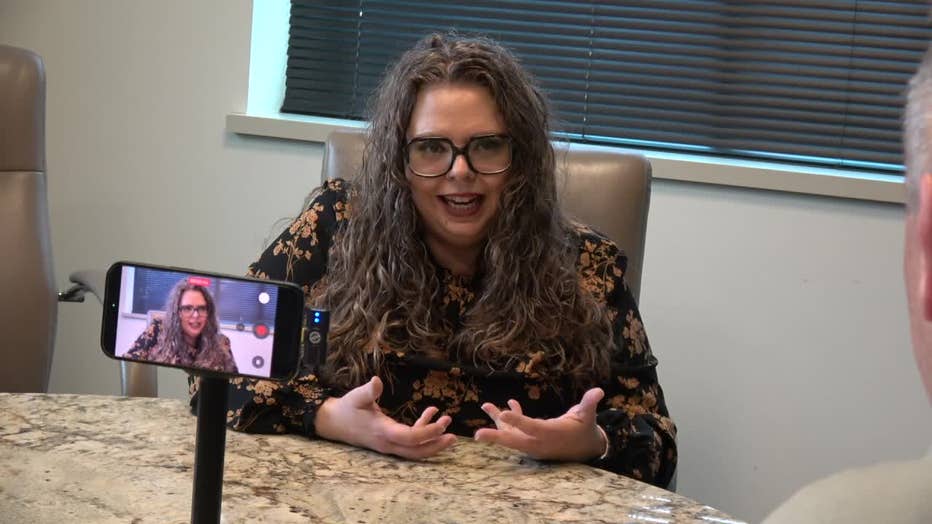
Michelle Coppens, Coordinator, Milwaukee County Domestic Violence High Risk Team
"There’s so many strangulations. They can only review the cases where a person who’s been strangled passed out or lost bodily function," Pitre said.
It is a category called strangulation to unconsciousness.
"Typically, that indicates a higher level of force, a longer duration of time that someone’s being strangled," Coppens said.
Tomitka told police her husband cut off her breathing for what felt like 30 seconds. Because she never passed out, her case was unlikely to be flagged high risk on that alone.
"You can say there’s way too many stranglers; we can’t lock all the stranglers up. I say the stranglers are the ones that should be locked up," Gwinn said.
Gwinn said he is not casting blame on violence prevention workers in Milwaukee; he helped Pitre launch Sojourner 10 years ago. When it comes to Jerrod Stewart, he believes the writing was on the wall.
"He should have been in jail!" Gwinn said.
The science of homicide risk
The Research:
"Sometimes systems don’t work the way they’re supposed to work," Pitre said. She says the only one to blame for Tomitka’s death is the one who killed her, but every death is cause for reevaluation.
"Are we missing something? Does something need to change?" Pitre said.
Change is what Elizabeth Houston is after.
"I do hope at the end of this they can come up with something better to protect the victims," Houston said.
For the past decade, police agencies in Milwaukee County have been using a tool that’s supposed to help them do just that.
"The science and data around what makes a case high risk is probably the biggest development that I’ve experienced in my career," Coppens said.
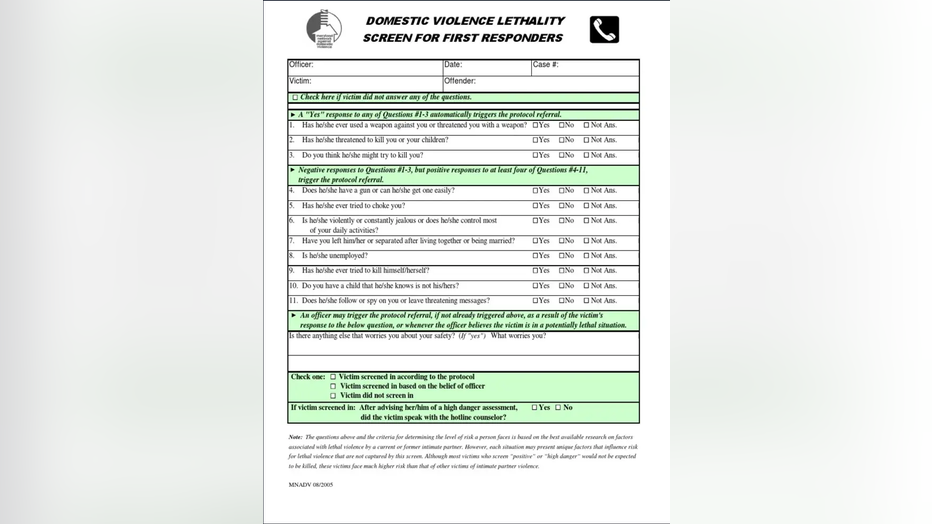
Lethality Assessment Program (LAP 1.0)
Developed in 2005 by the University of Maryland, the Lethality Assessment Program, or LAP, is an 11-question survey police are trained to ask domestic violence victims to determine if they are at high risk of being killed by their intimate partner.
Questions like, "Has he ever used a weapon?"
"Has he ever threatened to kill you?"
And, "Is he unemployed?"
"Some of it is more likely to lead to lethality than others," Coppens said.
The LAP does not ask anything about a history of punching, slapping, shoving, or kicking, but it does ask if their partner has ever tried to choke them.
"Why is that question important," asked FOX6 Investigator Bryan Polcyn.
"Strangulation is a significant factor and a red flag in homicide," Coppens said.
Point of contention
By the numbers:
Each question carries a weighted score determining risk, but while research shows strangulation is a top predictor of domestic homicide, the LAP survey in Milwaukee only assigns it 1 point.
"So I don’t know what they use in Milwaukee," Gwinn said, "but in the LAP today, strangulation is actually 3 points."
Published in 2021 and validated in 2024, a new version of the LAP – researchers call it LAP 2.0 — increased the predictive value of strangulation from one point to three points. It also moved the strangulation question into the top 3 – a group of questions for which a single yes answer automatically triggers a high-danger assessment.
Gwinn said Milwaukee may be using an old version of the LAP.
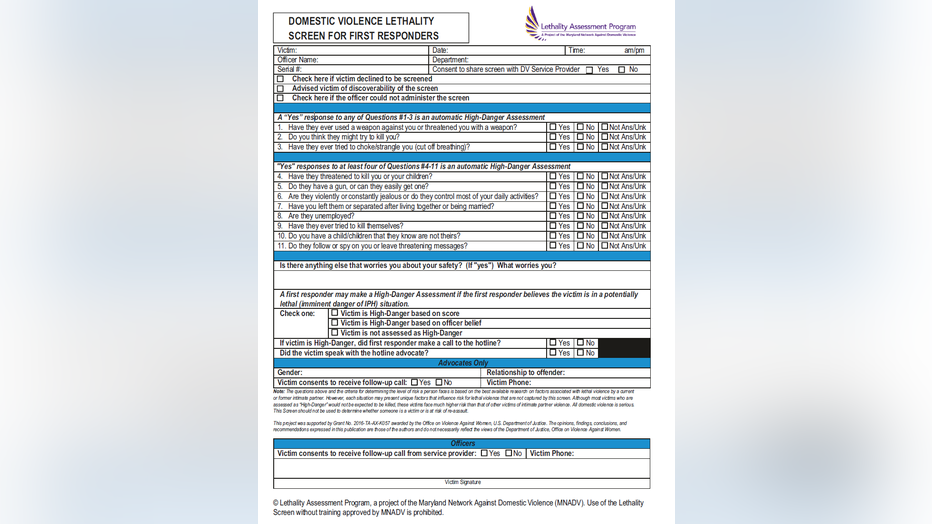
Lethality Assessment Program (LAP 2.0)
"You may want to find that out," he said.
In an email to FOX6 Investigators, Coppens confirmed that Sojourner and its law enforcement partners made a "collaborative decision" in 2024 not to transition to LAP 2.0 due to the program’s "myriad of requirements."
But that’s not the only reason.
Last year, the Milwaukee County District Attorney’s Office charged 347 people with strangulation or suffocation.
Strangulation to unconsciousness
What they're saying:
"The unfortunate reality and frankly, there are simply too many strangulation cases," said Erin Schubert, Sojourner’s director of outcomes and evaluation.
Schubert noted that in their own surveys, 54% of victims report having been strangled by their current partner at some point. Under LAP 2.0, that would mean more than half of all cases would be automatically flagged as high risk.
Coppens writes, "if nearly every case is classified as high risk, then none of them are."
Instead, they focus on the most severe strangulations, which leave a victim unconscious or cause a loss of bladder or bowel control.
"So, the degree of strangulation helps you determine the severity?" asked Polcyn.
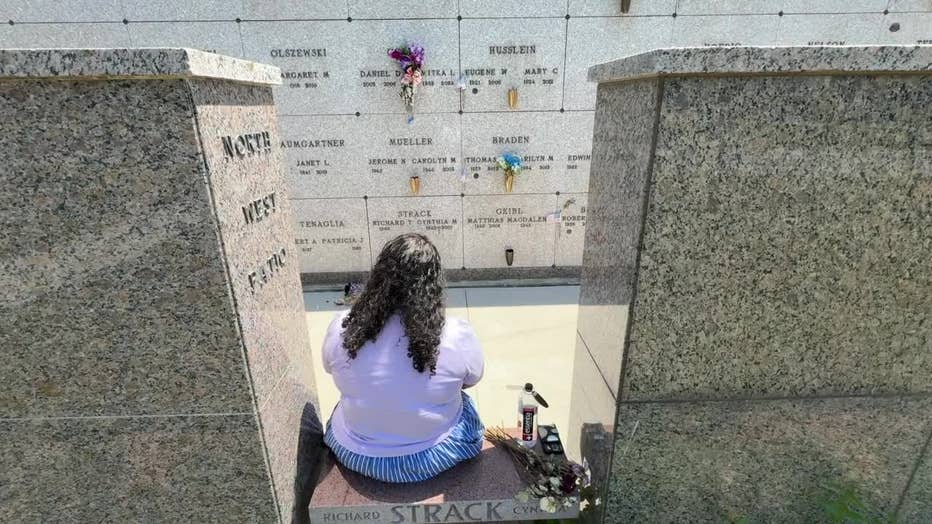
Houston visits Tomitka's final resting place
"Yes, unfortunately so," Schubert said.
"I get why we have to create standards," Gwinn said, "because resources in Milwaukee and around the country have been going down, down, down."
FREE DOWNLOAD: Get breaking news alerts in the FOX LOCAL Mobile app for iOS or Android
But Gwinn said that doesn’t change what the data reveals; that victims who’ve been strangled are more likely than others to be a grave danger.
Both the strangulation and homicide cases against Jerrod Stewart remain open nearly three years after his arrest. He remains in custody and is scheduled for trial in January. Coppens said that rather than adopting LAP 2.0, the team is working with the Medical College of Wisconsin to explore developing a custom lethality assessment tool specific to Milwaukee County.
Here is Coppens full statement:
"All Milwaukee County law enforcement agencies, to include the Milwaukee Police Department, are currently utilizing LAP 1.0 (not the 2.0 version that Mr. Gwinn sent you).
A collaborative decision (involving all law enforcement in Milwaukee County, the District Attorney’s Office, Department of Corrections and Sojourner) was made in 2024 for Milwaukee County to not transition to LAP 2.0.
As the first community in the state of Wisconsin to implement LAP and the largest LAP-implementing jurisdiction in the United States, we strongly support the work of lethality assessment and the life-saving impact it can have and has had for survivors.
LAP 2.0 has a myriad of requirements for its successful implementation. Our community knew we could not implement LAP 2.0 within the appropriate timeframe, nor could we provide the required data without an overhaul of processes with the more than 20 law enforcement agencies in Milwaukee County.
Finally, Milwaukee County has begun the work of determining if a lethality assessment tool that is specific to our community might be even more accurate than that of the LAP for survivors in our community. We are working closely with the Medical College of Wisconsin on this project and data. It is our hope that a lethality assessment tool that is highly specific to Milwaukee County will be our next transition (versus to LAP 2.0).
As the largest jurisdiction in the country utilizing one of the things that has been incredibly challenging for our community with the LAP assessment is that it results in the overwhelming majority of victims screening in high risk. One of the problems with this is if nearly every case is high risk then none of them are high risk (because that just becomes "the norm"). So we feel certain that we need something that can narrow this down further for survivors, but also those working to support them."
Portions of this article were formatted using A.I. FOX6’s Bryan Polcyn and an editor reviewed it for accuracy and tone prior to publishing.