

Infant formula safety study results released by FDA

FDA to increase testing on baby formula
The U.S. Food and Drug Administration will increase its testing on baby formulas for contaminates including heavy metals, the agency announced this week. In a statement the FDA said they along with the HHS is committed to increasing testing for the presence of substances like arsenic, lead and mercury. The plan is called "Operation Stork Speed." Joining LiveNOW to help break it all down is Dr. Joel "Gator" Warsh, Board-Certified Pediatrician.
WASHINGTON - On Wednesday, the U.S. Food and Drug Administration announced results from its largest and most rigorous examination ever conducted, focused on chemical contaminants in infant formula available on the U.S. market.
The federal agency purchased more than 300 infant formula samples from stores and online retailers and tested them for heavy metals (lead, mercury, cadmiu and arsenic), pesticides (glyphosate and glufosinate), and polyfluoroalkyl substances (PFAS), sometimes called "forever chemicals."
US infant formula supply is safe, data finds
Big picture view:
The FDA analyzed 312 powdered and liquid infant formulas made by 16 brands purchased online and in person, most from big box and grocery stores in the northeastern United States.
According to the results, an overwhelming majority of samples had undetectable or very low levels of contaminants, affirming that the U.S. infant formula supply is safe.
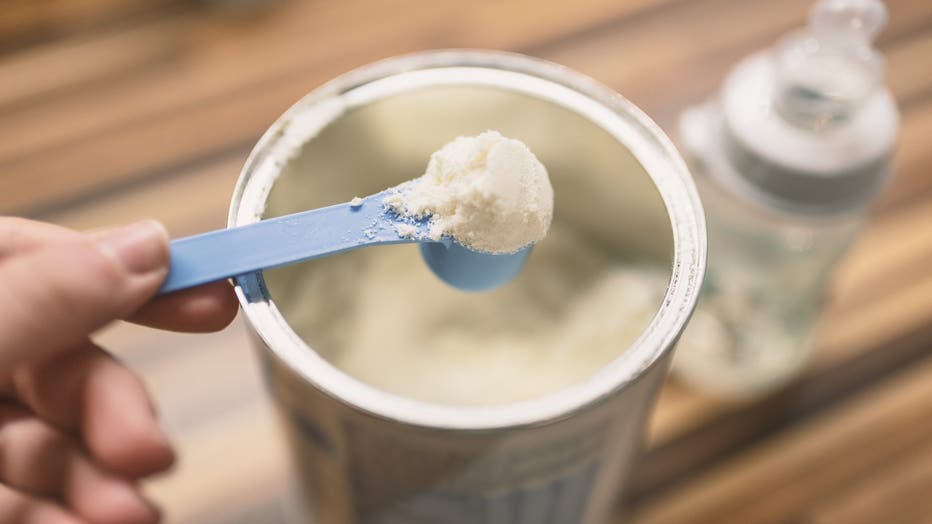
FILE: Baby formula pictured. (Getty Images)
The New York Times also learned that all the formula samples tested well below EPA and EU limits for heavy metals, and all but three of the samples were free of the 318 pesticides tested.
The FDA detected some phthalates and PFAS in the formula samples, though they characterized the levels as being very low, the Times reported.
Experts say these contaminants are ubiquitous in the environment, so it’s difficult to remove them entirely from our food supply, including from infant formulas.
What they're saying:
"We tested more infant formula than ever before, and the results are clear: most products meet a high safety standard—but even small exposures matter for newborns," said Health and Human Services Secretary Robert F. Kennedy Jr. "We will hold manufacturers accountable, and give parents honest, transparent data they can trust. Protecting our children’s health is nonnegotiable."
FDA announces ‘Operation Stork Speed’
The backstory:
Last year, the FDA announced "Operation Stork Speed," vowing to improve the safety and quality of U.S. infant formulas — in part by increasing its testing of them for heavy metals, pesticides and other contaminants.
"The FDA will use all resources and authorities at its disposal to make sure infant formula products are safe and wholesome for the families and children who rely on them," Kennedy said last year.
EARLIER: RFK Jr. orders review of baby formula: What to know
At the time, scientists said a review was long overdue regarding the most recent data on the composition of human milk and how babies digest and absorb nutrients in breastmilk and formula.
"You can judge a society by how it treats its most vulnerable members. That’s why we’re doing everything in our power to make sure our babies and infants have safe, high quality formula options that are backed by a resilient supply chain," FDA Commissioner Marty Makary said in a statement. "The results of this study are encouraging. We will continue to advance formula innovation and safety for the millions of families who depend on it."
Why you should care:
Infants and children exposed to metals such as lead, mercury, cadmium, and arsenic can impair development, learning and attention, and increase the risk of lifelong health problems like cancer, respiratory and cardiovascular conditions, according to the Children’s Environmental Health Collaborative.
The organization said that children are particularly vulnerable because their brains and bodies are still developing. They eat, drink, and breathe more than adults relative to their body size, which means they absorb higher amounts of toxic metals when exposed – and are less able to detoxify them.
Some experts raise questions
The other side:
While federal health officials describe the results as reassuring, a few outside experts noted that some phthalate and PFAS levels were concerning.
"Any detection of PFAS or phthalates is problematic" and deserves scrutiny, especially in products that babies consume, Dr. Sheela Sathyanarayana, a professor of pediatrics at the University of Washington, told the Times.
It’s good that the agency is evaluating these contaminants, Dr. Sathyanarayana said. But, she added, the findings highlight the need for continued monitoring and work to reduce levels of them in formula.
What's next:
The FDA said it is following up with additional testing as part of the agency’s ongoing monitoring and oversight efforts and will take additional action where appropriate. This includes conducting further testing, including for additional contaminants and continuing to engage with manufacturers on measures to reduce the levels of contaminants to as low as possible.
"As a father, I understand how important it is for parents to trust the safety of the food they give their children. At the FDA, ensuring the health of America's next generation is vital," said Kyle Diamantas, the deputy commissioner for Deputy Commissioner for Food. "Through Operation Stork Speed and our Closer to Zero initiative, this testing – the first of its kind – reinforces that infant formula in the U.S. is a safe option for parents and caregivers who rely on it. We will continue working to drive contaminants to as low as possible through rigorous oversight."
Secretary Kennedy plans to host chief executives from leading infant formula companies in May for a roundtable discussion focused on modernizing FDA’s infant formula oversight and continued implementation of Operation Stork Speed, which includes aspects of nutrition, chemical and microbiological food safety.
The Source: This story was reported from Los Angeles. The FDA, the New York Times contributed.