

Americans hide money struggles, seek better bank advice: study
FOX6 Cents: Americans hide money struggles, seek better bank advice: study
Are you being honest with yourself about personal finances? Does what you put on social media really reflect what you can afford? A new survey blows the lid off the lies some of us tell ourselves and others about money.
OCONOMOWOC, Wis. - Are you being honest with yourself about personal finances? Does what you put on social media really reflect what you can afford? A new survey blows the lid off the lies some of us tell ourselves and others about money.
‘The Secret Financial Lives of Americans’
What they're saying:
Ben Zeidler and Gunny Scarfo co-founded the New York-based research company Nonfiction. Their report, "The Secret Financial Lives of Americans," found people are not being honest about what is in their wallet.
FREE DOWNLOAD: Get breaking news alerts in the FOX LOCAL Mobile app for iOS or Android
"We had an intuition that the way that everyday people’s money was being talked about in research and by companies was distant from the reality of people’s money," said Scarfo.
When asked what surprised him, Scarfo said: "The biggest thing that surprised us was the extent to which Americans are living double lives when it comes to money."

Survey results
By the numbers:
Zeidler and Scarfo spent five years on the project, asking more than 2,000 Americans deeply personal questions about money.
"Fifty-two percent of Americans have cried because they didn’t have enough money at the time. It’s not just about being stressed out or having money on your mind, breaking down into literal tears," Zeidler said.
SIGN UP TODAY: Get daily headlines, breaking news emails from FOX6 News
The survey found this is not just an issue for the poor or lower middle class. Nonfiction found 41% of respondents who earn more than $200,000 a year have cried because they did not have enough money. When they did an update to the survey last year, Nonfiction said those numbers increased.
When asked if it has made him think differently about the state of America or the economy in general, Scarfo said: "It’s very easy to think to yourself, ‘How do they have this, and I’m over here struggling?’ But the reality is that most people are wrestling with financial issues they don’t normally disclose."
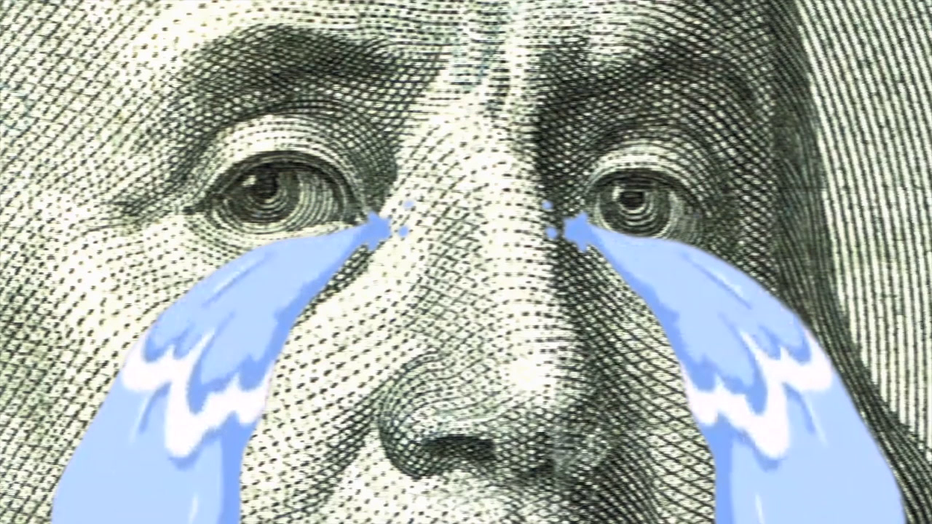
Thirty-five percent said they considered taking a second job to make ends meet, while 32% said they would donate plasma or participate in medical trials to get by. 13% said they would sell pictures of their feet online to help pay bills, and 10% admitted to stealing from friends, family or work.
"To me that’s a level of desperation among folks – they are in heavy credit card debt, living paycheck to paycheck," Zeidler said.
Nonfiction’s survey included testimonials from respondents that show the consequences could be deadly. One person wrote: "My doctor wanted to do several tests related to my heart disease and I had to admit there was no way I could afford the co-pays or the transportation to get to where the tests would be done."
Social media…and a bank robber?
Dig deeper:
Nonfiction believes social media is masking financial issues. Twenty-eight percent of millennials admit to posting on Instagram to make themselves look wealthier than they really are.
"Millions and millions of Americans are doing these little things that tell a story about our finances that’s not normally told," Scarfo said.
Zeidler and Scarfo discovered many Americans simply do not know what to do or who to turn to for financial advice. Only 7% said their bank has "taken the time to understand our dreams and what it will take to fund them."
Nonfiction then started interviewing bank executives to address some of these concerns. But it was not until they spoke with a convicted bank robber that a clearer message emerged:
"When we talked to him, we said, ‘Why did you rob the bank? You could rob anything – liquor store, family – why pick a bank?’" Zeidler said. "He said, ‘I feel like banks have all the information about how money works, and they keep it to themselves, and they don’t share it with anyone else.’ When we heard that, we were flabbergasted. That sort of became the moral north star for this report. How is it possible that the bank robber has a clearer view on this financial life that Americans are living than the banks do?"
"Sometimes we notice clients are just nervous because they just don’t know what they don’t know," Micah Schroeder said.
Financial advice
Local perspective:
Schroeder is a financial consultant for Five Nine Wealth Management in Oconomowoc. He has worked in the industry for more than a decade and believes social media is distorting financial realities.
"They are looking at social media and it’s everybody’s best picture, right? They might have this concern that, ‘Hey, I might have this credit card debt I can’t tell anyone about,’ or ‘I have this big car payment that is stressing me out’ or ‘How am I going to put the kids through college? Or retire?’ But no one talks about that, right?" Schroeder said.
While he was surprised by Nonfiction’s stats about the number of people who cry over money, Schroeder said that does not have to be the case.
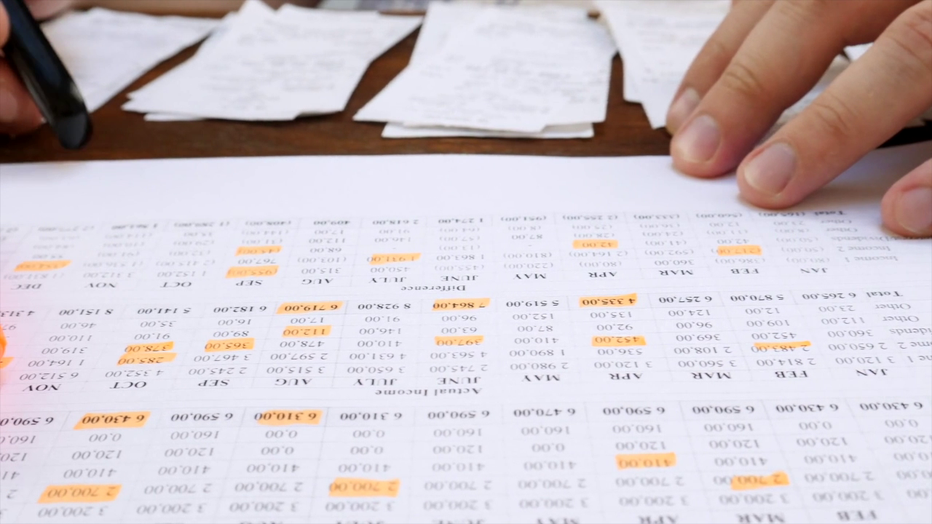
When asked how someone knows they are on the right path, Schroeder said, "Sure, there has to be a measuring stick, right? Individually, it depends on how much you’re spending, what’s your tax situation?"
Nonfiction’s survey found 20% of Americans would be willing to pay for basic financial advice. That is something Schroeder says many financial advisors already offer.
"That’s a situation where having a good advisor already really helps. I’ll have clients call to say, ‘Hey we’re looking to buy a car, should we pay it all in cash? Which account should we take it out of?’ I can say, ‘Bill or Mary, I think it’s XYZ,’" Schroeder said.
"Twenty percent of Americans is an enormous market. It’s the same amount of people who use TurboTax every year," Scarfo said.
Big picture view:
Nonfiction believes banks can ultimately profit by shifting focus to helping people set financial goals and benchmarks. Half of Americans do not have enough money to weather a $400 emergency.
"I feel like all of this is so depressing. I think the hopeful note about Americans and striving is worth hitting," Zeidler said.
"We were encouraged to see just how driven and determined Americans are to make things work for themselves and to improve," Scarfo said.
There is hope a deeper connection between customers and banks can benefit everyone.

Honesty about money: Americans hide money struggles
Are you being honest with yourself about personal finances? Does what you put on social media really reflect what you can afford? Micah Schroeder, a financial consultant for Five Nine Wealth Management, joined FOX6 News to answer these and other questions about your personal finances.
Portions of this article were formatted using A.I. FOX6’s Bret Lemoine and an editor reviewed it for accuracy and tone prior to publishing.
The Source: Information in this story was gathered from Ben Zeidler, Gunny Scarfo, Nonfiction, "The Secret Financial Lives of Americans" survey report, survey respondents and Micah Schroeder.